Chickens in the food forest
Integrating chickens into a food forest: natural habitat, feed autonomy, pest control. Suited design, layers, herbs and practical tips.
Published October 7, 2024 · Semisto
Chickens in the food forest
The benefits of integrating them
- They find their favourite habitat there, choosing between sun, shade and dappled light, along with perches and mulch to scratch through — an environment reminiscent of the mountain forests they originally come from;
- They feed on natural dewormers such as fenugreek, thyme or yarrow;
- They boost their feed autonomy by eating worms in the mulch or fallen fruit, and pecking at seeds, berries and leaves;
- They control pests under fruit trees such as codling moth, a night moth that lays eggs in fruit (apples, pears, apricots, plums, walnuts, chestnuts), or the hazelnut weevil, which feasts on hazelnuts;
- They spread and recycle compost quickly across every corner of the garden, making minerals rapidly available to the soil.
→ Still plan a grain and cereal supplement, ideally grown between the groves or hedges (oats, sunflower, triticale).
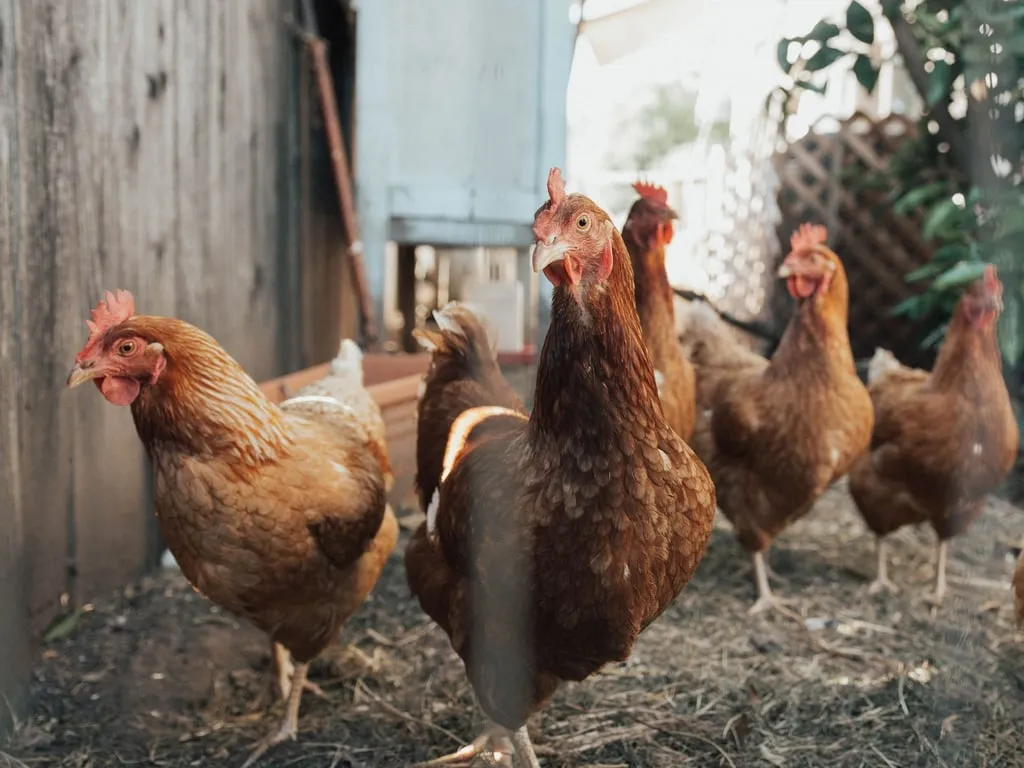
In spring
Keep them in the coop, protected from foxes, while seedlings and herbaceous plants come up.
In summer
In the food forest, near the summer fruit, with shade available.
In autumn
In the food forest, near the autumn fruit, with a compost pile to spread.
In winter
In the vegetable patch to scratch the soil and hunt insects, or in the food forest, whichever suits you best.
A suited design
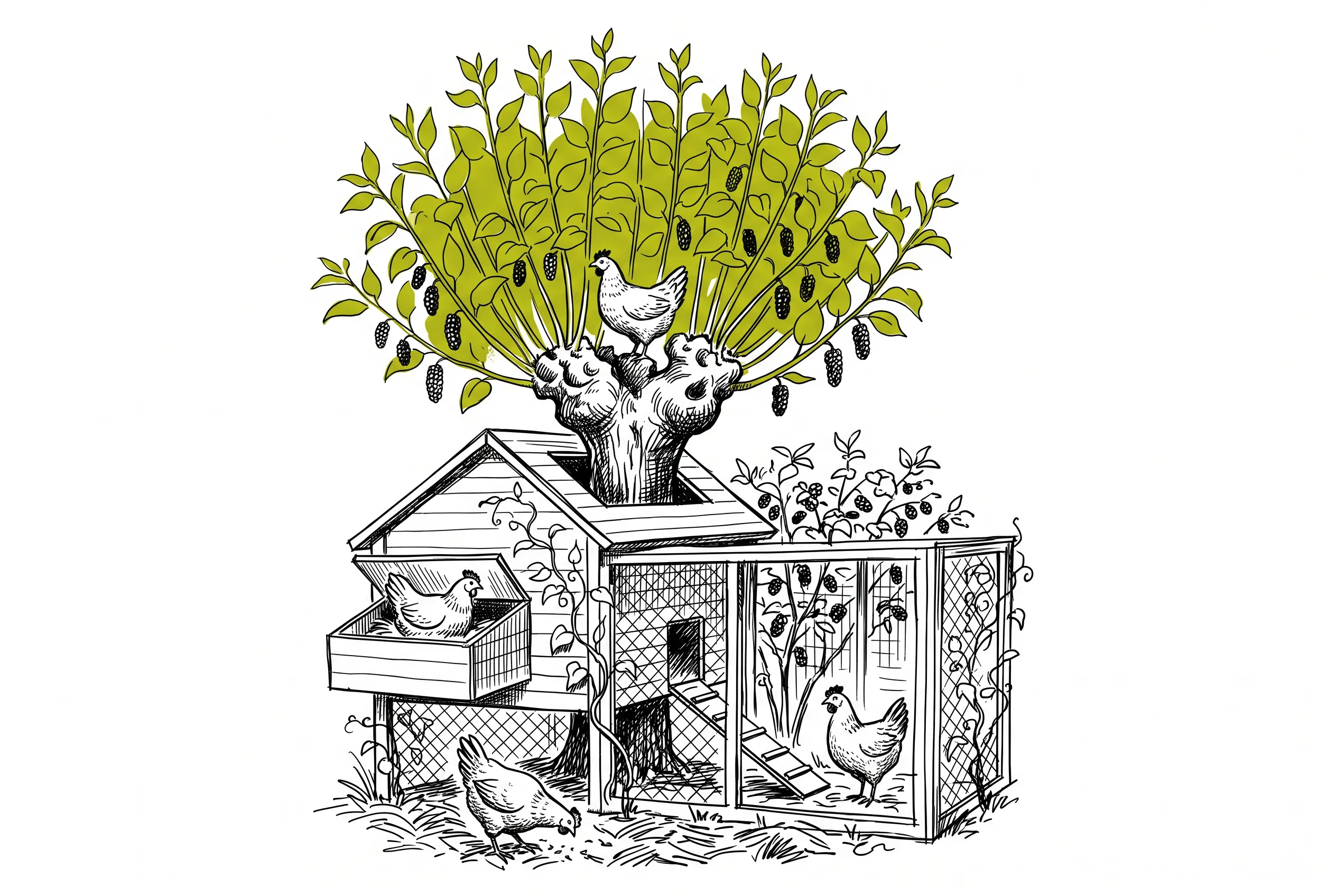
- The chicken coop can be set up as part of a food forest, which suits chickens far better than an empty space
Goals for the high layer: shade, protection from birds of prey, and fruiting
- White mulberry, Chinese silver vine, walnuts, albizia
- Peach trees tolerate fresh chicken manure particularly well
An edible intermediate layer for the chickens
- Siberian pea shrub, goji berries, amaranth
- Chickens love lamb’s quarters, sometimes called “fat hen”
A scratch-resistant low layer, ideally edible on the go
- Aromatic plants (thyme, savory, lavender), daylilies, ivy
Climbers on the coop’s trellis that will quickly provide shade
- Grapevine, kiwi, akebia
Practical tips:
- Chickens in the shade of trees and shrubs feel safe in spring and summer
- On a sloped plot, store manure at the top of the garden: the chickens will happily spread it down the slope
- Cage the young plants rather than the chickens
- Don’t plant trees too close to the fence, or the chickens will use them to fly to freedom
- When setting up, add sawdust, wood shavings and other carbon-rich materials to normalise the C/N (carbon/nitrogen) ratio and offset the excess nitrogen and phosphorus in droppings at the base of plants (source: Fabrice Desjours)
- Plant lettuces near your coop. These vegetables grow fast, are easy to maintain and make a real feast for chickens (alongside a balanced diet).
Herbs for chickens
- Basil: basil keeps parasites away. It’s also effective for soothing mange, fungal infections and ringworm. You can plant it in the coop or give it as an infusion.
- Rosemary: it fights microbes and illnesses like colds or rheumatism. It also helps keep the urinary and digestive systems healthy.
- Mint: it repels insects, parasites (like red mites) and rodents. It can be used to soothe stomach aches and help fight intestinal parasites. It also has aromatic properties that can help improve the smell of the chicken run.
- Thyme: it strengthens poultry’s natural defences and protects them from disease. It’s also a powerful antiseptic.
- Sage: it’s antiseptic and anti-inflammatory. It improves digestion and reduces stress.
- Parsley: it stimulates the body and cleanses the kidneys.
- Oregano: it helps fight coccidiosis and boosts immune defences. A source of many vitamins and fibre, it protects chickens against respiratory and cardiovascular disease.
- Chamomile: it can be used to calm chickens and promote sleep. It can also help relieve headaches and reduce stress.
- Lavender: it can be used to help relieve stress and promote sleep in chickens. It also has insect-repelling properties that can help protect chickens against parasites.
- Arnica: it can be used to relieve muscle and joint pain, and aid recovery after intense physical exertion.
Choose plants that grow well in your region and place them so they don’t take up too much space in the chicken run.
If I were a chicken…
If I were a laying hen… I’d want a coop that lets me feel safe and comfortable. Here are a few things I’d love to find in my dream coop:
- Comfortable perches at different heights: chickens love having places to perch and relax, so I’d want perches that let me stretch and move freely.
- A place to lay: I’d want a quiet, comfortable spot where I can lay my eggs safely.
- Easily accessible feeders and drinkers: I’d want feeders and drinkers that are easy to reach and not crowded out by other chickens.
- Edible plants: I’d want access to plants I can eat directly, like vegetables, herbs and seeds. That would let me feed myself more naturally and vary my diet.
- A landscaped outdoor space: I’d want an outdoor area where I can wander and scratch the ground, letting me stay active and fit.
In short, my dream coop would be a comfortable, pleasant place where I can move freely, eat a varied diet, and relax safely.
To go further on this topic
- The video Il met des poules dans son verger et ça fait des miracles, by L’ArchiPelle
- The chapter L’élevage agro-forestier in Antoine Talin’s book, Forêt comestible et haie fruitière
- The chapter L’élevage en forêt in Damien Dekarz’s book, La Forêt Comestible
- The sidebar “Un parcours en 3D” in Fabrice Desjours’s book, Jardins-forêts
In our database
Check out the list of perennial plants for the chicken coop in our plant database.
What about designing your own?
Integrating animals into a forest garden is a design question: density, rotation, protecting young plants, choosing which layers they can reach. That’s exactly what we pass on in the Semisto course — and what we put into practice when we design a project with you.