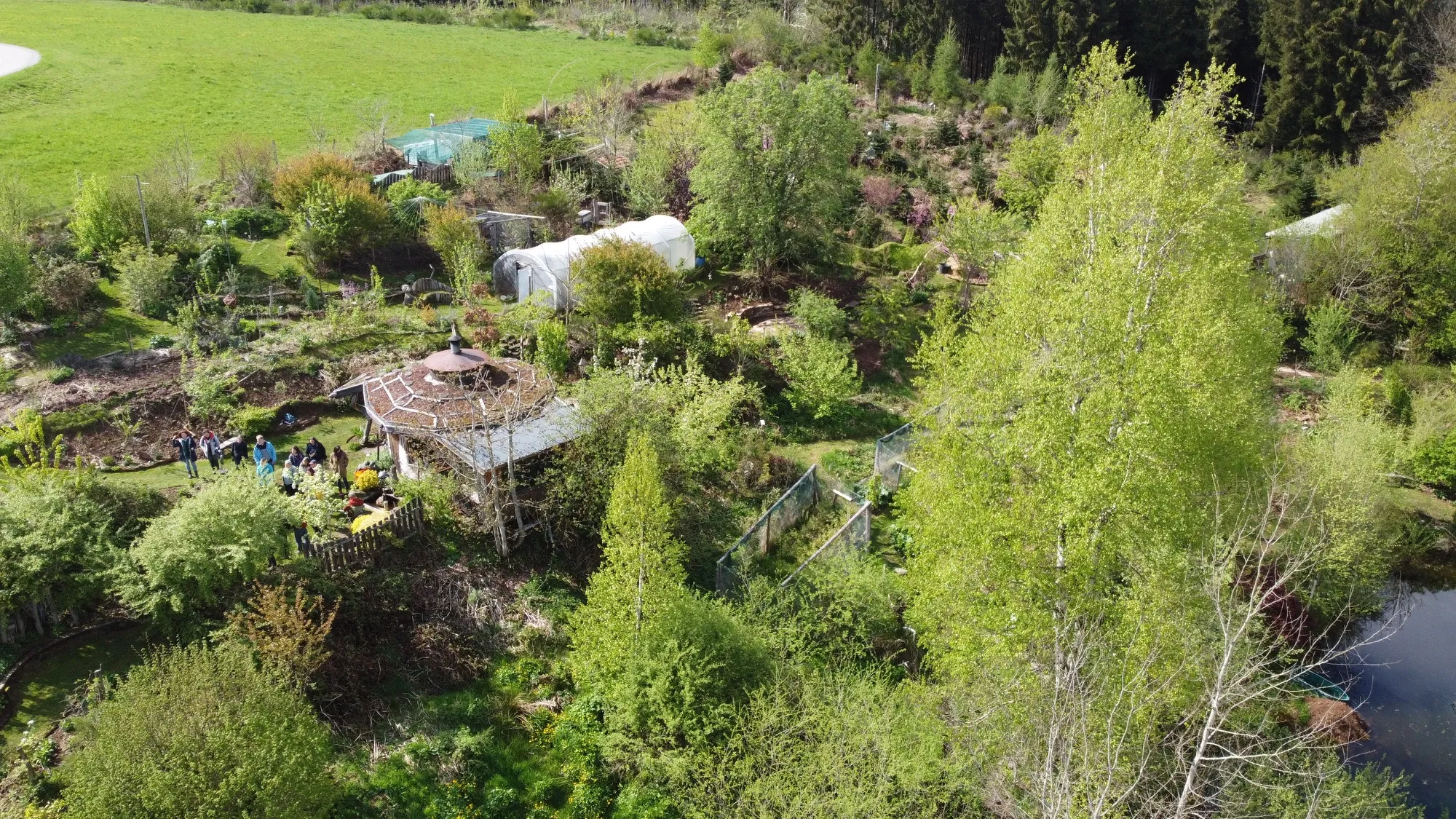
The Era of Food Forests
What is a food forest? A multi-layered, food-producing, regenerative ecosystem inspired by the young natural forest.
Semisto gives present and future generations the means to turn Europe into food forests and edible gardens: regenerative, robust ecosystems, deeply positive for people, soil and biodiversity, able to feed humanity while regenerating the biosphere.
Faced with climate challenges, biodiversity loss and the need for sustainable local food, turning our spaces into food forests is a profoundly innovative solution.
A food forest — sometimes called an edible forest garden — is an ecosystem designed on the model of a young natural forest, or more precisely a forest edge, where most of the plants are edible or useful. This multi-layered system — trees, shrubs, climbers and herbaceous plants — produces a striking range of fruits, nuts, tubers, leafy greens, flowers, herbs and more, all while regenerating the soil and sheltering biodiversity.
The origins of food forest gardens
For centuries, humans have farmed the land to feed their communities. Annual crops reshaped our landscapes for the benefit of humans, at the expense of other living species. Today, the picture is clear: cultivated soils are becoming depleted and need ever more inputs to keep producing, biodiversity is collapsing, and harvests bear the full brunt of climate extremes. The fragility of our agricultural system is very real.
About forty years ago, pioneers began designing new ecosystems inspired by indigenous peoples in tropical regions — peoples who garden the forest, with respect. They created the first food forests in temperate climates: trees, shrubs, herbaceous plants and vines that produce for people in harmony with all living things, within an ecological system modelled on a young natural forest.
We’ve grown used to getting everything fast, whereas a food forest takes several years to establish and requires real design work upfront. Yet it’s the solution best placed to support those who come after us, through the major transitions ahead. These productive, resilient environments will be passed down to our children and grandchildren, who will keep tending and diversifying them as their environment evolves. Their impact will be major — arguably immeasurable.
Restorative, nourishing and reassuring, food forest gardens fully embody the principles of permaculture: care for the earth, care for people, and share resources fairly. Together, we’re turning Wallonia — to start with! — into a network of multi-layered gardens, food forest gardens and food forests.
“What is a food forest?” — expert Geoff Lawton answers this increasingly common question. Watch Geoff Lawton’s explanation
Gardens that benefit biodiversity
The food forest garden — also called a forest garden, food forest, fruit hedge (when linear) or food-producing forest — aims to create a stable, robust, self-managing natural system. Its robustness comes not from optimisation but from diversity and redundancy: dozens of species that relay and replace one another, so the system stays functional even as conditions fluctuate. It’s the exact opposite of a conventional garden — that collection of isolated elements you have to maintain yourself, constantly, because nature always tends to return to forest.
A food forest garden is designed by humans, but conceived for the good of everyone: humans, plants and animals live there in harmony, through mutually beneficial interactions. Trees, shrubs, climbing plants, herbaceous plants (flowering plants), root vegetables and ground covers are planted and tended, sharing the horizontal and vertical space — what we call the layers — spaced so that sunlight reaches every plant that needs it. Our main goal, as humans, remains to produce a wide variety of harvests.
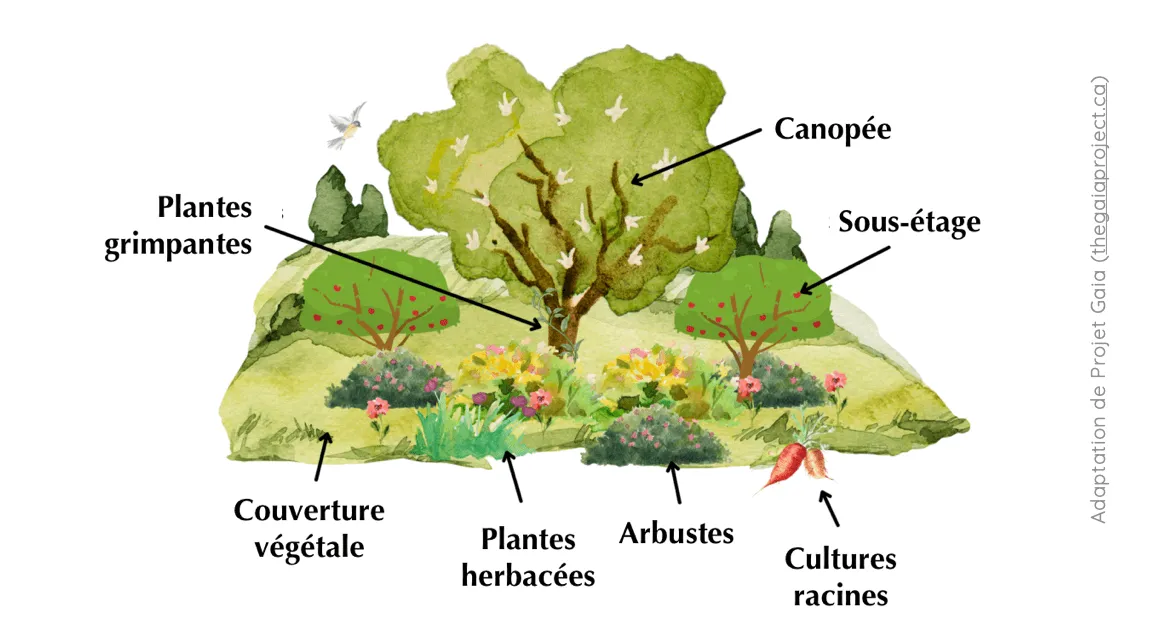
A vegetable patch is a 2D environment. A food forest garden is 3D.
In reality, we’re imitating natural ecosystems and moving away from the monoculture farming model of the 20th century, by creating polycultures of perennial trees, shrubs, herbaceous plants and ground covers. Through their interactions, above and below ground, these plants rebuild living, thriving soil — soil that takes over many of the tasks we’d otherwise have to do ourselves.
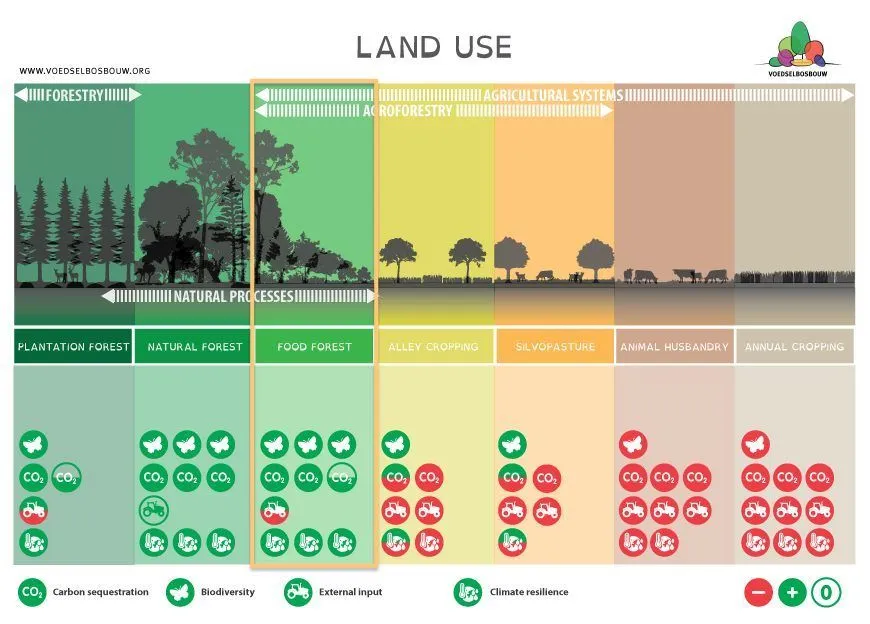
Document published by Stichting Voedselbosbouw Nederland.
So it’s not just a planting of trees: it’s co-creating, with nature, a complete ecological system.
This environment gives us diverse, varied harvests, essential to a healthy, balanced diet, but also:
- firewood;
- fodder for our animals;
- timber and basketry wood;
- plants with countless medicinal properties;
- shelter and food for pollinators, insects and birds;
- effective protection against wind and soil erosion;
- shade and coolness, essential for generations to come;
- intoxicating garden scents;
- and, easy to overlook but crucial: storing atmospheric carbon through biosequestration.
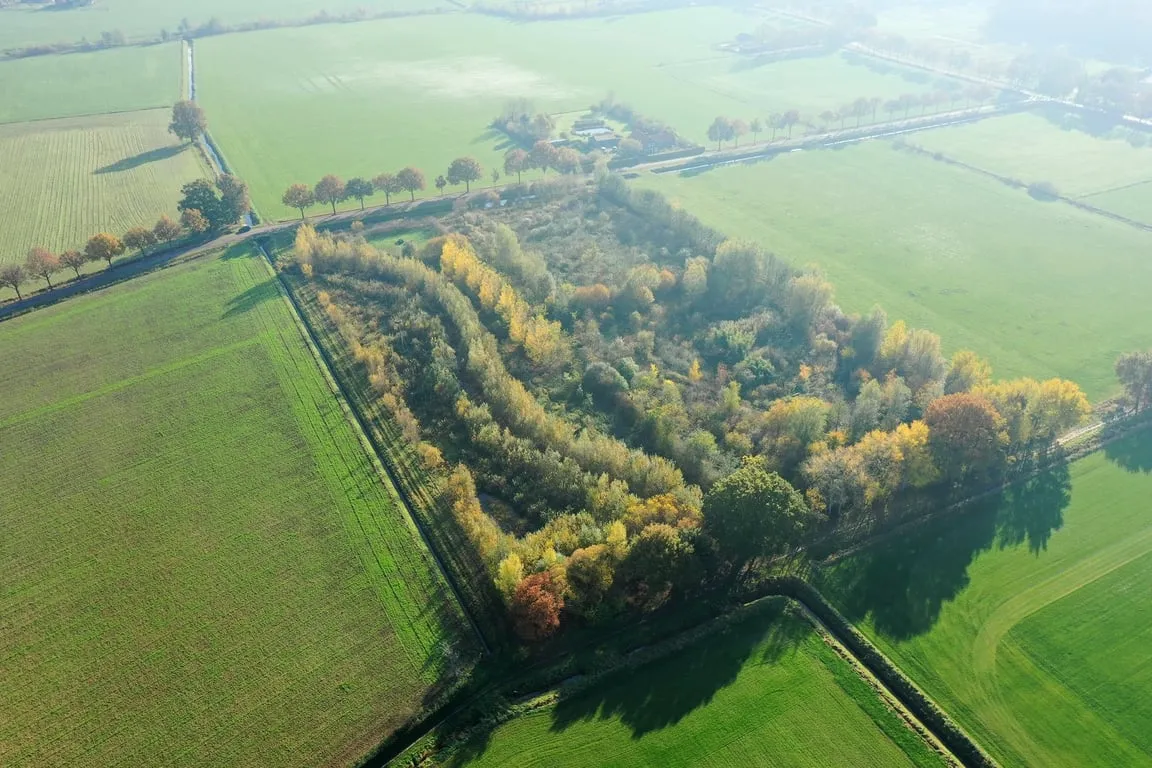
The Ketelbroek food forest in Groesbeek, the Netherlands.
A response to the major challenges of our time
- Massive biodiversity collapse
- Climate change
- Dwindling flows of materials and energy
Regenerating the land, and the bonds between us
Permaculture rests on three cares: the Earth, people, and fair sharing. A food forest honours all three at once. Because in regenerating a soil, you also regenerate what grows around it: know-how thought lost and passed on again, planting days where strangers become a collective, a local economy that stands on its own without leaning on subsidies, territories taking back a say over what they eat.
This is our conviction: regeneration isn’t only natural — it’s also societal. You don’t mend the living on one side and the social fabric on the other — the two are remade together, in the same place, on the same patch of ground. That’s why a food forest is never designed alone: it spreads. From a garden to a farm, from a town to a region, from one hub to the whole of Europe.
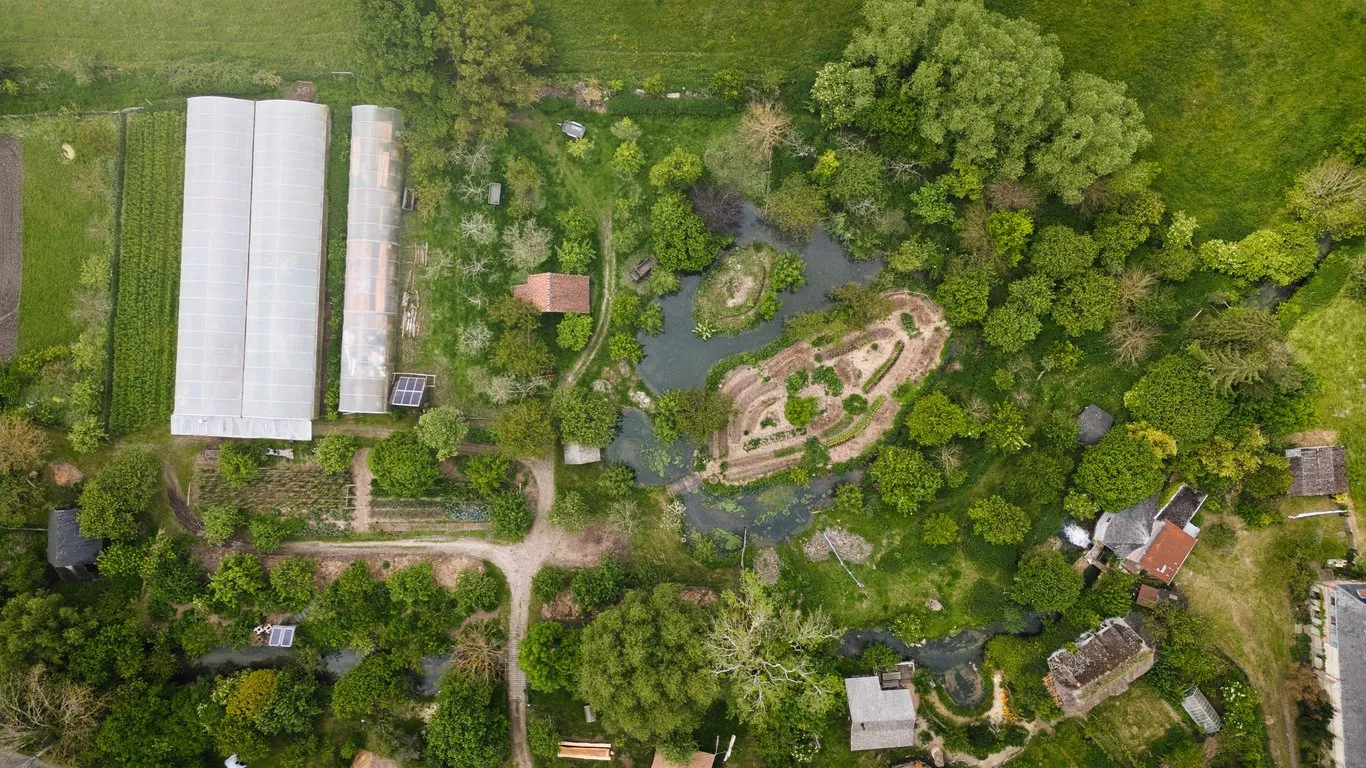
The Bec Hellouin farm in Normandy (spring 2024).