Une Figue dans le Poirier: inside a demanding, inspiring food forest design
A visit to a food forest project in the Vosges: contextual design, landscape aesthetics and knowledge-sharing, with Une Figue dans le Poirier.
Published May 12, 2025 · Semisto
Une Figue dans le Poirier: inside a demanding, inspiring food forest design
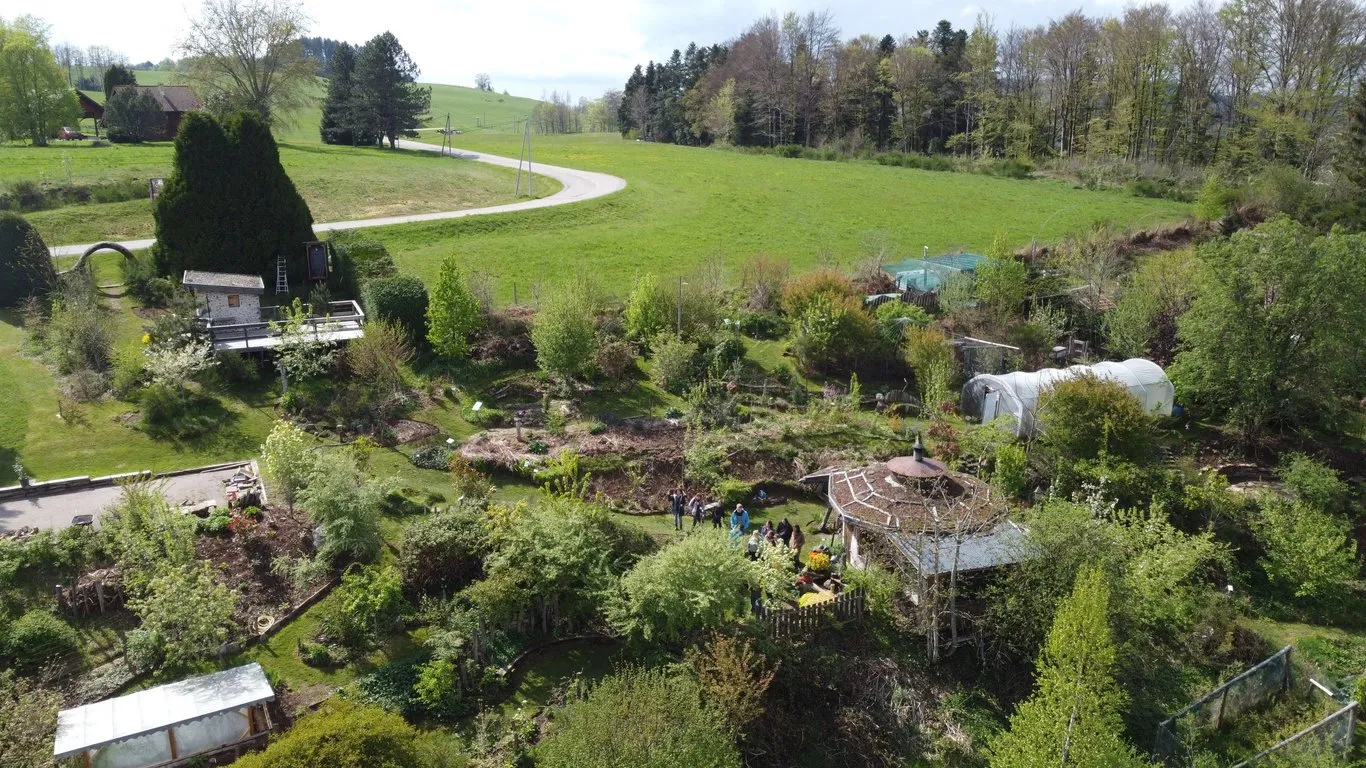
At 650 m of altitude, in the southern Vosges, the project Une Figue dans le Poirier (“A Fig in the Pear Tree”), led by Lilian, is a particularly rich case study for future food forest designers. This site — at once a place of experimentation, knowledge-sharing and landscape creation — offers a finely tuned reading of the land through its founder’s sensitive, systemic approach.
A design rooted in the local soil and climate
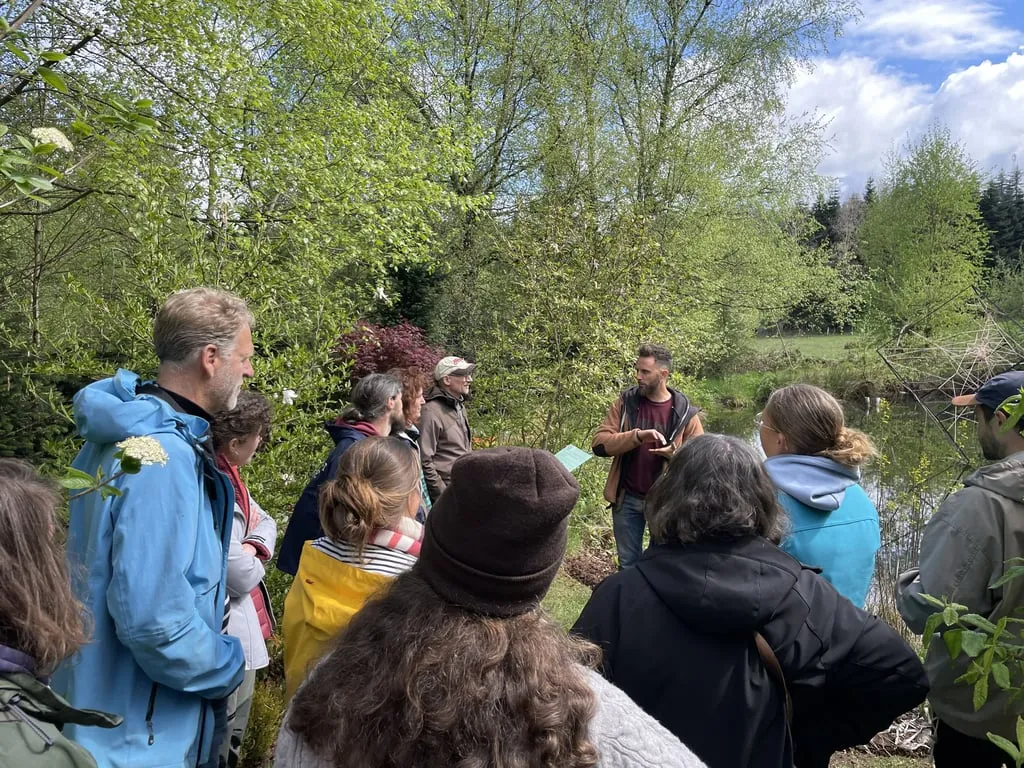
The land, split across a dual base of sandstone and granite, illustrates the local geological complexity. Lilian designed the layout around this heterogeneity, weaving together plant succession, water management and shifting microclimates. Analysis of prevailing winds, a fine understanding of slopes, drainage zones and soil layers guided the plantings. The site also applies permaculture zoning logic, with a diversity of fruit tree forms suited to their use and their distance from the house.
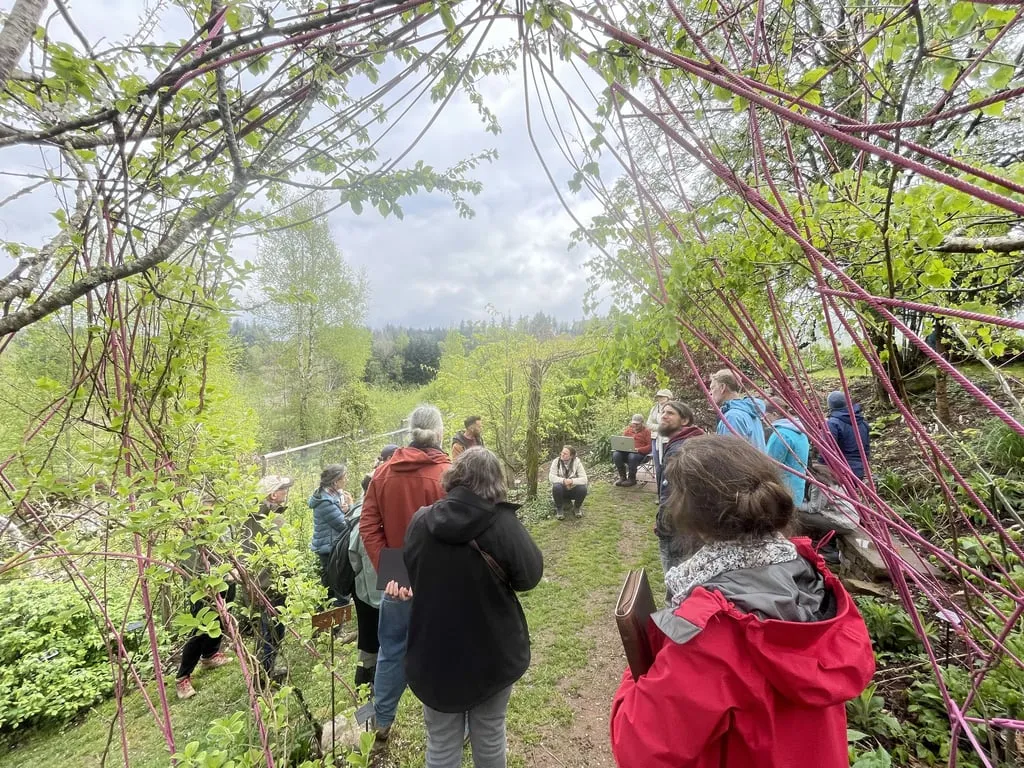
The project stands out for its dynamic view of the forest: Lilian draws on the concept of ecological succession to guide plantings and encourage a layered forest to develop over time. The creation of a “purple forest”, designed for teaching purposes, visually illustrates these successions, making the changes in vegetation over time perceptible.
Lessons for students of living-systems design
This immersion touched on several key ideas, directly transferable to professional practice in designing food-producing, resilient systems:
- The importance of contextual design, grounded in actively listening to the land, reading its constraints and potential, and finely adapting to ecological, human and social conditions.
- Aesthetic value as a lever for awareness and ownership, particularly in places less receptive to the traditional codes of permaculture. Here, aesthetics becomes a vehicle for emotion and belonging, easing knowledge transfer and community engagement.
- Progressive design, thought through by layer and by cluster, allowing for an evolving, resilient planting adapted to available resources, soil dynamics and empirical feedback. The garden becomes a space for iterative learning.
- The integration of a crafted, sensitive approach to landscape, blending woodworking, forging, sculpted plant forms and bold plant choices. This care for gesture and material gives the place a distinct, coherent identity, while renewing our relationship to tools and living matter.
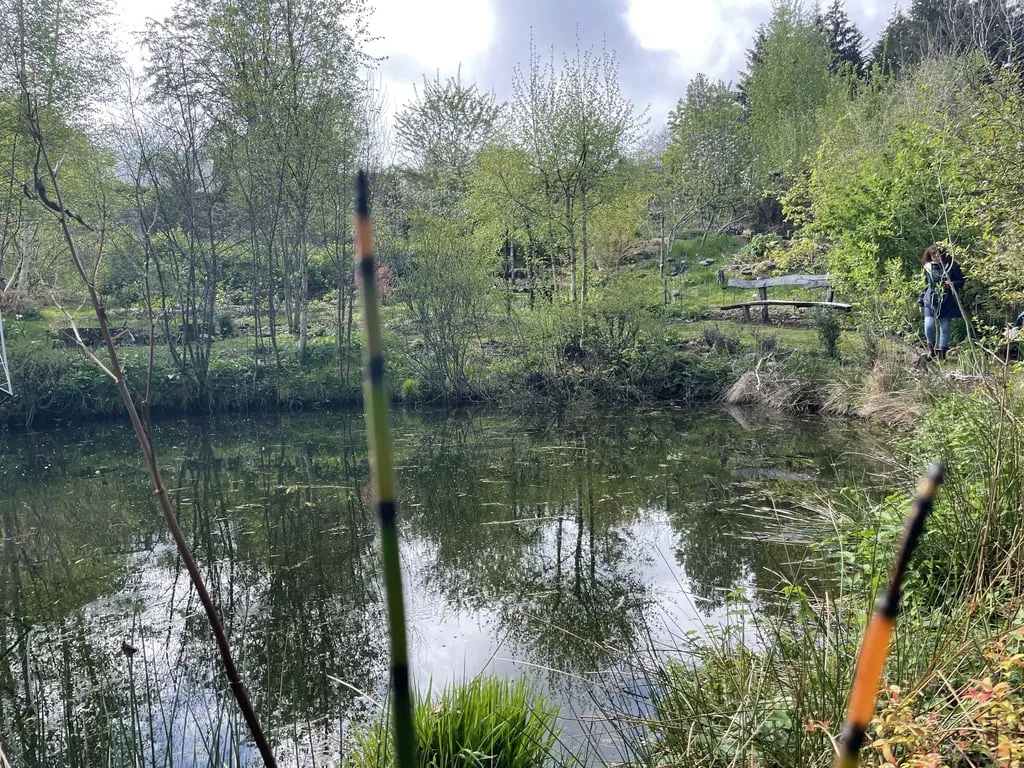
Finally, this visit offered a valuable counterpoint to strictly technical or production-focused approaches. It revealed a specific stance for the food forest designer: that of a mediator between living systems, landscape and people, at the crossroads of applied ecology, landscape art and knowledge-sharing. A stance that calls for an embodied, demanding ecology, rooted in observation, experimentation and the poetry of everyday life.
Lilian’s garden, and the Une Figue dans le Poirier association behind it, is a reminder that designing a food-producing ecosystem isn’t just about optimising yields or stacking vegetation layers. It’s about composing with life, in all its diversity, unpredictability and beauty. A message that’s both humble and ambitious, one that resonates deeply throughout our students’ training journey.
See it, then do it
Visits to places like this one are an integral part of our food forest designer course: you learn to read a living system on the ground, not just on a plan.