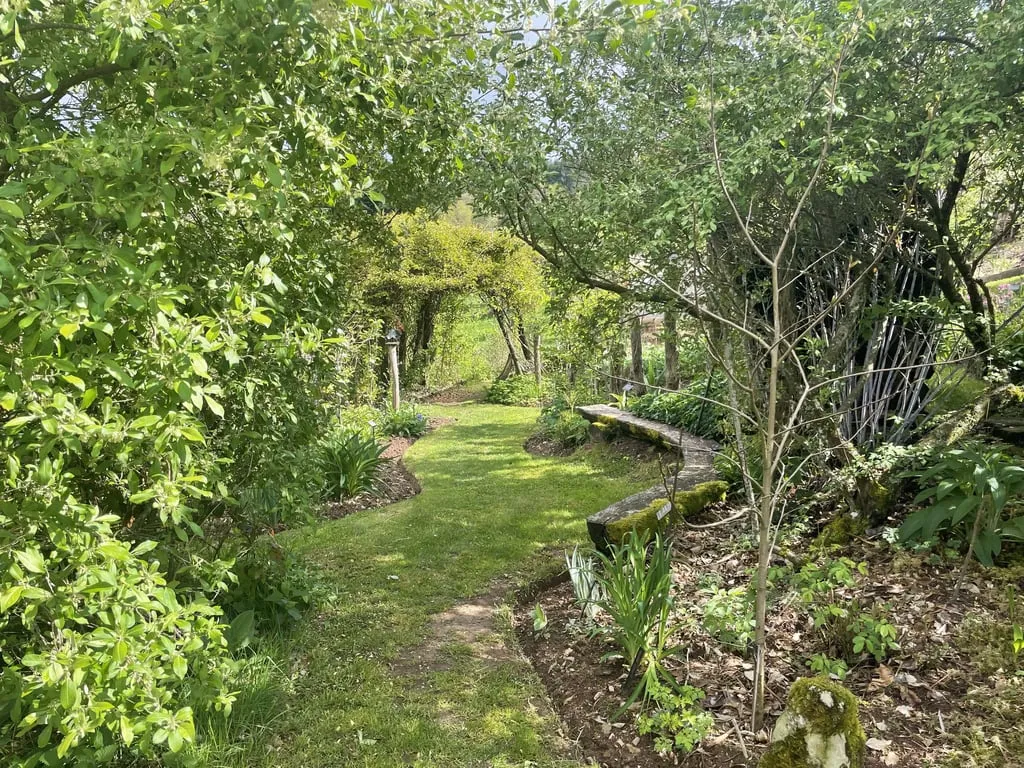
The 7 layers of a food forest
Design a productive food forest with seven complementary vegetation layers, inspired by forest ecosystems. Examples, tips and common mistakes.
Published October 7, 2024 · Semisto
The 7 layers of a food forest
A garden that produces an abundance of fruit, vegetables and other useful resources while creating a haven for biodiversity? That’s the promise of a food forest, also called an edible forest garden, inspired by the richness of natural forest ecosystems.
A food forest is made up of several layers of vegetation, each playing an essential role in the system’s overall synergy, offering different services and levels of productivity.
A food forest is designed like a forest edge, letting sunlight reach every level, which supports the growth of each layer. This 7-layer concept was theorised by Robert Hart, a pioneer of permaculture.
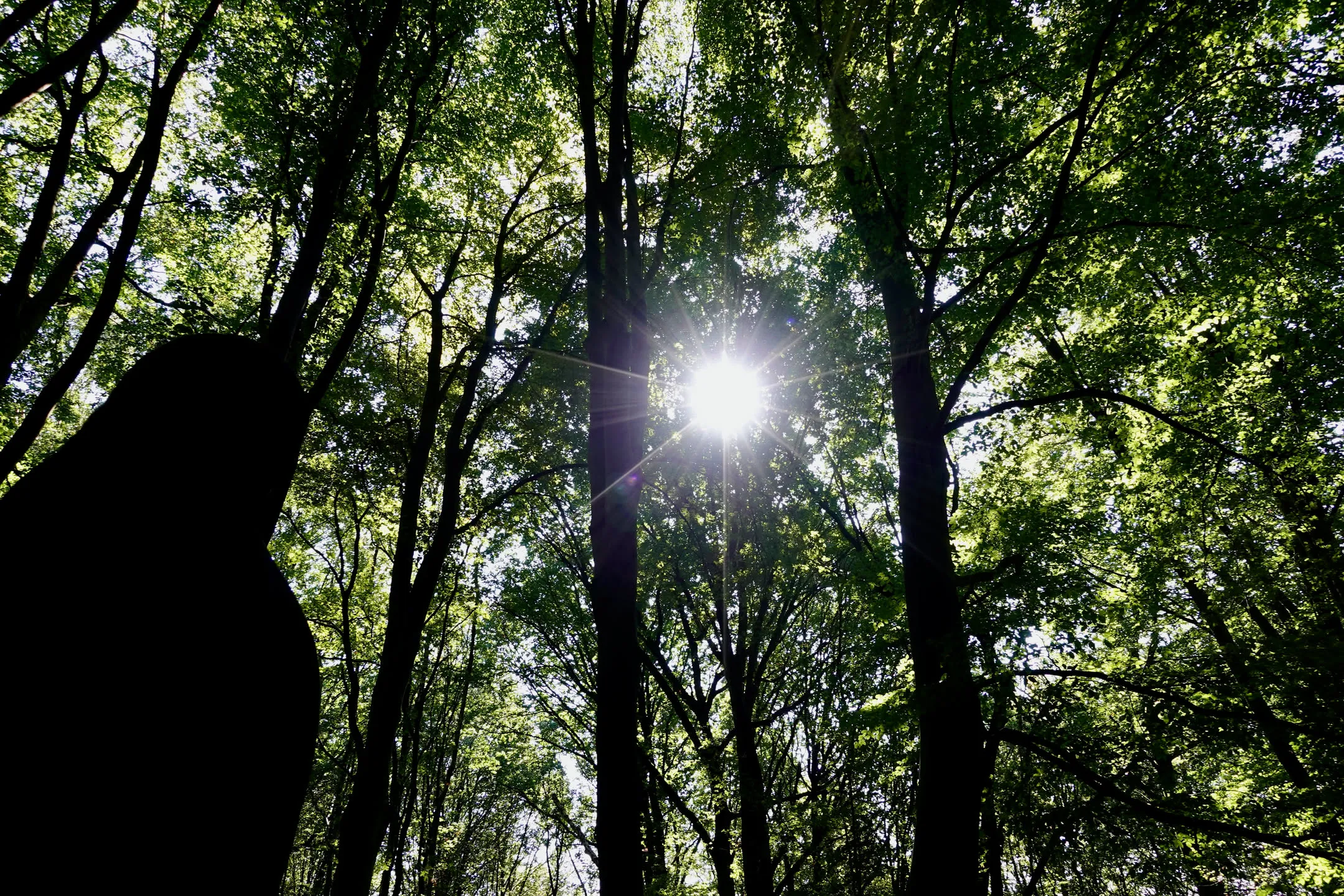
1️⃣ Large trees (canopy)
The highest layer is made up of the large trees that dominate the food forest. They provide shade, protect against strong winds, and form the system’s main structure. They play a crucial role in improving the microclimate, supporting moisture retention and reducing evaporation.
A few examples
| Common name | Latin name and description |
|---|---|
| Sweet chestnut | Castanea sativa A long-lived tree producing carbohydrate-rich chestnuts. |
| Walnut | Juglans regia Produces nuts rich in healthy oils, prefers deep, well-drained soils. |
| English oak | Quercus robur A majestic tree providing shade and contributing to the microclimate. |
| Small-leaved lime | Tilia cordata Valued for its pollinator-attracting flowers and its leaves for tea. |
| Sycamore maple | Acer pseudoplatanus Fast-growing, improves soil quality through its leaf litter. |
| Common ash | Fraxinus excelsior Used for its quality timber and medicinal properties. |
| Wild cherry | Prunus avium Produces tasty cherries, attracts many birds. |
| Field elm | Ulmus minor A hardy tree that stabilises soil and provides habitat for birds. |
| European beech | Fagus sylvatica Produces edible beechnuts and casts dense shade for the understorey. |
| Black alder | Alnus glutinosa Nitrogen-fixer, improves fertility in wet soils and attracts bees. |
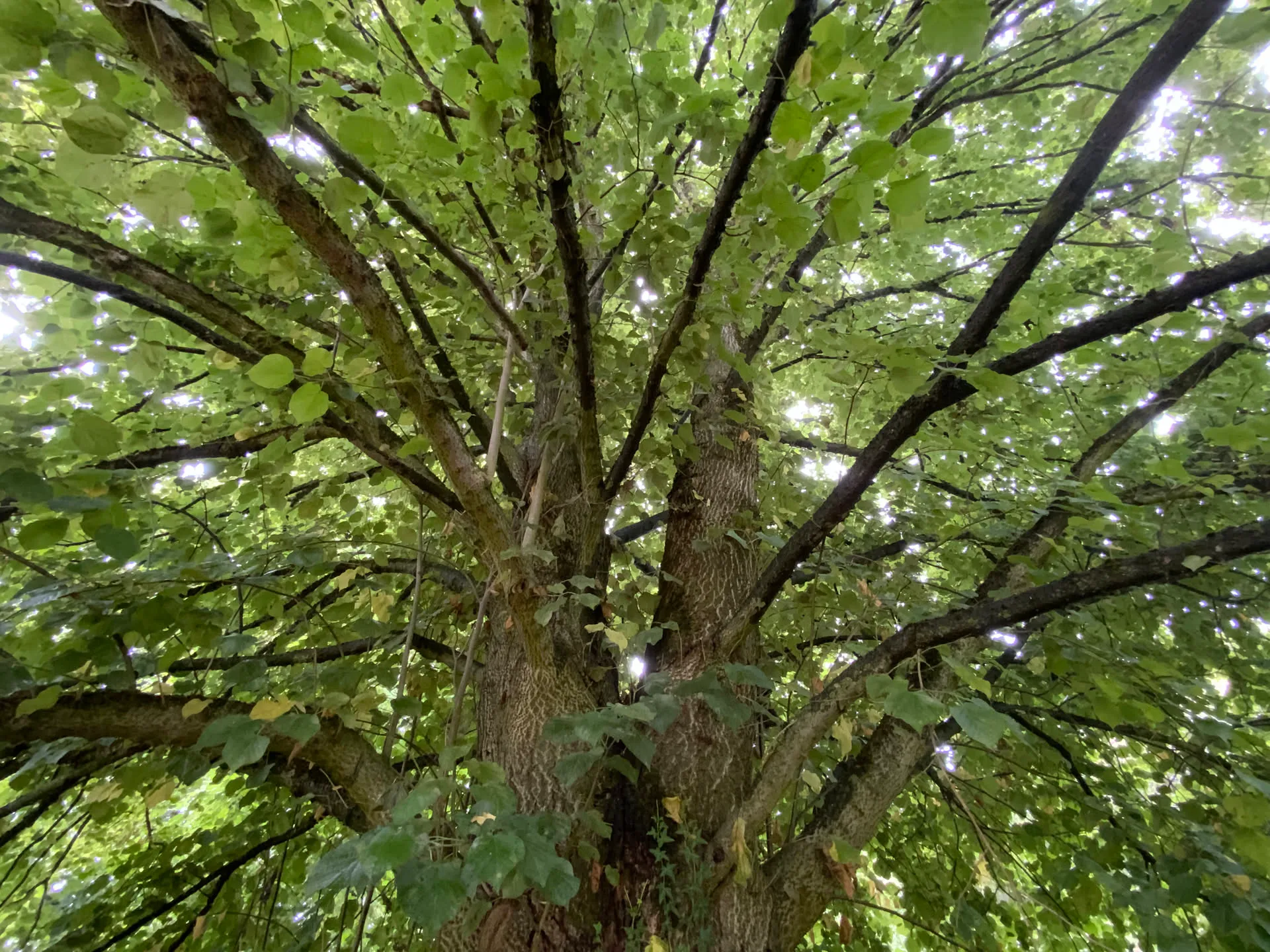
2️⃣ Small trees (sub-canopy)
Beneath the canopy are smaller trees that thrive in the partial shade of the taller ones. These trees often produce smaller fruit or nuts, but are just as valuable for their diversity.
A few examples
| Common name | Latin name and description |
|---|---|
| Apple | Malus domestica Produces versatile apples, suited to countless culinary uses. |
| Cherry | Prunus avium Produces tasty cherries that also attract birds. |
| Pear | Pyrus communis Produces juicy pears, well suited to temperate climates. |
| Plum | Prunus domestica Produces sweet plums, ideal for jam and fresh eating. |
| Medlar | Mespilus germanica A hardy tree producing medlars, fruit with a unique flavour once bletted. |
| Quince | Cydonia oblonga Produces quinces, used in jelly or as a side to savoury dishes. |
| Peach | Prunus persica Produces sweet, juicy peaches, much loved in summer. |
| Hazel | Corylus avellana Produces nutrient-rich hazelnuts, also useful for attracting squirrels. |
| Canadian serviceberry | Amelanchier canadensis Produces small sweet berries, eaten fresh or made into jam. |
| Rowan | Sorbus aucuparia Produces berries prized by birds and supports local biodiversity. |
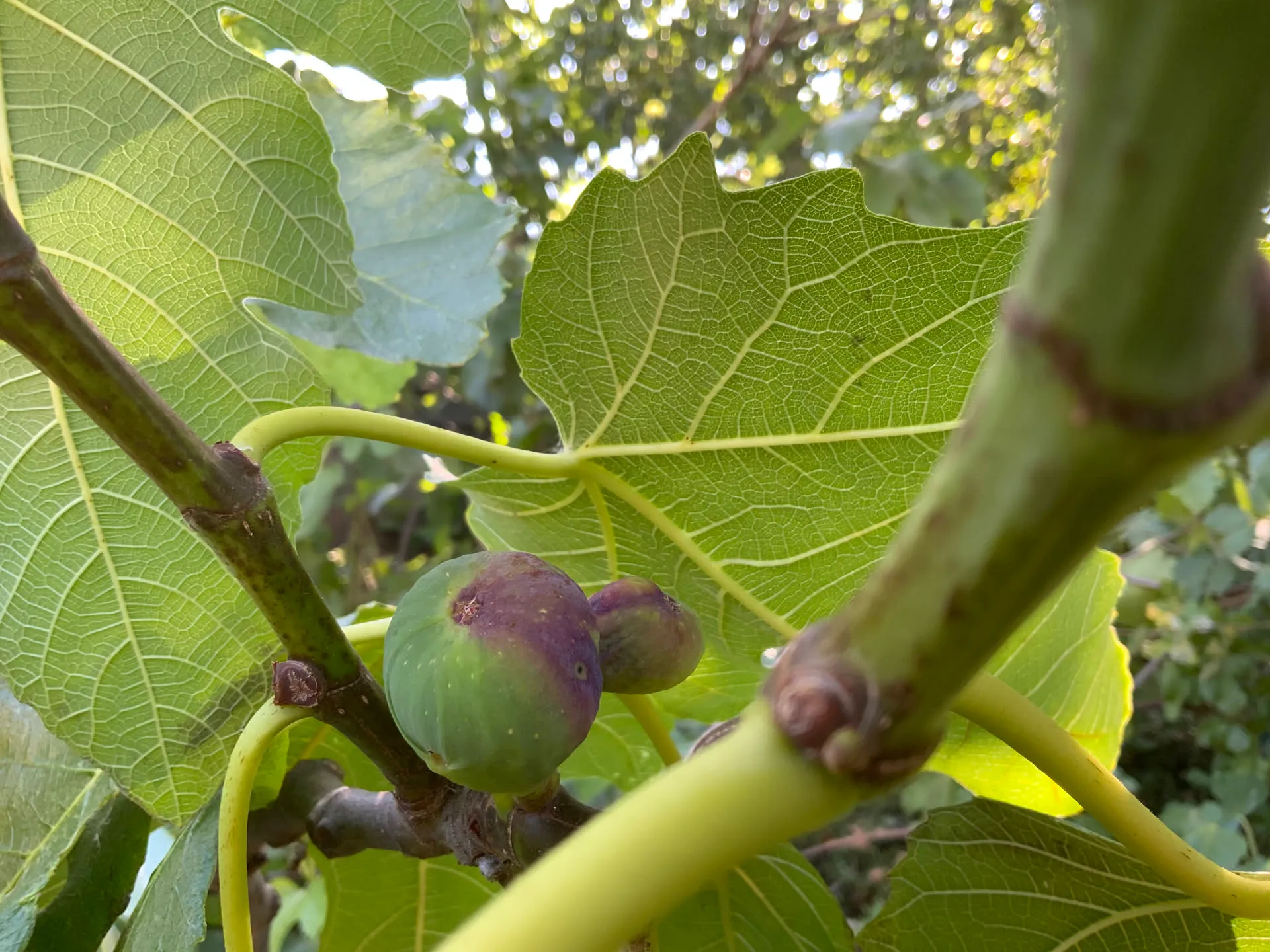
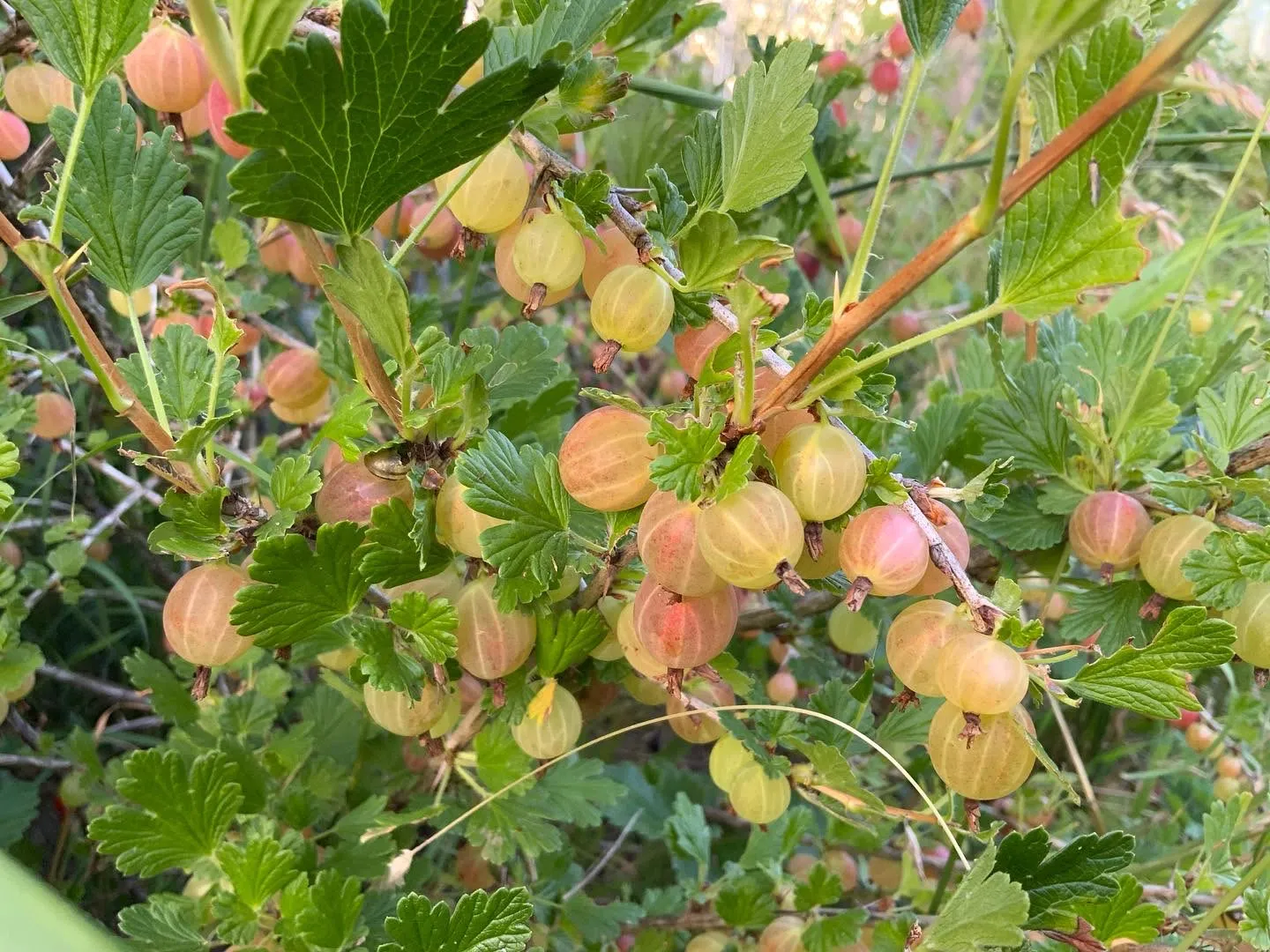
3️⃣ Shrubs
The shrub layer is made up of small bushes that can produce fruit, spices, or medicinal plants. This layer is essential for boosting productivity and providing a diverse harvest throughout the year.
A few examples
| Common name | Latin name and description |
|---|---|
| Blackcurrant | Ribes nigrum A hardy shrub producing vitamin-C-rich berries, ideal for jams and syrups. |
| Aronia | Aronia melanocarpa Produces antioxidant-rich berries, attracts pollinators and resists disease. |
| Redcurrant | Ribes rubrum Produces clusters of red berries, rich in vitamin C, used in jam. |
| Raspberry | Rubus idaeus Produces tasty raspberries, excellent fresh or made into jam. |
| Elderberry | Sambucus nigra A hardy shrub; its berries and flowers are used in syrup and traditional medicine. |
| Sea buckthorn | Hippophae rhamnoides Produces berries very rich in vitamin C, often used for juice and jam. |
| Honeyberry | Lonicera caerulea Produces sweet, juicy berries, enjoyed fresh or in jam. |
| Cornelian cherry | Cornus mas Produces edible berries, often turned into jelly or jam. |
| Bilberry | Vaccinium myrtillus Produces tasty bilberries, rich in antioxidants and prized in desserts. |
| Purple-leaved hazel | Corylus maxima Produces nutritious hazelnuts, its purple leaves adding an aesthetic touch. |
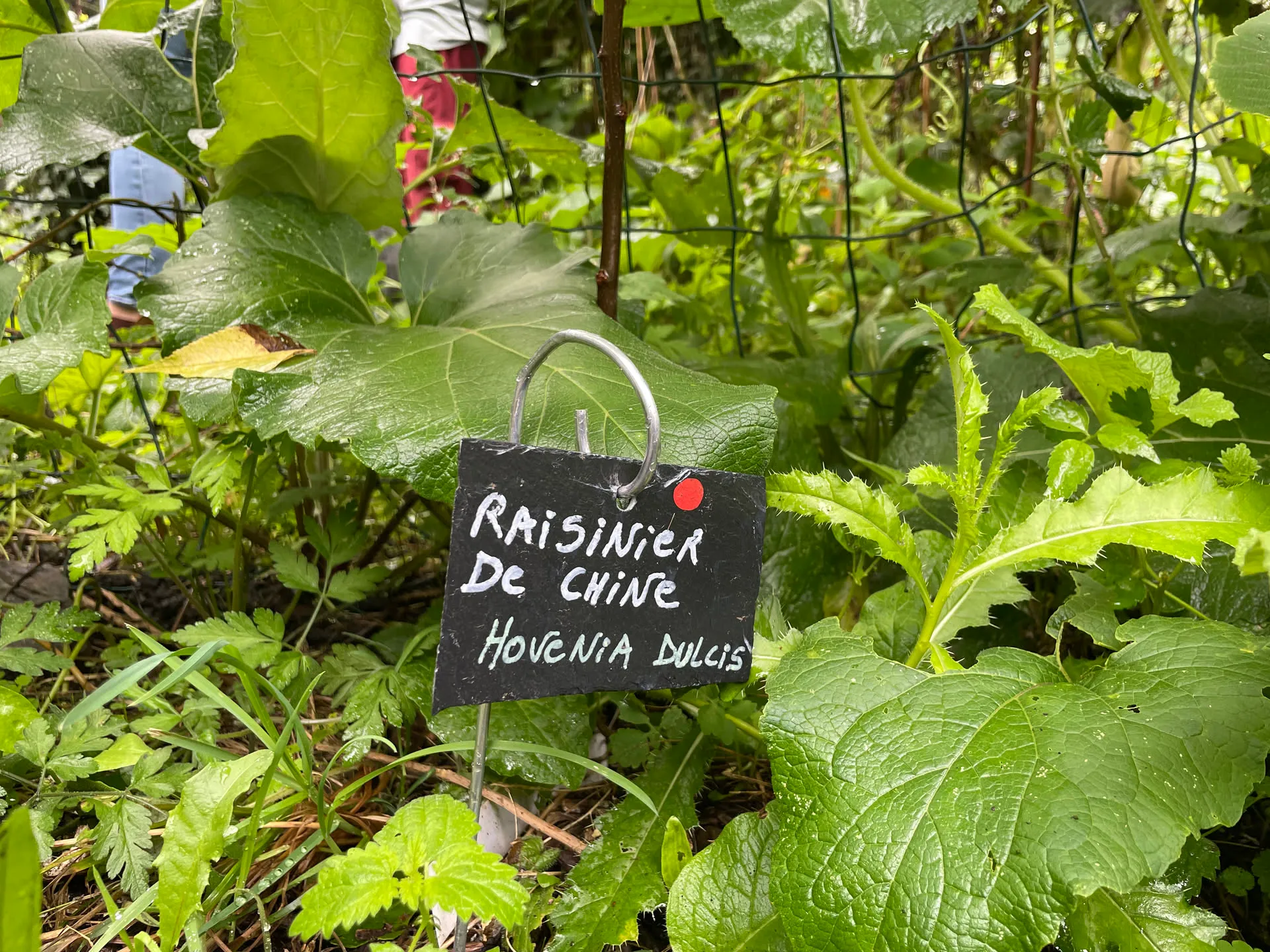
4️⃣ Herbaceous plants
Herbaceous plants sit at ground level and include both perennial and annual varieties. This layer is essential for filling empty spaces, protecting the soil and offering a quick harvest.
A few examples
| Common name | Latin name and description |
|---|---|
| Nettle | Urtica dioica A nutritious plant, useful as a liquid feed to strengthen plants, eaten in soup or tea. |
| Chives | Allium schoenoprasum Easy to grow, repels some pests, a kitchen staple. |
| Lemon balm | Melissa officinalis A medicinal plant with fragrant leaves, used for its calming properties. |
| Comfrey | Symphytum officinalis A perennial, used as mulch and to enrich the soil with nutrients. |
| Chamomile | Matricaria chamomilla Used as an infusion for its soothing, medicinal properties. |
| Peppermint | Mentha piperita An aromatic plant, used in cooking and for its digestive benefits. |
| Parsley | Petroselinum crispum var. tuberosum An essential kitchen herb, rich in vitamins. |
| Dill | Anethum graveolens Used to flavour dishes and attracts beneficial insects. |
| Sorrel | Rumex acetosa A perennial, adding a tangy note to salads and soups. |
| Salad burnet | Sanguisorba minor Edible leaves with a cucumber-like taste, used in salads. |
5️⃣ Ground cover plants
Ground cover plants form a living carpet, preventing erosion and reducing weed growth. They help retain soil moisture and improve fertility.
A few examples
- Wild strawberry (Fragaria vesca): Provides small, tasty strawberries while efficiently covering the ground. Wild strawberries are also popular with beneficial insects.
- Ground ivy (Glechoma hederacea): Used for its ability to quickly cover large areas. Also known for its medicinal properties, notably as a tea for respiratory conditions.
6️⃣ Climbing plants
This layer makes use of verticality, through plants that climb up trees or support structures. They add a third dimension to the food forest and increase productivity per unit of area.
A few examples
| Common name | Latin name and description |
|---|---|
| Hardy kiwi | Actinidia arguta Perfectly suited to Wallonia’s climate, this hardy kiwi produces sweet fruit. |
| Grapevine | Vitis vinifera Produces tasty grapes while creating shade when grown on a pergola. |
| Hops | Humulus lupulus Used in brewing, also a medicinal plant that quickly covers supports. |
| Passionflower | Passiflora caerulea Spectacular flowers, valued for its fruit and calming properties. |
| Honeysuckle | Lonicera japonica Flowers abundantly, attracts pollinators, and adds an aesthetic touch. |
| Old man’s beard | Clematis vitalba Produces many flowers and is used to cover fences and trellises. |
| Runner bean | Phaseolus coccineus Produces edible beans and enriches the soil with nitrogen. |
| Chinese wisteria | Wisteria sinensis An ornamental plant producing beautiful, fragrant flower clusters. |
| Sweet pea | Lathyrus odoratus Flowers in summer with a pleasant scent, attracts bees and other pollinators. |
| Climbing rose | Rosa spp. Produces fragrant roses and vitamin-C-rich rose hips. |
7️⃣ Roots and rhizomes
This layer groups plants that develop edible or medicinal roots, making use of the food forest’s underground space. These plants are often robust and help aerate the soil.
A few examples
| Common name | Latin name and description |
|---|---|
| Jerusalem artichoke | Helianthus tuberosus Produces nutritious tubers and attracts pollinators with its large yellow flowers. |
| Horseradish | Armoracia rusticana A pungent root used as a condiment, good for digestion. |
| Comfrey | Symphytum officinale Used for its medicinal properties and as a green manure to enrich the soil. |
| Scorzonera | Scorzonera hispanica An edible root with a lightly sweet taste, often cooked as a root vegetable. |
| Oca | Oxalis tuberosa Produces edible tubers, rich in vitamin C, used in cooking. |
| Perennial leek | Allium ampeloprasum A perennial producing leeks usable year-round. |
| Wild carrot | Daucus carota An edible root, ancestor of the cultivated carrot, flowers to attract pollinators. |
| Sweet potato | Ipomoea batatas Produces sweet, nutrient-rich, energy-dense tubers. |
| Ginger | Zingiber officinale A root used for its medicinal properties and spicy flavour in cooking. |
| Wild garlic | Allium ursinum Edible, fragrant leaves and bulbs, prized in cooking for their garlicky flavour. |
Choosing plants for each layer
When choosing plants for each layer of your food forest, it’s essential to weigh several criteria to ensure your ecosystem succeeds.
Here’s specific guidance for each layer:
1. Large trees (canopy): Choose trees suited to your climate and soil. Trees like chestnut or walnut are ideal for deep, well-drained soils. Also consider food production — nuts or fruit — and their ability to improve the microclimate.
2. Small trees (sub-canopy): For this layer, favour species that tolerate some shade, like apple or plum. Diversify varieties to spread the harvest across the season. These trees often produce fruit and contribute to biodiversity.
3. Shrubs: Select shrubs that offer fruit or spices. Species like blackcurrant, aronia or elderberry are worthwhile — productive and disease-resistant. Shrubs are also useful for attracting pollinators and birds.
4. Herbaceous plants: Choose herbaceous plants for their ability to protect the soil and for their many uses (culinary, medicinal). For example, nettle is very useful for enriching the soil, while chives and lemon balm are excellent for cooking and tea.
5. Ground cover plants: Choose plants that cover the ground effectively, keeping weeds from spreading. Wild strawberry and white clover are good choices. They help retain moisture and improve soil fertility.
6. Climbing plants: Climbing plants should be chosen for their ability to make use of vertical space. Kiwi and grapevine are perfect for creating a productive vertical dimension. These plants can climb trees or structures and add harvest diversity.
7. Roots and rhizomes: Plants in this layer, like Jerusalem artichoke or ginger, should be chosen for their ability to adapt to your soil. Favour species that can enrich the soil or provide regular harvests. Root plants are also essential for aerating the soil and improving its structure.
Common design mistakes
When designing a food forest, certain mistakes come up again and again and can undermine the ecosystem’s success. Here are some of the most common mistakes for each layer.
Large trees (canopy)
| Common mistake | Explanation |
|---|---|
| Not enough space for the trees | Large trees need plenty of light and room to spread. |
| Planting too densely | Excessive density causes competition for light and nutrients. |
Small trees (sub-canopy)
| Common mistake | Explanation |
|---|---|
| Choosing shade-intolerant trees | Small trees need to tolerate reduced light conditions. |
| Planting without considering light needs | Trees under the canopy need specific light conditions. |
Shrubs
| Common mistake | Explanation |
|---|---|
| Lack of diversity | Plant several species to ensure a year-round harvest and minimise disease. |
| Poor fit with the ecosystem | Some shrubs may not integrate well without careful attention to their needs. |
Herbaceous plants
| Common mistake | Explanation |
|---|---|
| Not covering the soil enough | Leaving empty spaces encourages weeds to spread. |
| Using unsuited plants | Some herbaceous plants aren’t hardy enough to hold the space long-term. |
Ground cover plants
| Common mistake | Explanation |
|---|---|
| Planting ground cover unsuited to shade | Choose plants suited to the available light to ensure success. |
| Neglecting initial care | Early on, support is needed to help ground cover plants establish. |
Climbing plants
| Common mistake | Explanation |
|---|---|
| No support provided | Climbing plants need structures to climb and develop. |
| Choosing invasive climbers | Some climbing plants can overrun other layers if left unchecked. |
Roots and rhizomes
| Common mistake | Explanation |
|---|---|
| Planting invasive species | Some root plants can invade the garden and compete with others. |
| Lack of growth control | Some species spread quickly and need management to avoid becoming invasive. |
Conclusion
A food forest, with its seven layers, is a nature-inspired system that can provide an incredible diversity of resources. By selecting species suited to your region, it’s possible to create a resilient, productive ecosystem that supports biodiversity.
Each layer contributes to the richness of the whole, allowing you to harvest fruit, vegetables, spices and other resources throughout the year, while supporting pollinators and other forms of life.
By establishing a food forest, you take part in building a more resilient community and restoring local ecosystems, all while enjoying delicious, diverse harvests.
So, shall we plant?
Knowing the seven layers is the starting point. The real work begins when you have to assemble them on your ground: your soil, your aspect, your climate, what you want to eat.
If you want to learn to do it yourself, that’s the whole point of the Food Forest Designer course — a year of fieldwork, design and practice. If you’d rather we designed it with you, let’s talk about your project. And to choose your species layer by layer, our plant database is open to everyone.
To go further
Article published by Semisto on 7 October 2024
Co-authors
Michael Hulet
Header photo
Une Figue dans le Poirier (Vosges)