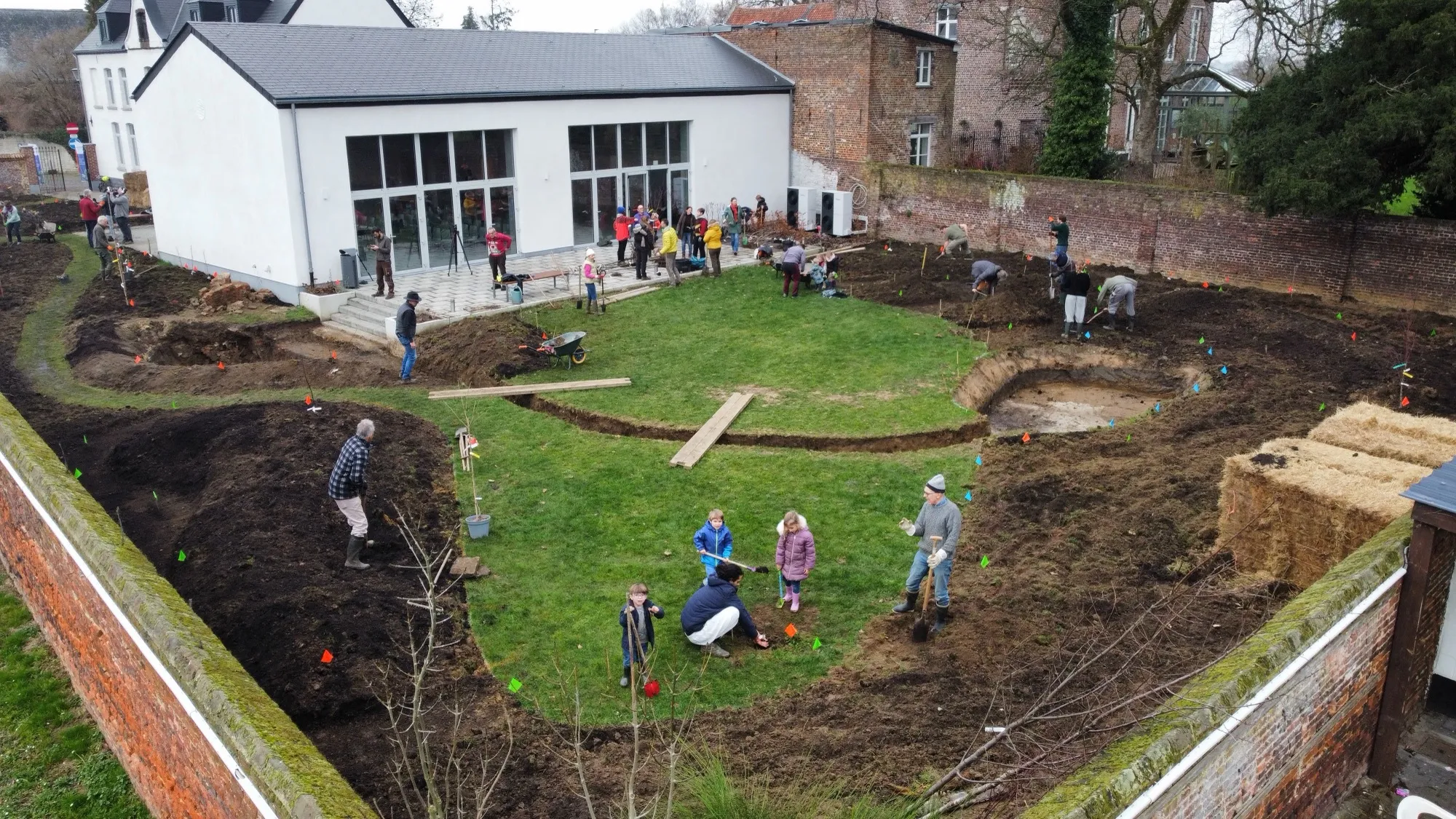
Consolidation and scaling up
For the regeneration of territories through food forests — Semisto ASBL, Wallonia + Brussels.
Opening words
2025, the year we scaled up
What if every street, every neighbourhood, every village in Europe became a food forest?
This founding question — in 2025 we began making it real. The year was one of consolidation, with a tighter operational core, a mature curriculum and revenue doubled — while returning to break-even.
Three engines drove the momentum: the Academy, now our top revenue contributor, the Design Labs, especially active on the ground, and community life equipped with sturdier governance tools.
Our course stays constant: prove it locally, anchor it over time, then make the model replicable across Europe. Think in decades, act day to day.
— The Semisto collective
01 · The year in brief
A year of consolidation
The association — 18 full members and 9 supporters, driven by the tightening of its operational core to 8 people at the end of 2025 — grew its activity strongly, mainly on design projects.
Our revenue rose from ~€77,600 (2024) to €145,030, while returning to break-even (a positive result of +€12,674). Net of client re-invoicing, value-added revenue stands at around €128,900.
Three engines drive the momentum: the Academy, now the top revenue contributor with a mature curriculum; the Design Labs, close behind; and community life finally equipped to decide and coordinate.
€145,030
Revenue · ×1.87 vs 2024
+€12,674
Result · back to break-even
108
Course participants · 256 since the start
47%
Of hours volunteered
2,523 h
Worked in 2025 · 4,800 h since the start
Nearly half volunteered (~1,198 h). They break down across design (456 h), implementation (325 h), project management (282 h), communication (267 h), planting (199 h) and courses (193 h) — not counting ~21,500 km driven to reach the field.
02 · Semisto in figures
2025 in key figures
Finances
- Revenue
- €145,030
- of which zero-margin re-invoicing
- €16,165
- Expenses
- €132,356
- Result
- +€12,674
Courses
- Courses run
- 7
- Training days
- 39
- Participants
- 108 · 256 cumulative
- 2025-2026 curriculum
- full · 15/15
Activity and fieldwork
- Internal-calendar events
- 108
- Design projects
- 8 active · 7 completed
- Edible species propagated
- 418
- Hours worked
- 2,523 h
Community and reach
- Members · 2025 AGM
- 18 full · 9 supporters
- Operational core · Jan 2026
- 8 members
- Social posts
- 99 · 45,200+ impr.
- Web audience (Google)
- 2,598 clicks
Sources: accounting and Terranova modules (Academy, Design, Nursery); Semisto calendar; Buffer; Google Search Console.
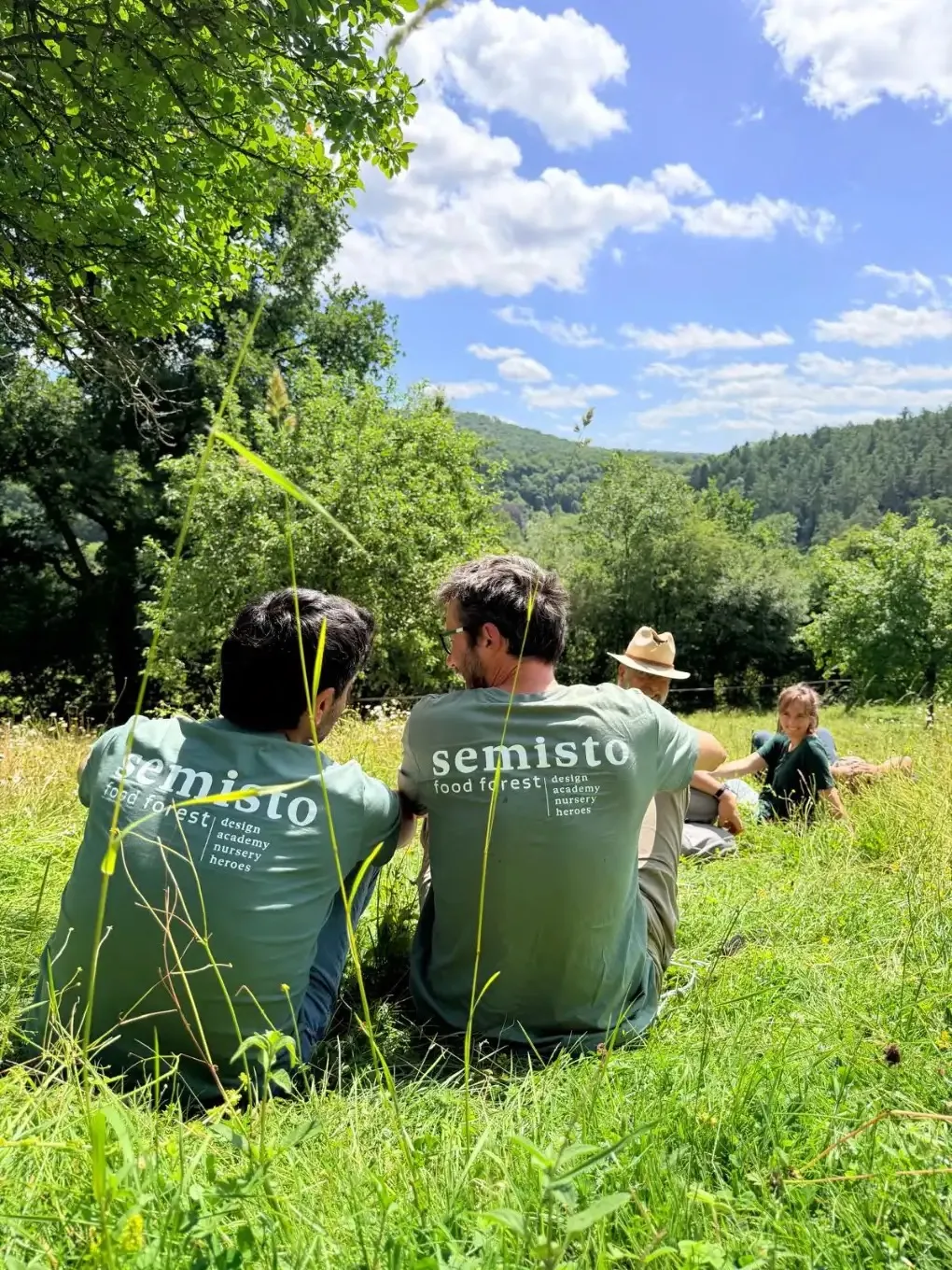
03 · Governance and community life
Building tools to decide together
2025 was a year of structuring: clarifying who decides what, and how, to move forward calmly, together.
The association now relies on holacracy principles and an organisation of poles and cross-cutting guilds. A decision-support tool — first on Notion, then on our new Terranova platform — implements the advice process.
Legally, we prepared a General Assembly with a statutes revision and launched a call for directors in June 2025. Michael was then joined by François, Mohammad and Eric.
The core team — Michael, Eric, François, Mohammad, Julie, Antoine, Christophe, Laurence and the associated contributors — also invested in its human dynamics. The main challenge acknowledged: better sharing the workload and coordination, and improving internal communication.
Board of directors
- Eric Luyckx
- Mohammad Seyed
- Michael Hulet
- François Delforge
- Gaëlle de Fays
Governance WG → Board, Sept. 2025
Cross-cutting guilds
The advice process
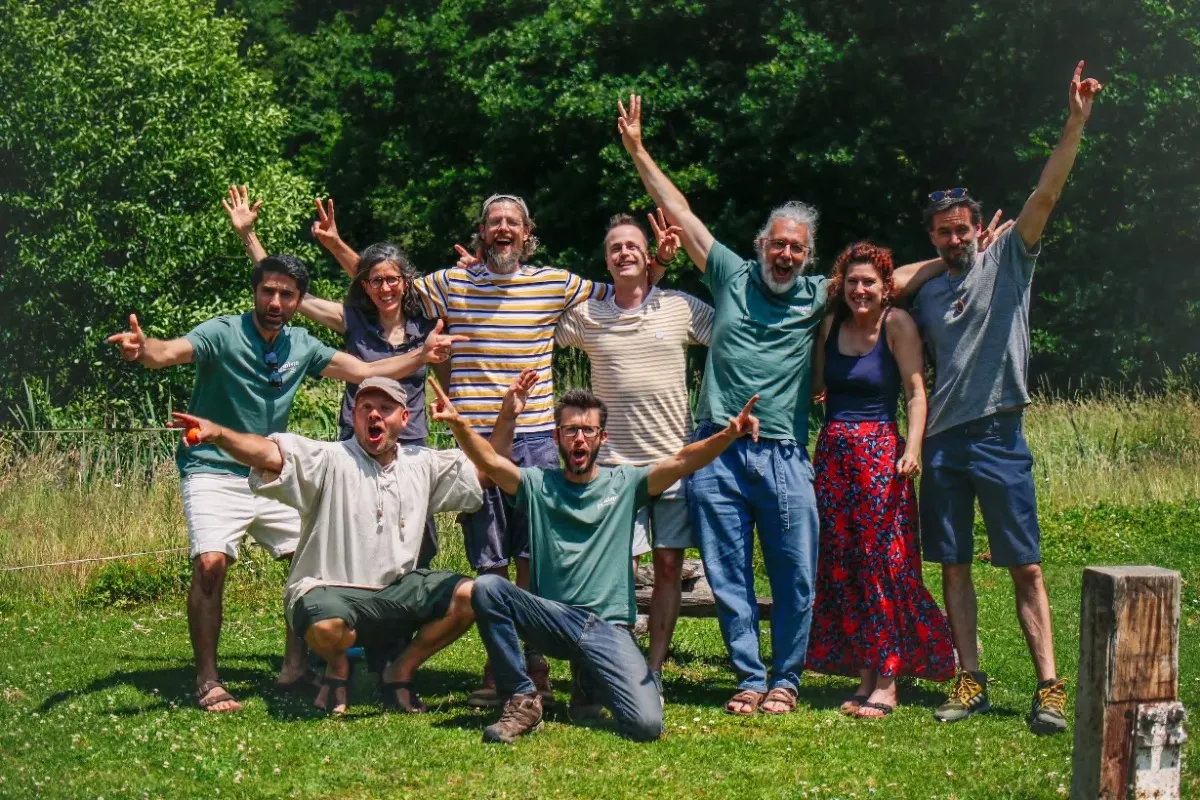
04 · Academy — courses
An Academy come of age
7 courses delivered in 2025 (on top of the second curriculum closed in May), for 108 participants and 39 days — from the long curriculum to hands-on practice days. And, a sign of the pole's health: no activity had to be cancelled for lack of enrolments.
7
Courses in 2025
39
Days delivered
108
Participants
15/15
Full curriculum
The highlight
Food forest designer 2025-2026
Launched in October, the 3rd curriculum filled up as soon as it opened: 15 students, the maximum capacity. The cohort has just completed its 30 days of training. The first cohort to reach full — a strong sign of our growing reputation.
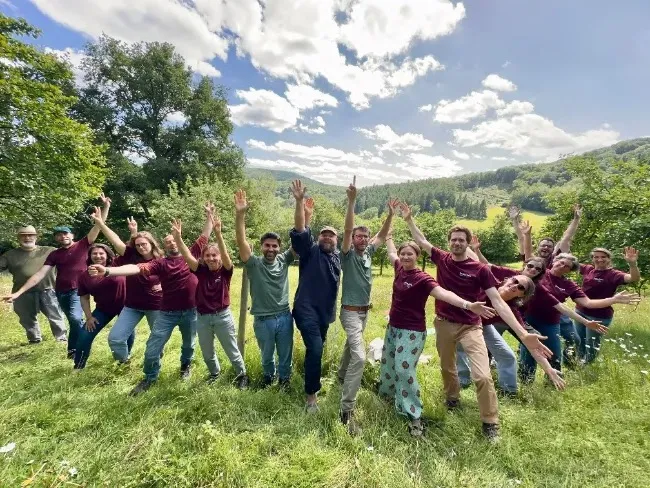
04 · The 2025 catalogue
Three tracks, one standard
The long curriculum
~30 days to become a food forest designer
The « Focus » weeks
Five intensive days on your own food forest
The day courses
Pruning, grafting, syntropy, ponds — one to two days of practice
| Period | Activity | Type | Days | Part. | Location |
|---|---|---|---|---|---|
| → May 2025 | 2024-2025 Curriculum | Curriculum | 30 | 12 | multi-site |
| winter 2024-2025 | Syntropic agriculture in temperate climates | Theory + practice | 2 | 16 | Agrécolibre (Ittre) |
| March 2025 | Focus on my food forest | Focus | 5 | 4 | Les 4 Sources (Yvoir) |
| March 2025 | Fruit-tree pruning | Practice | 1 | 20 | Queue de Pelle (Chaumont-G.) |
| March 2025 | Fruit-tree pruning | Practice | 1 | 19 | Les 4 Sources (Yvoir) |
| Apr. 2025 | Grafting & food-forest visit | Practice | 1 | 16 | Arbuste Fruitier (Vaux-s-Sûre) |
| Oct. 2025 → June 2026 | 2025-2026 Curriculum | Curriculum | 30 | 15 | multi-site |
| Nov. 2025 | Focus on my food forest | Focus | 5 | 6 | Les 4 Sources (Yvoir) |
Our strategy comes down to three words — quality, affordability, viability — with a structuring goal of ~30 curriculum days + ~30 days of short modules a year. An editorial effort (syllabus, fact sheets) has begun to capture the curriculum's knowledge.
04 · Student voices
What they take away
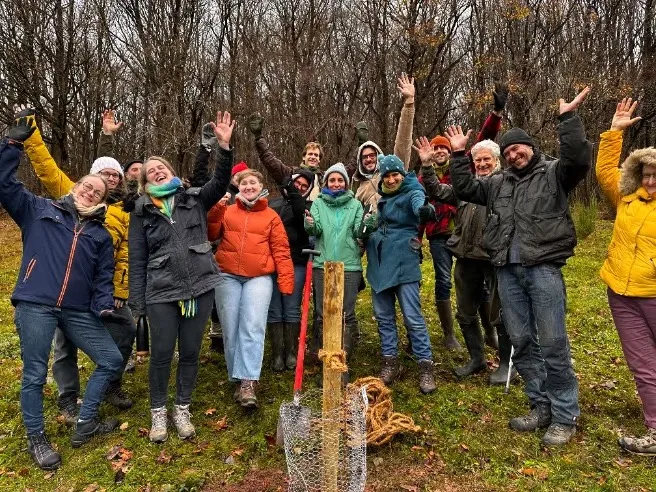
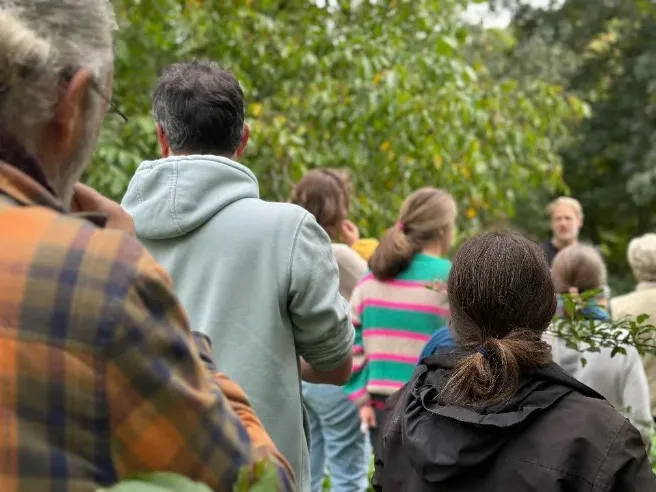
Beyond the skills, what a cohort really carries away: a community.
“They're passionate people who share passionately. It's just beautiful! Thank you to them all.
— Julien
“You made us become a real family.
— Pauline
“This course really gave me a lot of good in a very difficult time… The trainers and participants are wonderful. So much gratitude!
— Laureline
05 · Design Labs — design studio
Second revenue contributor
The Design Labs remains an economic engine for Semisto: €67,459 in revenue in 2025, the second contributor, just behind courses. The pole designed food forests for private clients, a first municipality (Beauvechain) and a first company (the Queen Elisabeth Music Chapel) — with genuine professionalisation of the practice, and over 2,000 cumulative hours across the design team.
€67,459
Pole revenue
8
Active design projects · 7 completed since the start
2,000 h+
Invested by the designers
Projects of the year
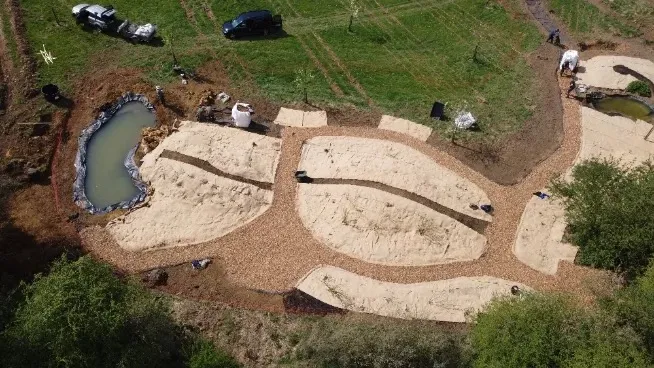
Anhée
Implementing a food forest with two ponds.
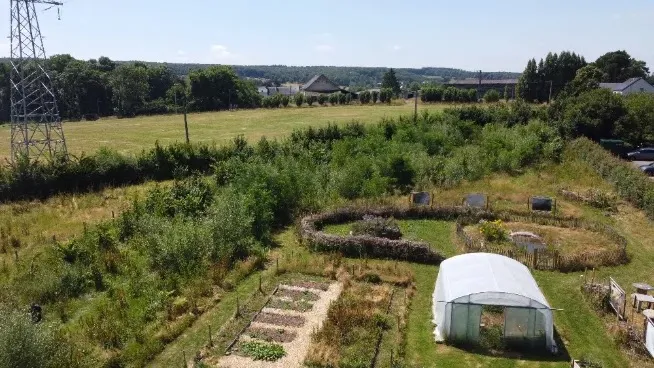
Jardins d'ici — Naninne
Managing the AFIs and maintaining the « Semisto Experience » educational food forest.
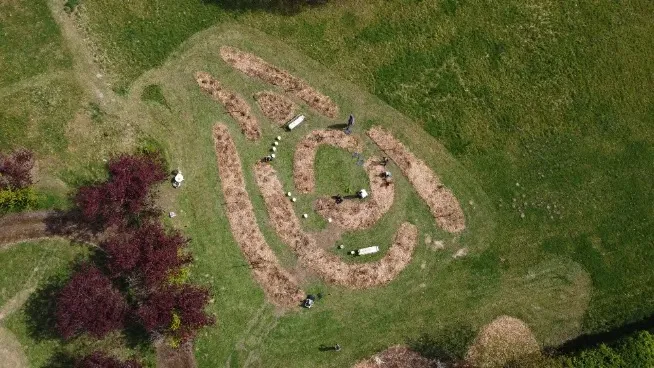
Queen Elisabeth Music Chapel
A food forest supporting the birds dear to the Queen.
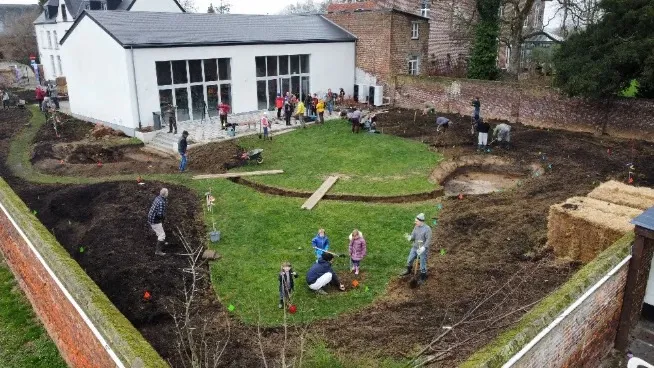
Beauvechain
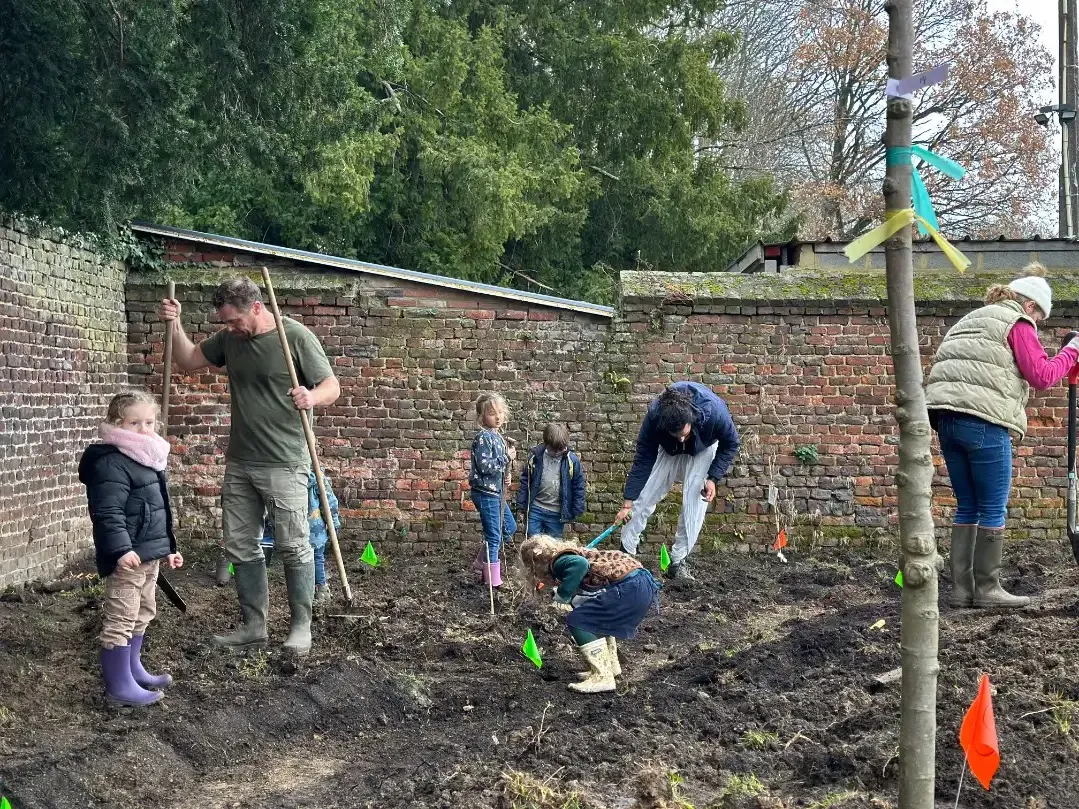
Co-designing and planting the upper layers of our first municipal food forest.
And other private projects across Wallonia — Durnal, Suarlée, Court-Saint-Étienne, Porcheresse.
06 · Ecological impact
Edible diversity
Our impact is measured first in living diversity, not in square metres.
Where conventional farming grows a handful of species, a single one of our food forests brings together several dozen. In 2025, nearly 200 distinct edible species (195 species, 127 genera) were used — from fruit trees to ground covers, by way of nitrogen fixers and aquatic plants.
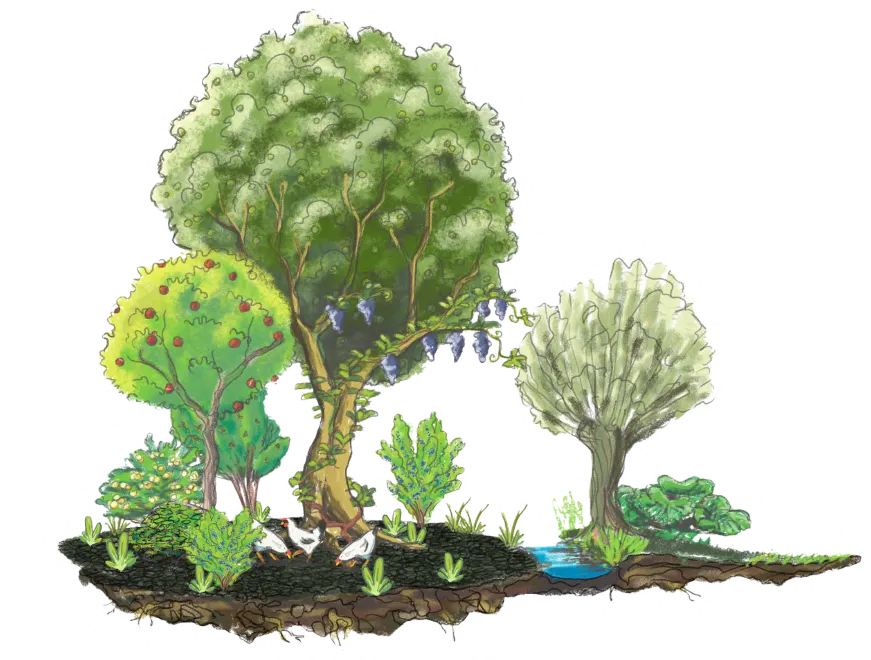
One palette, all layers combined
195
edible species
127
botanical genera
Each food forest brings together 45 to 80 complementary species. It's this density of diversity — rather than a monoculture — that gives the system its resilience and productivity.
Upstream, at the nursery
418
edible species propagated · 257 genera · 409 varieties, across the 8 layers.
Edibles suited to future climate extremes
07 · Nursery
Towards a nursery-school
In 2025 the nursery moved from a personal project run by François to a structured pole. Orders for low-layer plants exploded — from around €1,000 (2024) to over €9,000 in early 2025, 25% of it as donation or exchange.
€9,000+
Low-layer plant orders · ×9 vs 2024
7
Partner nurseries
400+
Species in the catalogue
Three structuring workstreams
- 1
Studying production expansion
The Saint-Servais site is reaching saturation. After a year of exploration with Les 4 Sources, François is refocusing the expansion on Namur and its neighbours.
- 2
A network of partner nurseries
With a 10% mark-up for Semisto. On several projects, the pole pools orders to save time and test these collaborations.
- 3
Diversifying the plant catalogue
More than 400 different species, serving design, propagation and transmission.
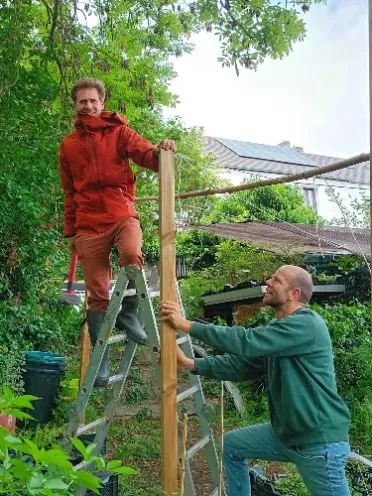
A place to reconnect with the Living
The vision refined at the « Nursery Pole Day »: a place to reconnect with plants and with oneself, open one day a week, blending horticultural transmission and human support — with, on the horizon, a « Semisto incubator » for those who want to make it their trade.
08 · Events and fieldwork
108 gatherings, a collective life
The 2025 internal calendar counts 108 entries: pole and governance meetings, Design Days, Semisto Days, AGM, worksites, plantings, visits, partnerships and courses.
~23
Course events
~20
Design-studio days
2 + 2
Design Days · Semisto Days
September 2025
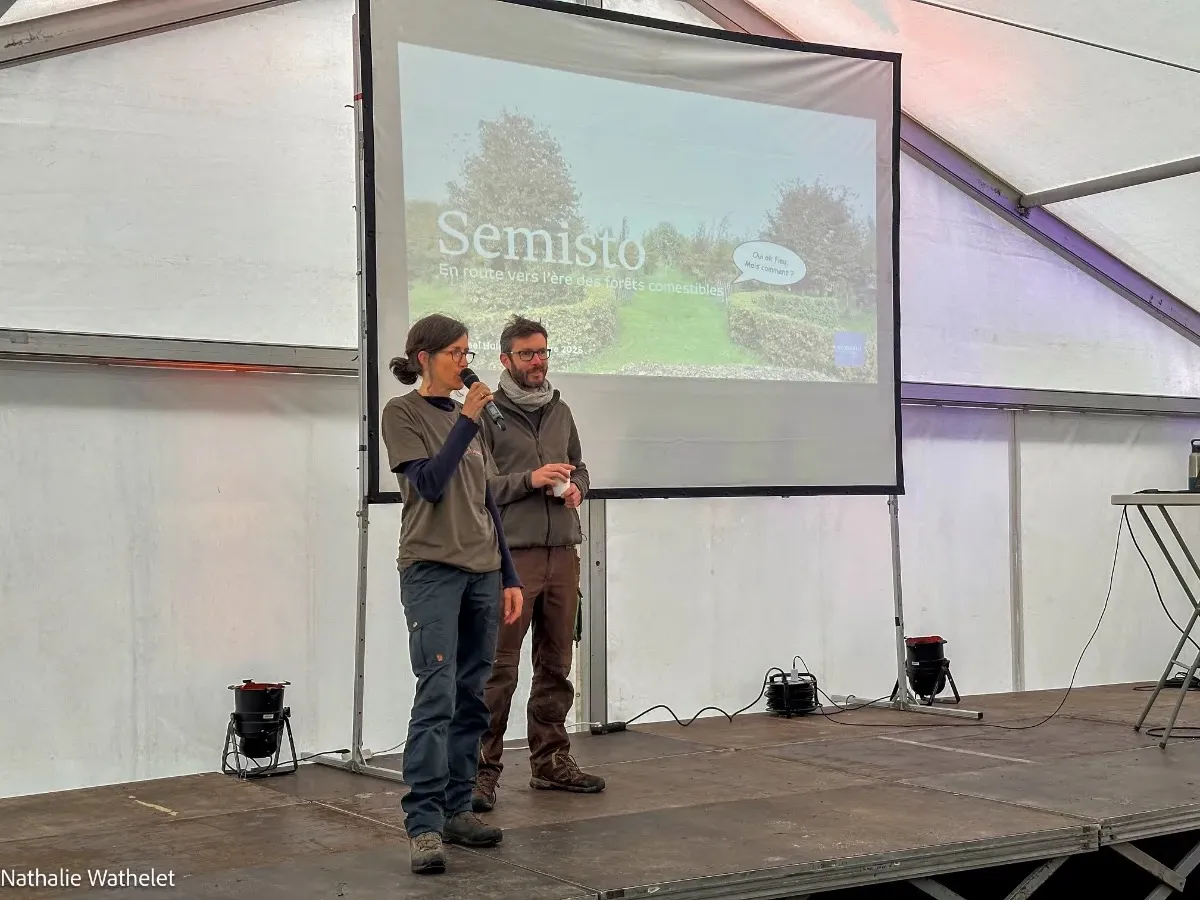
Food Forest Festival
For its first edition, the Festival brought together around fifty participating sites. Semisto was represented in the organisation by Anne and François, by opening Jardins d'ici and the Yggdrasil nursery, then by a large stand throughout the closing weekend at Vaux-sur-Sûre. The event laid the groundwork for a more ambitious future edition.
Partnerships and representation
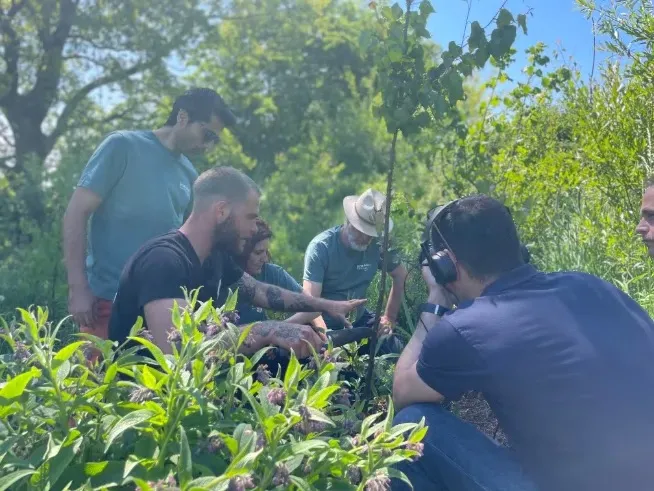
RTBF capsule « Le Monde de Demain »
Filmed in Corentin Hennuy's food forest; also presented to the Permanant network.
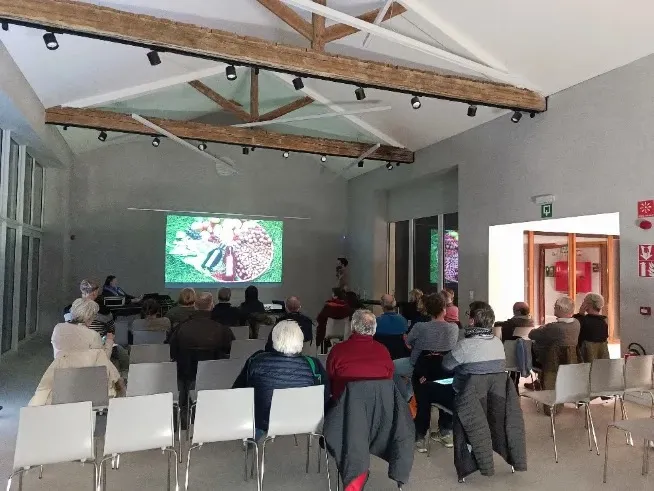
BiodiverCité conference · Beauvechain
Our municipal food-forest project began with a conference given in January 2025, as part of the BiodiverCité programme.
09 · Communication and digital presence
Educational content, an audience engine
Social media
99
Posts
45.2k
Impressions
~1,280
Interactions
Most-followed content
- Worksite with the residents of Beauvechain~4,100
- A municipal food forest comes to life~4,100
- The 3rd Designer cohort~3,100
- « Turning all of Europe into a food forest »top engagement
Website — semisto.org
2,598
Google clicks
57.6k
Impressions
4.5%
Avg CTR
Where visitors come from
then Switzerland · Canada · Luxembourg — a francophone BE-FR core.
Flagship content
« The 7 layers of the food forest »
451 clicks · ~19,000 impressions — the most-viewed content, ahead of the homepage (758 clicks). Educational content is a real acquisition engine.
→ Read our articlesSources: Buffer (2025 posts) · Google Search Console (semisto.org, 20/02–31/12/2025). Instagram reach and January–mid-February are outside the data window.
10 · Financial results
Scaling up, at break-even
Revenue by pole
+€12,674
Result for the year
~€129k
Value-added revenue
| By pole | Revenue | Expenses | Balance |
|---|---|---|---|
| Design Labs | 67,459 | 70,055 | −2,596 |
| Academy | 74,023 | 54,746 | +19,277 |
| Transversal | 3,548 | 7,555 | — |
Main expense items
Reading the year
Part of the growth corresponds to client re-invoicing (plants, materials) advanced then re-invoiced at zero margin: in 2025, €16,165 already re-invoiced inflate revenue and expenses identically, with no effect on the balance. It's the « value-added » perimeter (~€129k) to keep in mind when comparing years.
The Academy pole posts a surplus (+€19,277) that supports operations; the Design Labs, largest by volume, shows a slight deficit that is partly optical (costs re-invoiced at zero margin). A €50,000 loan (2024) acts as a cash buffer; repayment will begin in January 2027.
11 · Outlook 2026
Think in decades, act day to day
A constellation of web apps serving Semisto
Terranova
Project management.
Semisto Finance
Administrative and accounting management.
My Semisto
Access to info, plant database and directory.
Also on the roadmap
Les Semos — our internal contribution currency
A new version of the website
Les 4 Sources classroom — automatic transcription of sessions
Friends of Semisto Fund — tax-deductible donations via the King Baudouin Foundation
Training-centre accreditation — 0% VAT, under study
Making the poles profitable — and paying for coordination
Corporate patronage — active search
Rolling out the nursery-school — and structuring the « Implementation » pole
Our course stays constant: prove it locally, anchor it over time, then make the model replicable across Europe.
Thank you
Thank you to the team, the trainers, designers, interns and volunteers, the partner nurseries, the patrons and the clients who, through their trust, advance the web of food forests.
And a very special thank-you to the 15 students of the 2025-2026 cohort!
On the way to the age of food forests