Semisto Experience
Twenty ares of food forest, free and open every day, at Les Jardins d'ici in Naninne. A place we've been building with many hands since 2023 — and there's still room for yours.
Most of the food forests we design live behind a fence. Anyone can walk into this one
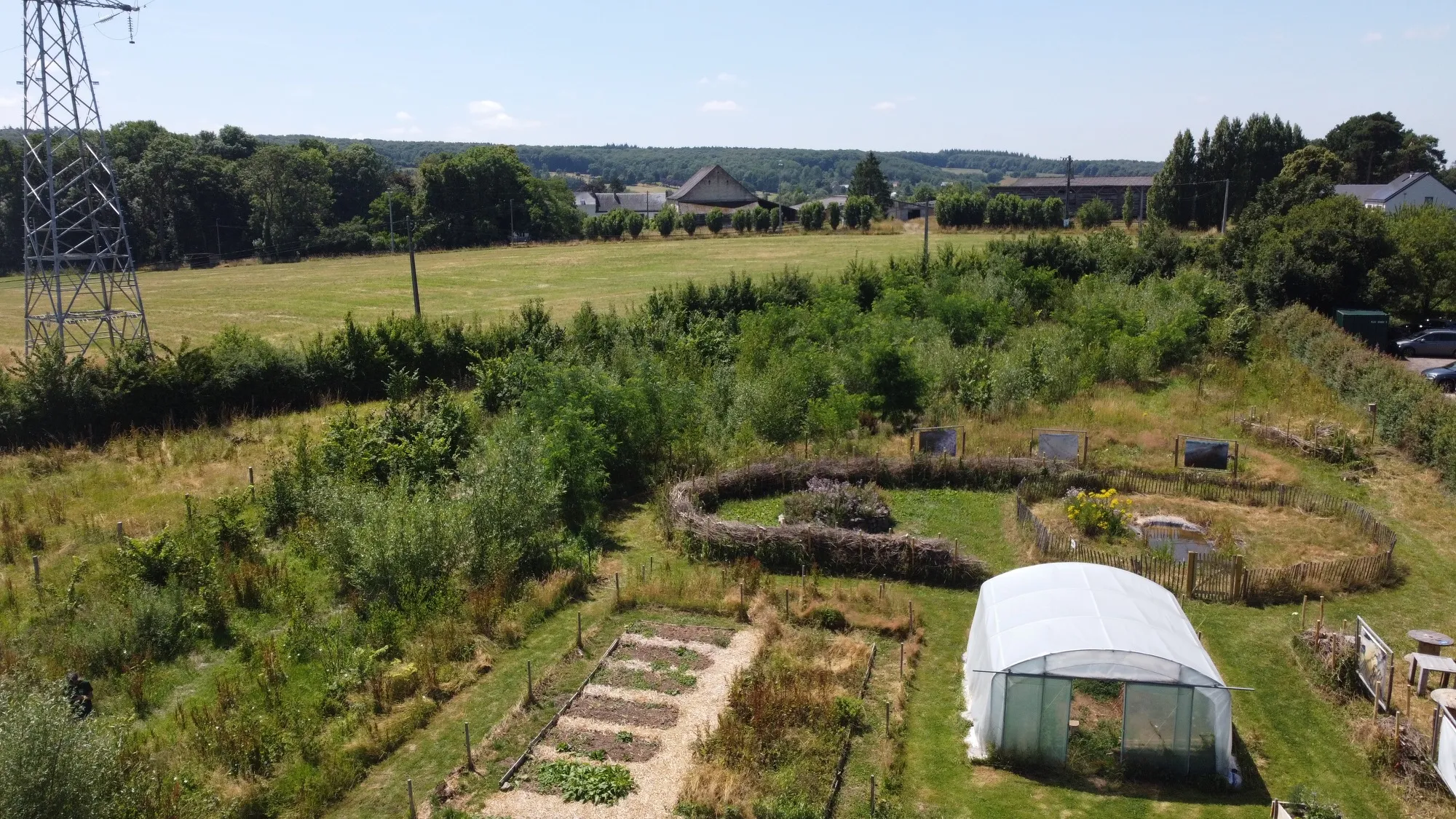
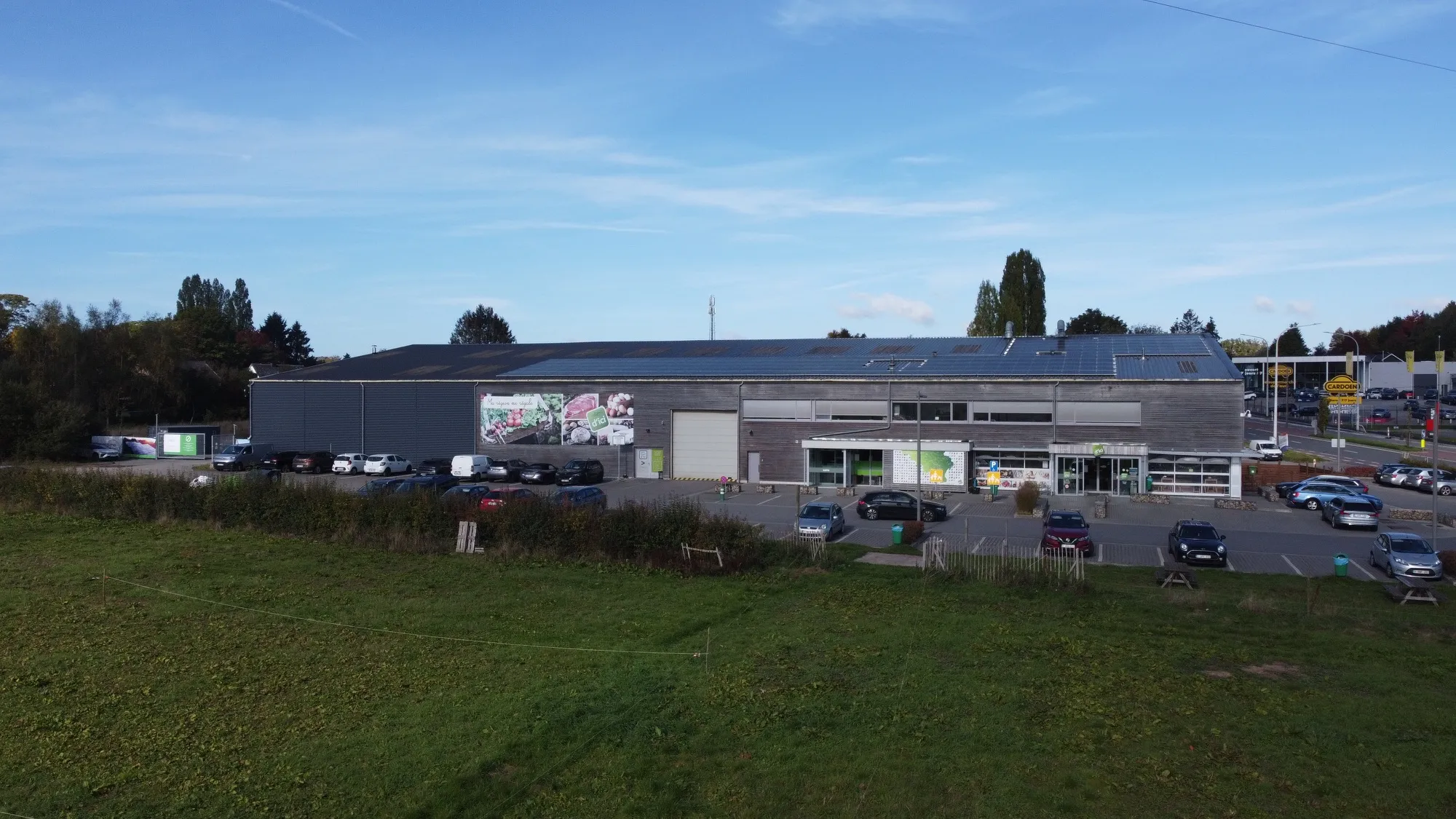
Semisto Experience is our teaching food forest: 20 ares of multi-layered edible forest planted on a former pasture, along the N4 on the edge of Namur. We started it in 2023 with d'ici, the local-producer grocery store, and it has been growing in the open ever since, in full view of everyone who drives past.
It's also where we learn in public: the design choices are visible, the wins as well as the failures. Our courses are taught here, our designers experiment here, and visitors get to see what a food forest actually looks like at three years old — not a render, a real garden with its gaps and its surprises.
One thing worth knowing before you come, because we'd rather say it than let you discover it: the abundance you feel here today is the abundance of trees, not yet the abundance of the plate. The 1,400 pioneers are in and have already closed the landscape over — you really are walking through a young forest. But the productive species are only getting started: the herbaceous layer is almost entirely still to plant, and shrubs and fruit trees will join the garden every season through to 2028. That's exactly where we need hands.
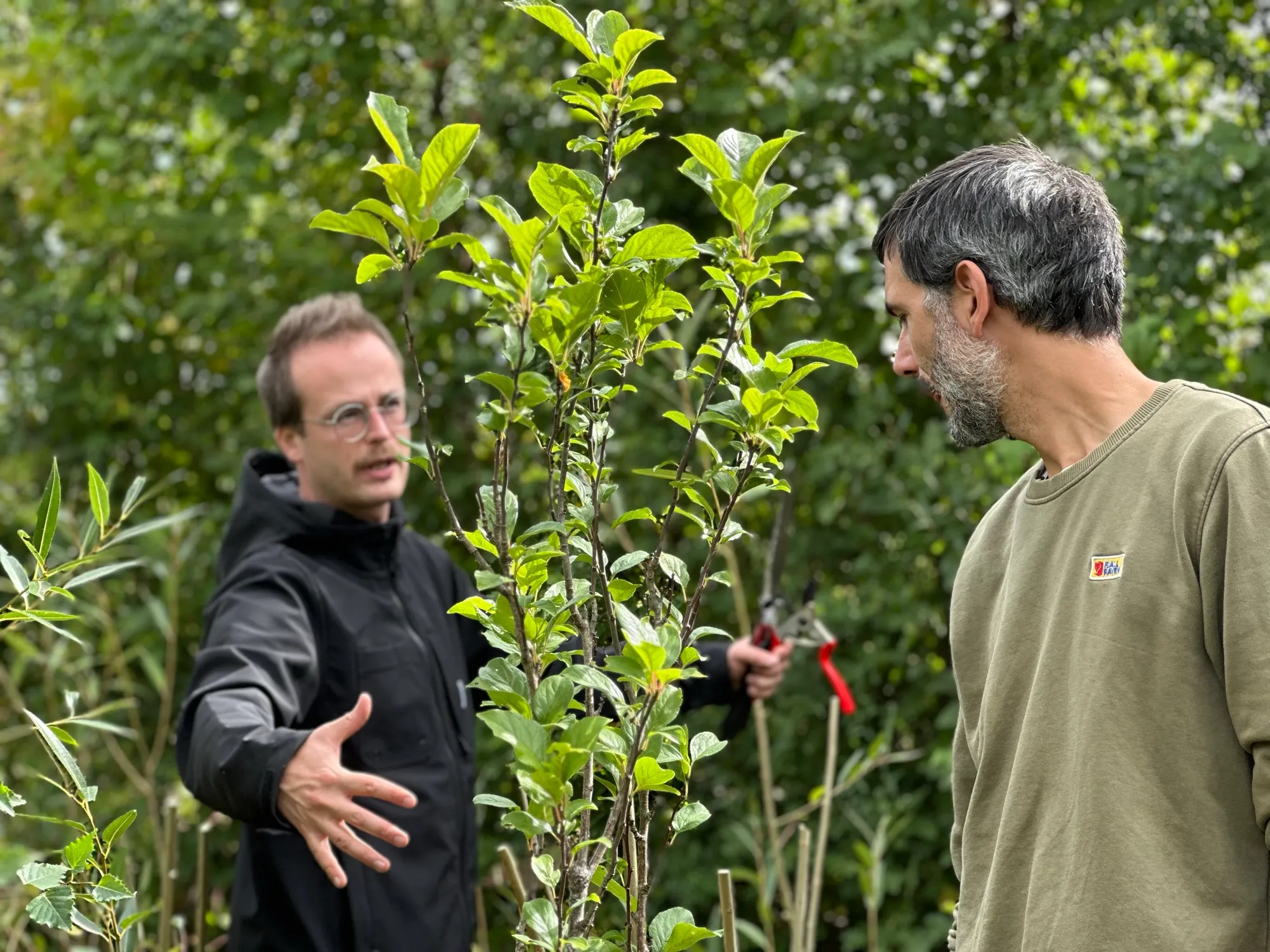
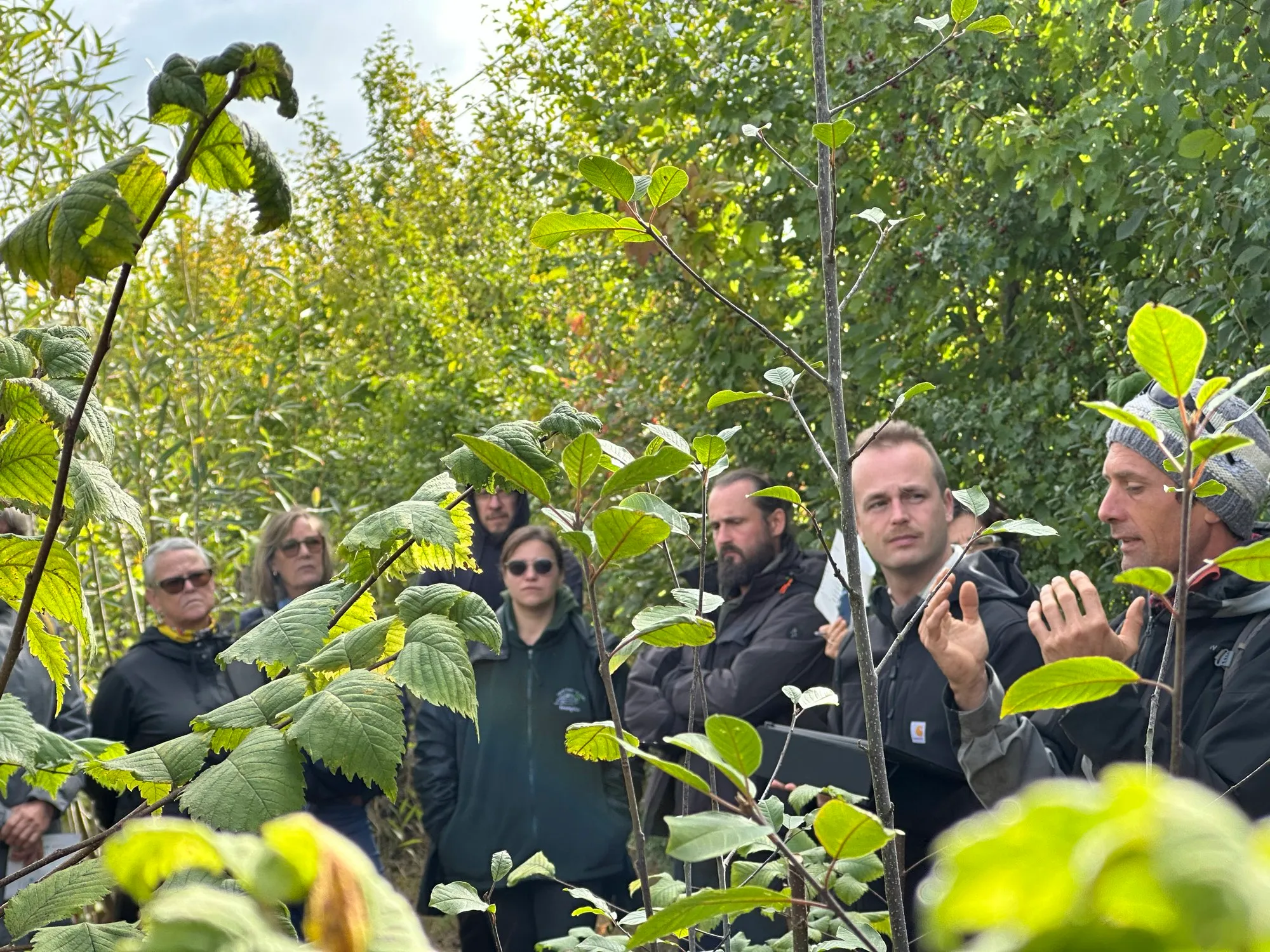
Come and wander, any day
No booking, no ticket, no opening hours. Les Jardins d'ici are free and open all year round, and the food forest is crossed by its own paths. An hour is enough to walk it; a whole season isn't enough to see all its states.
The address
Parking and entrance
When
What to look for
And while you're there
The food forest is our share of the place. Les Jardins d'ici is a collective: several project holders on the same piece of land, around a shared wish to turn it into a space for learning and wonder.
The food forest
The teaching vegetable garden
The biodiversity garden
The pasture and the playground
The local group is forming now
A food forest isn't planted once, it's steered for decades. Semisto is a small team and this project is a volunteer one: we'll only go the distance with a group of people from Namur who come regularly, for the pleasure of being there and learning by doing.
No experience required, nothing to sign. You come when you can, we show you everything on site, and we eat together at lunch.
The big planting of Sunday 15 November
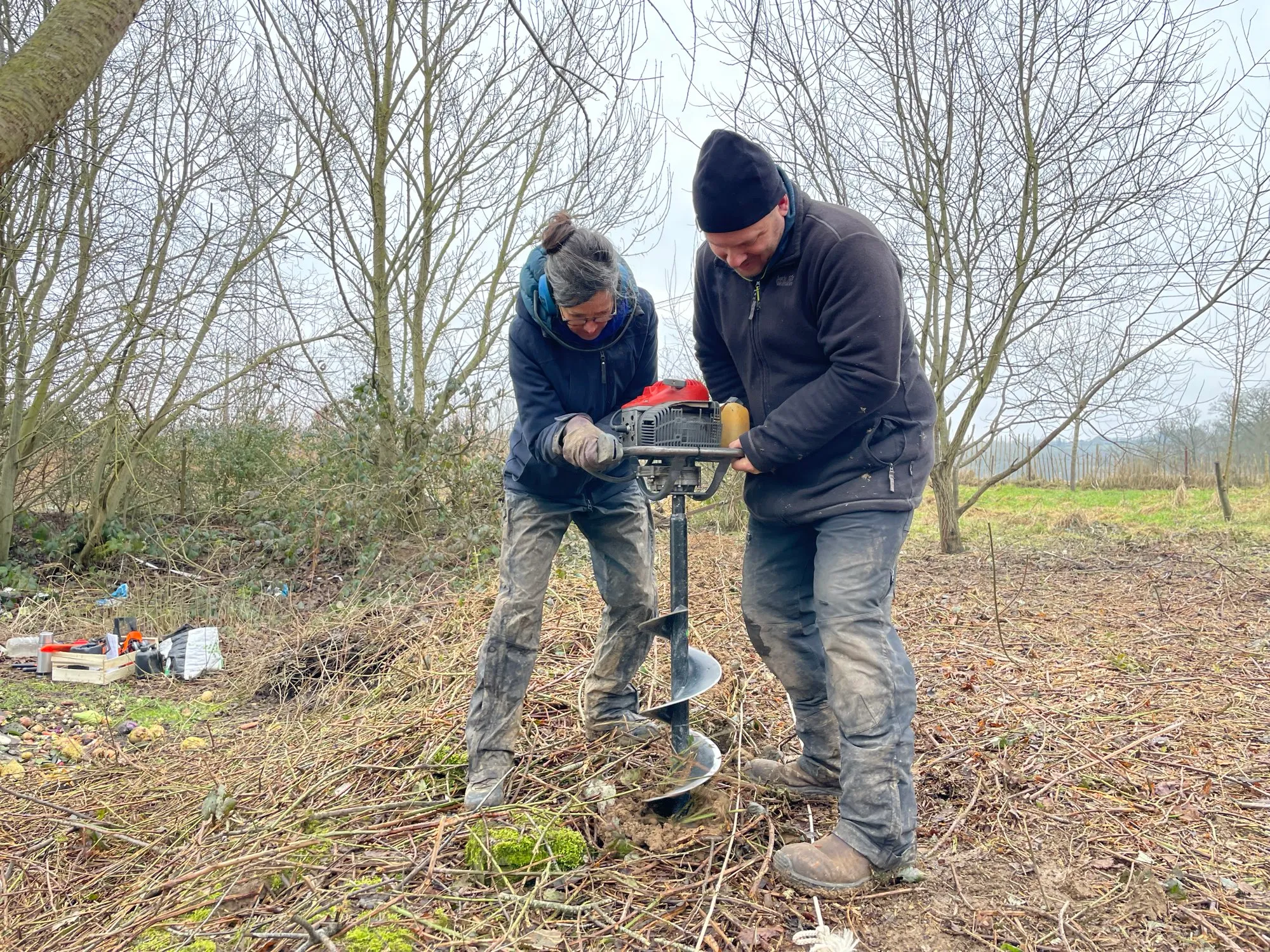
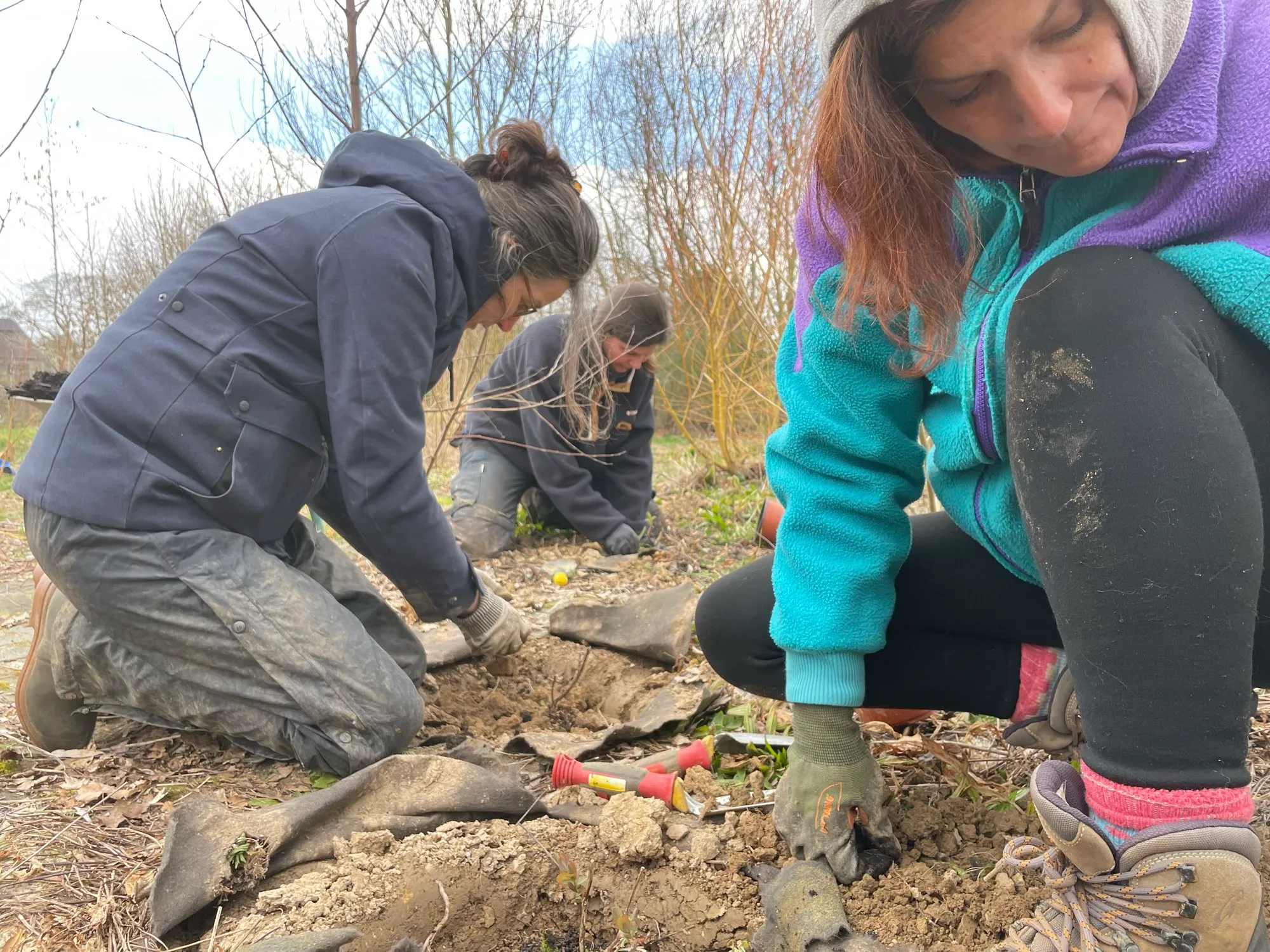
The largest work day of the year, and the most memorable one to be part of. Join us on Sunday 15 November 2026, from 9.30am to 12.30pm, to plant new edible species and varieties. The morning opens with a short how-to-plant-a-tree lesson, tools are provided, and lunch is on us. No experience needed.
Planting
Bare-root fruit trees in winter, shrubs and perennials in spring. The technique takes ten minutes to learn.
Tending
Pruning the pioneers, mulching with woodchip, freeing young plants from competition. This is where a food forest lives or dies.
Building
Accessible paths, woven willow structures, the pond and its surroundings. Visible work that changes the place in a single day.
Observing
Identifying species, recording what took and what failed, feeding the plant database. The garden is an experiment too.
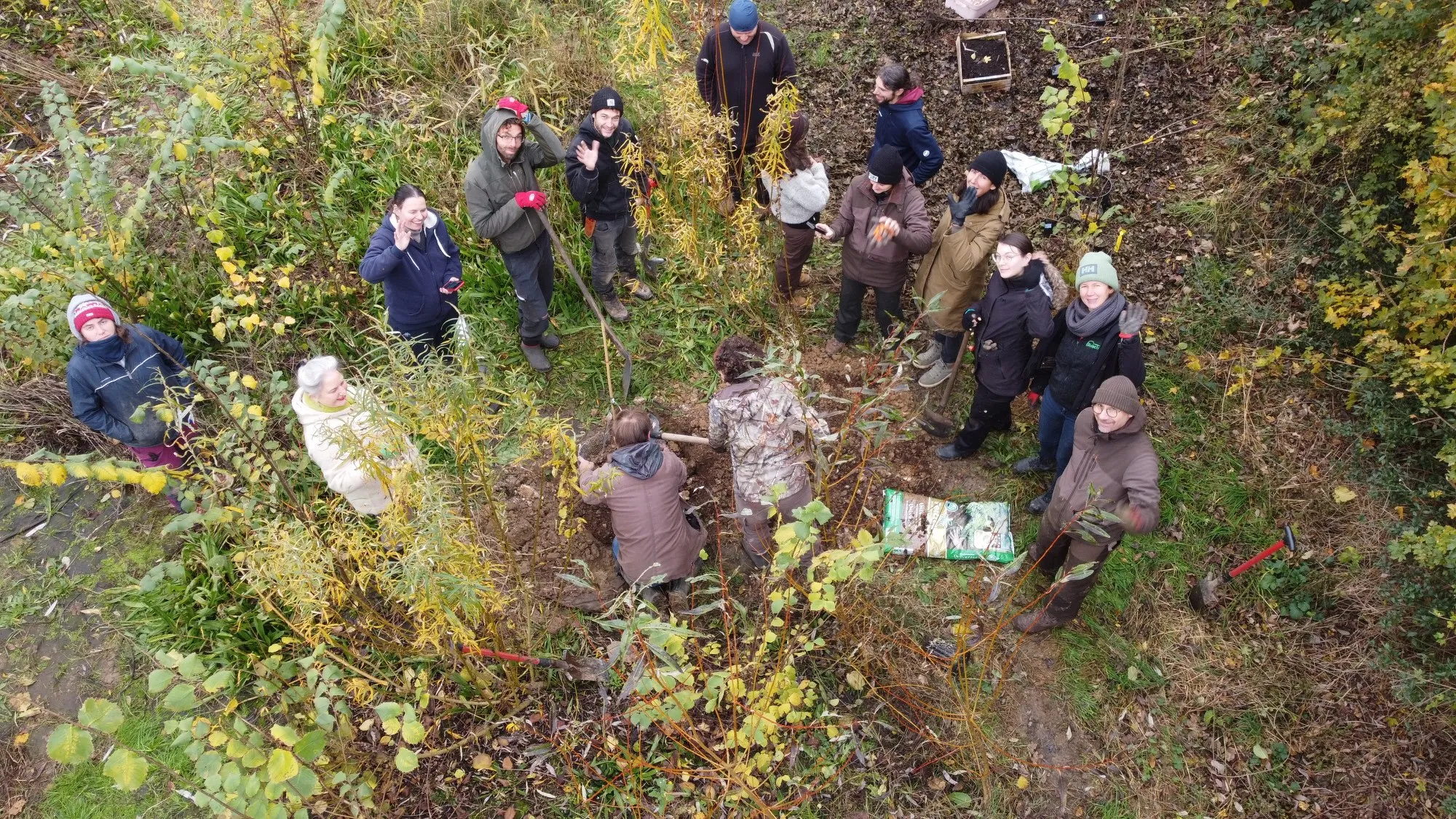
Planting the productive layers, November 2024.
From pasture to forest
The same ground, three years apart, seen from two different ends. In between: thousands of volunteer hours, biodegradable ground cover, a great deal of mulch and not a gram of synthetic fertiliser.
A pasture, then a decade of market gardening. Nothing resembling a forest.
1,400 companion trees planted in a single work day, over biodegradable ground cover. Pioneers that build the soil before the edible layers go in.
The design lands, the canopy takes hold. The first productive layers go in that autumn.
The first productive layers join the pioneers: fruit trees, berry shrubs, climbers and the willow bed. Still sparse — a start, not a finish.
A structuring partnership and a €33,000 grant through the City of Namur's participatory budget anchor the place for the long haul. Accessible paths are on the way.
What the team put into this
This garden was never a commission. It's a volunteer project that Semisto members have carried since 2023 on their own time — soil analysis, design, planting, surveys, tending season after season.
companion trees planted in April 2023
ares of multi-layered food forest
planting seasons still ahead of us, through to 2028
years of co-management funded, from 2026
A palette chosen for the ground
It unfolds in stages, at the pace of the plantings. To the east, species that cope with damp soils; to the west, those that tolerate limestone. The canopy, already in place, mixes grey alder, downy birch, Turkish hazel, honey locust, walnut and pecan. Settling in beneath it: apples, plums, cherries, pears, nashi, service tree and rowan. Then come the shrubs — medlar, goumi, sea buckthorn, currants, blackcurrant, elder — the climbers (schisandra, akebia, kiwi) and a basketry willow bed. Leaf and root vegetables are waiting on the soil analyses: food safety comes before the demonstration.
A place carried by several hands
Since 2026 a structuring partnership binds Semisto, the local Natagora Cœur de Wallonie chapter and the d'ici stores. That same year, the Jardins d'ici secured a €33,000 grant over five years through the City of Namur's participatory budget, shared across all the site's projects to better welcome the public and launch activities — the coordination and the hands stay voluntary. In return, we commit to running one activity a month for five years with the site's partners.
Design: François Delforge and Christophe Wautier.
On the ground: Relocalise ASBL, and Simon Focant — head of the fruit and vegetable department at the d'ici shop — for the vegetable garden.
The technical case study is on the project page.
What's coming, and where you fit in
The next four seasons are already mapped out. Each one is a work day, and every work day needs hands.
Paths opened up for wheelchair users and reduced mobility, so the whole garden can be crossed by everyone.
The big planting — the largest work day of the year, and the best moment to turn up. A morning to get new edible species and varieties in the ground, planting lesson included and lunch on us.
Digging the pond and installing the edible aquatic layer.
The herbaceous layer, today almost entirely still to plant: ground covers, perennials and herbs that close the soil. It's the biggest piece left.
Climbers and the collective orchard — the last layer of a system that's finally complete.
Before you come
Can you visit the Semisto Experience food forest in Naninne?
Yes. The garden is free and open every day, no booking needed, at Chaussée de Marche 940, 5100 Naninne, Belgium. Park at the d'ici shop and enter next to the Natagora chalet. It sits inside Les Jardins d'ici, a publicly open site shared by several project holders.
Do you need experience to volunteer at the food forest?
No. Work days are led by the Semisto team and every skill is taught on site: planting, mulching, pruning, willow weaving. Bring clothes that can get dirty — everything else is provided.
What is a companion tree, or AFI?
AFI stands for the French Auxiliaire, Fertilisant, Ingénieur — companion, fertiliser, engineer. These are pioneer trees planted in large numbers when a food forest starts. They build a canopy quickly, enrich the soil through their roots, biomass and leaf litter, and remove any need for external inputs. Some are later sacrificed to free up light and space for the productive species.
Who runs the Semisto Experience project?
The food forest is designed and tended by Semisto, inside Les Jardins d'ici. The site brings together several partners: the d'ici stores, the local Natagora Cœur de Wallonie chapter and Relocalise ASBL. The permaculture vegetable garden is grown by Simon Focant, who heads the fruit and vegetable department at the d'ici shop.
We'll see you at the garden
For a solo wander on a Sunday, or for a work day with the others. Both count.