
One of Europe's oldest food forests could vanish at the end of 2026
In Mouscron, the Fraternités ouvrières garden — 57 years of agroecology on 1,800 m² — is threatened by the end of its lease. Here's how to support it.
Published July 23, 2026 · Semisto
One of Europe’s oldest food forests could vanish at the end of 2026
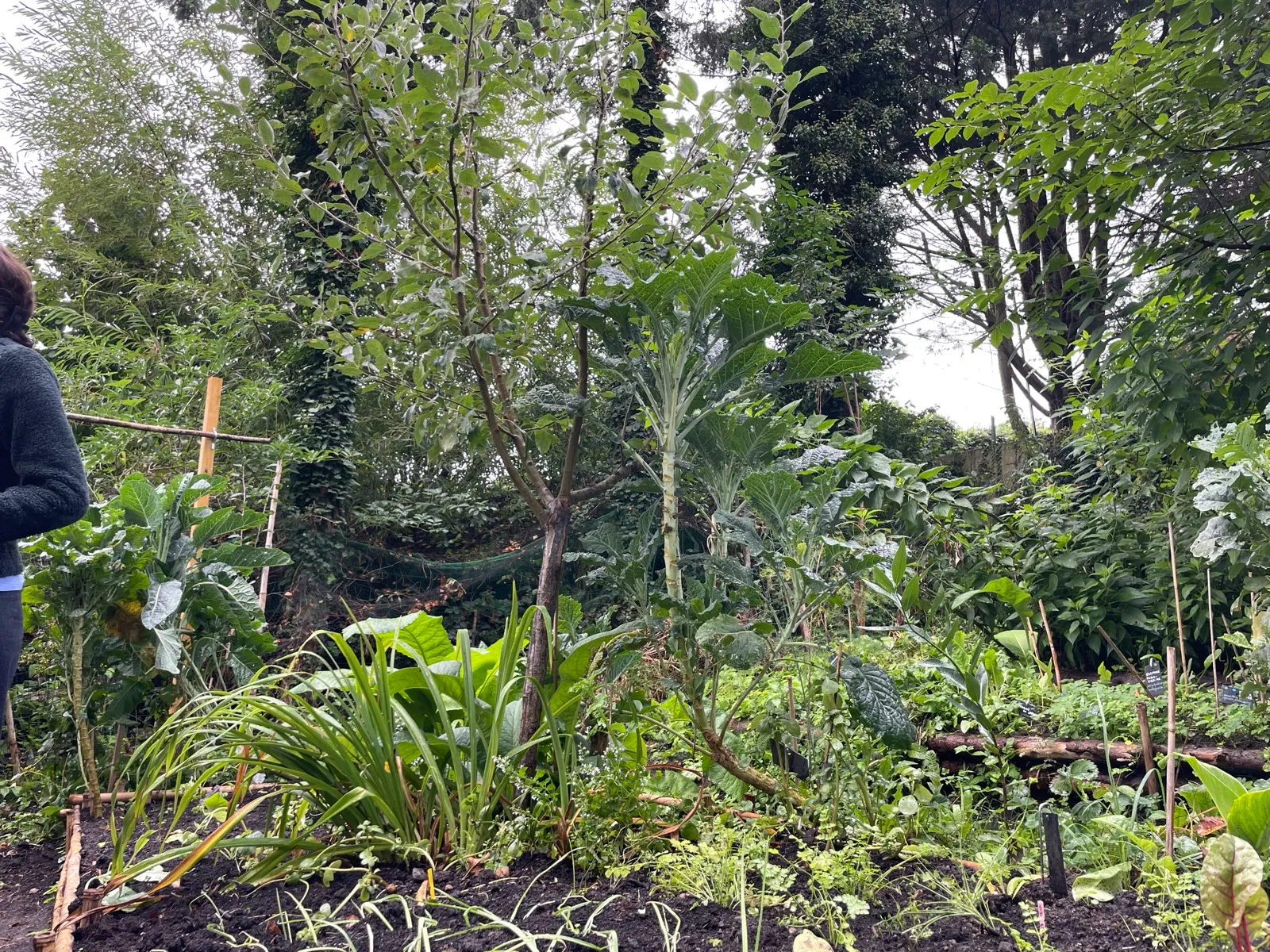
In the middle of the city of Mouscron, there is a 1,800 m² garden where some 2,000 edible trees and plants grow, one inside another, one beneath another. Kiwis climbing into apple trees. Layers of fruit trees so dense that visitors call it a jungle. This place is called the Fraternités ouvrières. It was planted from 1969 onward by Gilbert and Josine Cardon, and it has inspired whole generations of gardeners, market growers and forest-garden designers — ourselves included.
At the end of 2026, the association’s lease expires. The site will be put up for sale. Without a takeover solution, one of the oldest forest gardens in Europe could simply disappear.
What 57 years do to a soil
You can replant trees. You can’t replant time.
In 57 years, the soil of the Fraternités ouvrières has become what most soils in our regions no longer are: a living forest soil, fed each year by falling leaves and decomposing wood, woven through with mycorrhizae linking the roots together. It’s exactly the state we try to recreate when we design a forest garden — and it takes decades to get there.
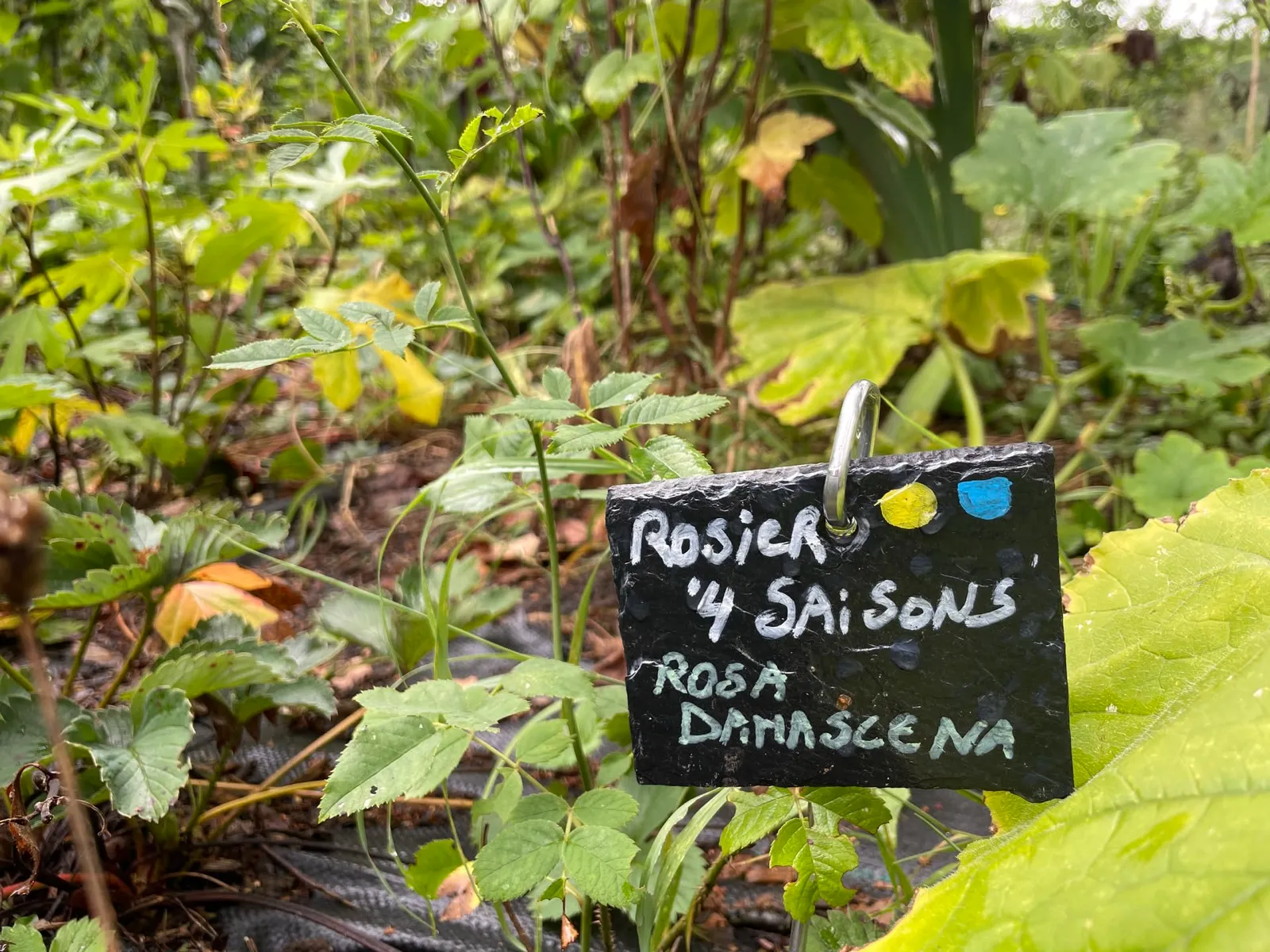
And then there’s the genetics. Gilbert and Josine Cardon made this place a refuge of farmer seeds and fruit varieties, gathered and passed on over decades, long before “cultivated biodiversity” became a common phrase. A living collection of this scale can’t be bought back at a nursery: it is lost, or it is handed on.
This garden is also a school. Generation after generation, visitors from everywhere have learned to graft, to sow, to densify, during the visits and courses given by the association. Part of the Belgian forest-garden movement — the part Semisto belongs to — descends in a straight line from what the Cardons showed: that you can produce an improbable abundance on a tiny area, by working with the living world rather than against it.
Why pioneering places are fragile
The story of the Fraternités ouvrières tells us something we see everywhere: pioneering places rest on people, rarely on structures.
Gilbert Cardon died five years ago. The association carries on, driven by long-standing volunteers. But the land itself was never secured: the garden lives on a rental lease, and a lease comes to an end. Neither the site’s ecological value, nor its international renown, nor the 57 years of accumulated work carry any legal weight against a lease deadline.
It’s a lesson we take seriously in every project: the permanence of a forest garden isn’t a question of planting, it’s a question of land, of a carrying structure and of transmission. A forest garden is conceived in decades; its legal status must hold over the same span. That’s why stewardship by municipalities, foundations or solid collectives changes everything — and that’s what Mouscron lacked.
What’s at stake now
The association has launched a petition. The aim is twofold: to show Mouscron’s municipal authorities that a grassroots movement exists to preserve this heritage, and to find — on the public or private side — a solution to acquire the site before the lease ends.
A little over a year remains. That’s short to put together a buyout. It’s enough if enough people get involved.
What you can do, concretely
- Sign the association’s petition: online form on the Fraternités ouvrières blog. A paper version also exists (rue Charles Quint 58, 7700 Mouscron).
- Share it — especially if you know people from Mouscron, elected officials, or players able to carry an acquisition (foundation, cooperative, municipality).
- Visit and spread the word about the place while it lives: nothing convinces better than an hour spent under those layers of fruit trees.
And then there’s the other answer, the long-term one: create the next places, and create them on solid land foundations. Every forest garden planted today with a lasting structure — municipal, cooperative, backed by a foundation — is a future heritage that won’t depend on a lease. That’s the work we do with municipalities and project leaders, and what we pass on in our training.
At Semisto, this question weighs on us enough that we’re considering a structural answer: a foundation that would own food-producing places and make them available to project leaders through a long lease (emphyteusis) — a very-long-term lease, conceived on the scale of a forest garden rather than that of an ordinary rental contract. The place would stay protected whatever happens to the people who cultivate it. We’re only at the reflection stage, but it’s precisely this kind of story — Mouscron’s — that convinces us this work must come to fruition in the years ahead.
What Gilbert and Josine Cardon planted in Mouscron showed a whole generation that abundance was possible. It’s now up to our generation to show that it can last.
Sign and share the Fraternités ouvrières petition
To go further
Two films tell the story of this place and of those who made it, far better than an article.
“Les semeurs de vie,” by Luc Deschamps — a portrait of Gilbert and Josine Cardon, to watch right here:
“La Jungle Étroite”, by Benjamin Hennot — the definitive film dedicated to Gilbert Cardon and the Fraternités ouvrières garden, to watch on Vimeo.
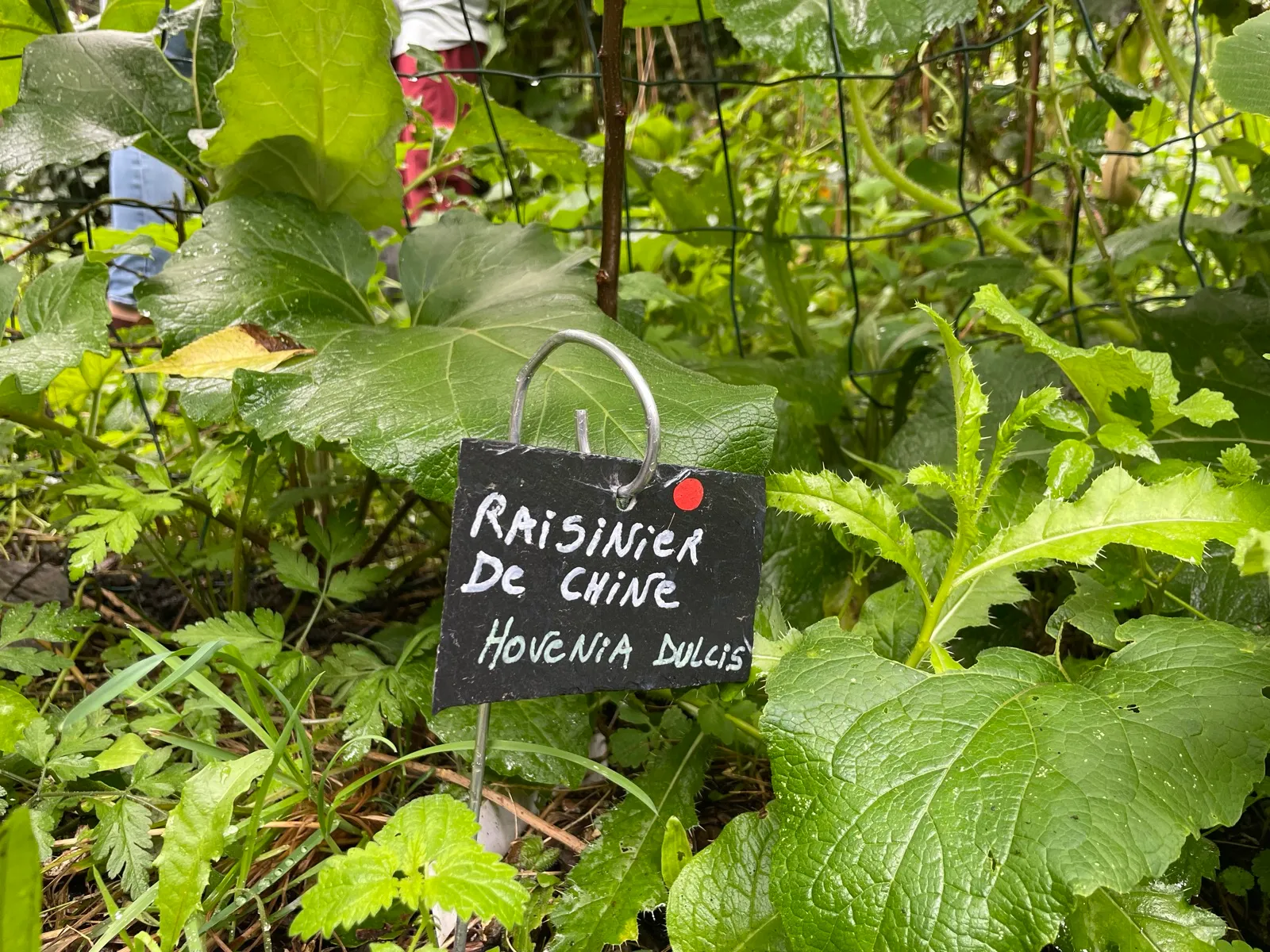
Header photo: Gilbert Cardon in the seed library of the Fraternités ouvrières — Zdewinter, CC BY-SA 4.0, via Wikimedia Commons. The other photos were taken at our nursery-school in Saint-Servais (Namur) — the Cardons’ spirit, with us.