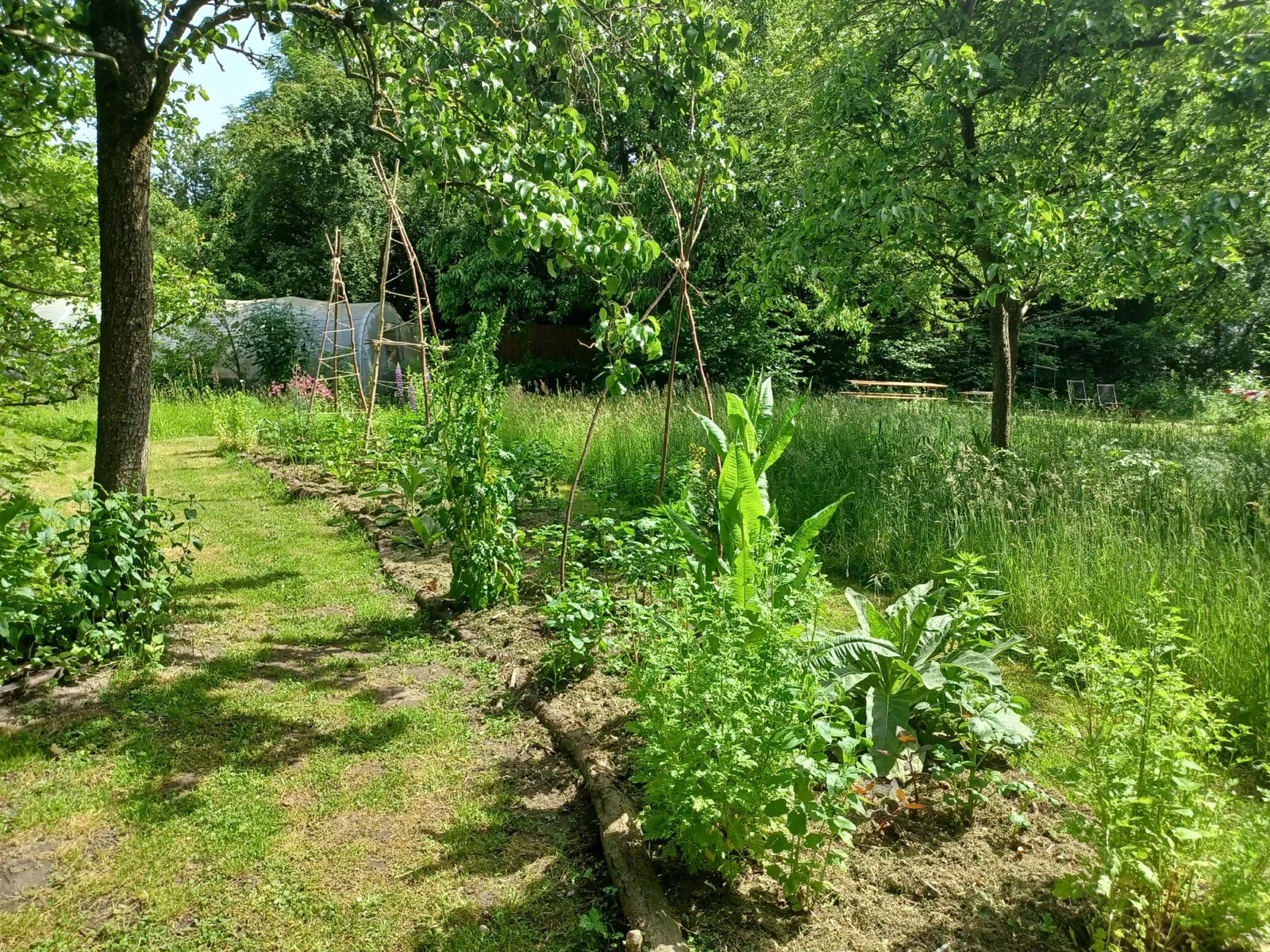
What if your garden became a food forest?
Dreaming of a food-producing space that's beautiful and resilient? Become a client of a food forest project designed by Semisto, and get a design created by our students, supervised by experienced designers. (Program and application form are in French.)
What is a food forest?
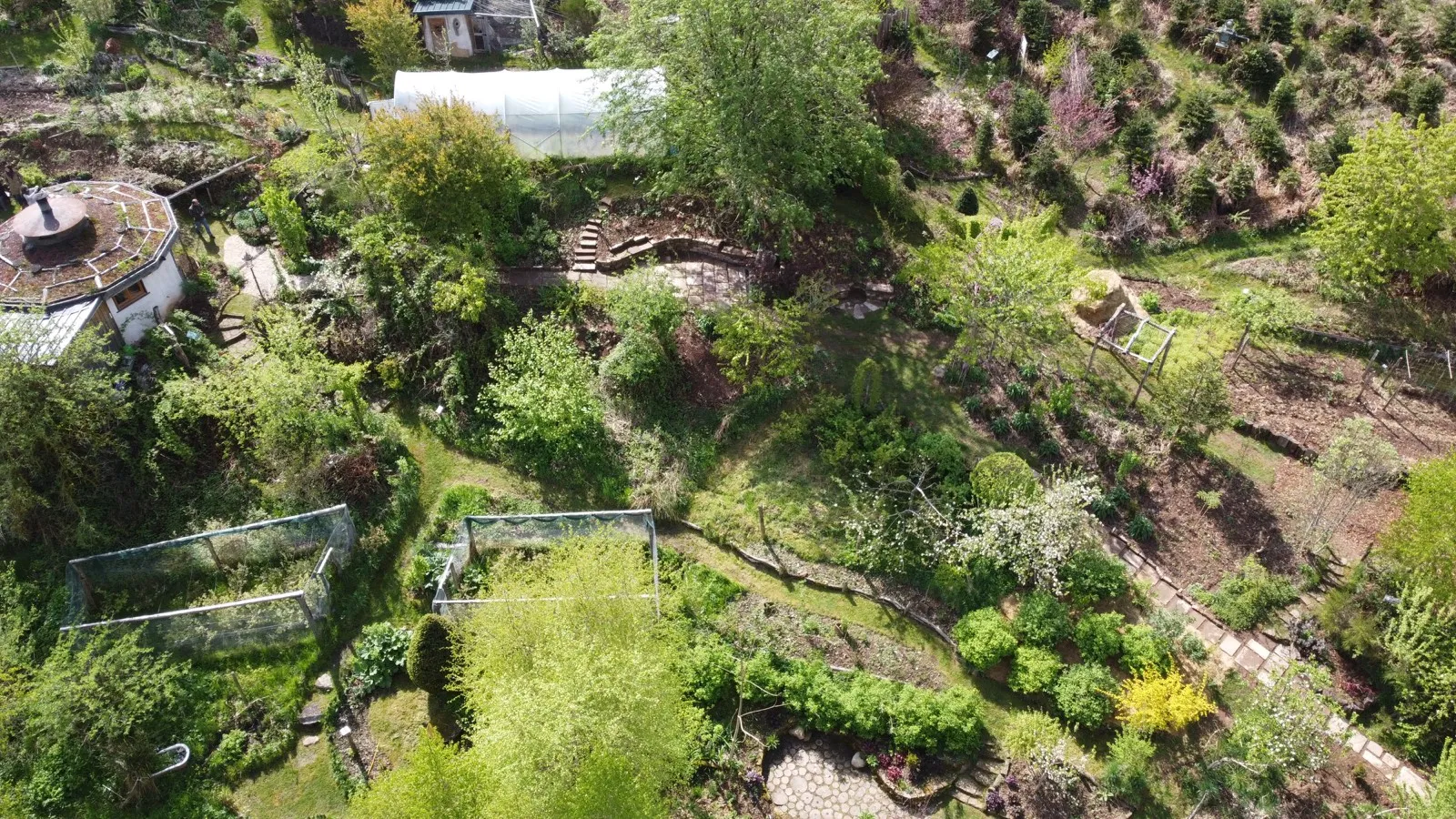
Imagine a garden that works like a forest: fruit trees in the canopy, berry shrubs beneath them, herbs and perennial vegetables at ground level, climbers weaving through it all… All forming a self-sufficient, productive, beautiful ecosystem.
A food forest — also called an edible forest garden — draws on natural forest ecosystems to create a food-producing space with several layers of vegetation. Once established, it needs little upkeep, enriches the soil over the years, supports biodiversity, and yields varied harvests over a long period.
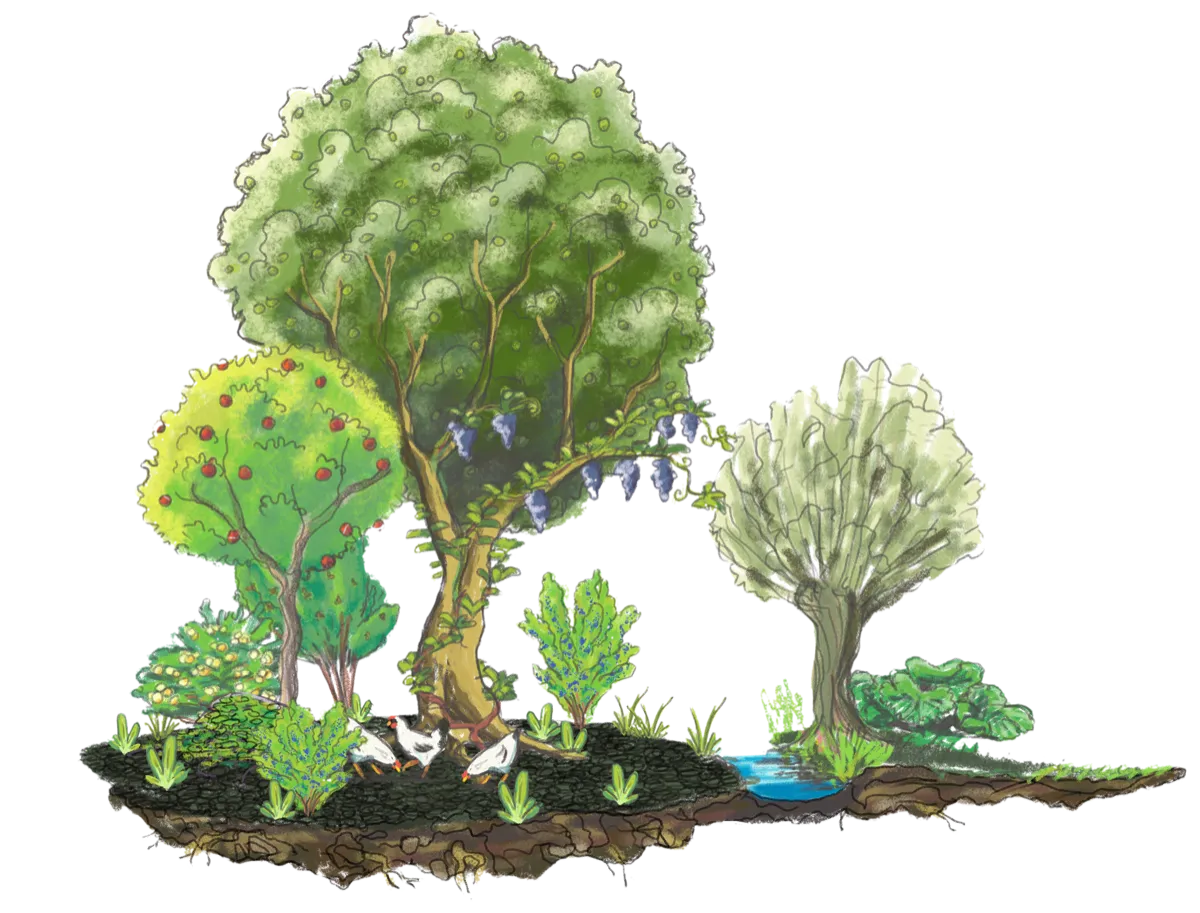
Canopy
Large fruit and nut trees (apple, walnut, chestnut…)
Understorey
Small trees and large shrubs (plum, hazelnut, elder…)
Shrubs
Berries and small fruit (currants, blueberries, blackcurrants…)
Herbaceous
Perennial edibles, herbs, perpetual vegetables
Ground cover
Strawberries, mint, comfrey… that protect and feed the soil
Climbers
Kiwi, grape, hops… that make use of verticality
Rhizosphere
Edible roots and mycorrhizal fungi
Aquatic
Ponds and pools: bank and aquatic edibles (watercress, cattail, water chestnut…)
No need to dedicate your whole garden — a few ares is enough to create a rich, productive space. The design adapts to your area, your wishes and your context.
A garden that changes everything
Beyond looks, a food forest lastingly transforms where you live. Here's what it really brings.
Beautiful, and alive all year round
The only garden that gets simpler over time
A productive nature reserve
It holds up when others collapse
Food, right outside your door
A living legacy, passed down
Your food forest project, designed by Semisto
Every year, Semisto Academy's Food Forest Designer program trains a cohort of 15 passionate students. To ground their learning in reality, these future designers create a real food forest project for real project owners.
That's where you come in: as a client, you offer your land (or part of it) and your project to a team of students supervised by a Semisto mentor designer. Together, you co-build the design of your future food forest.
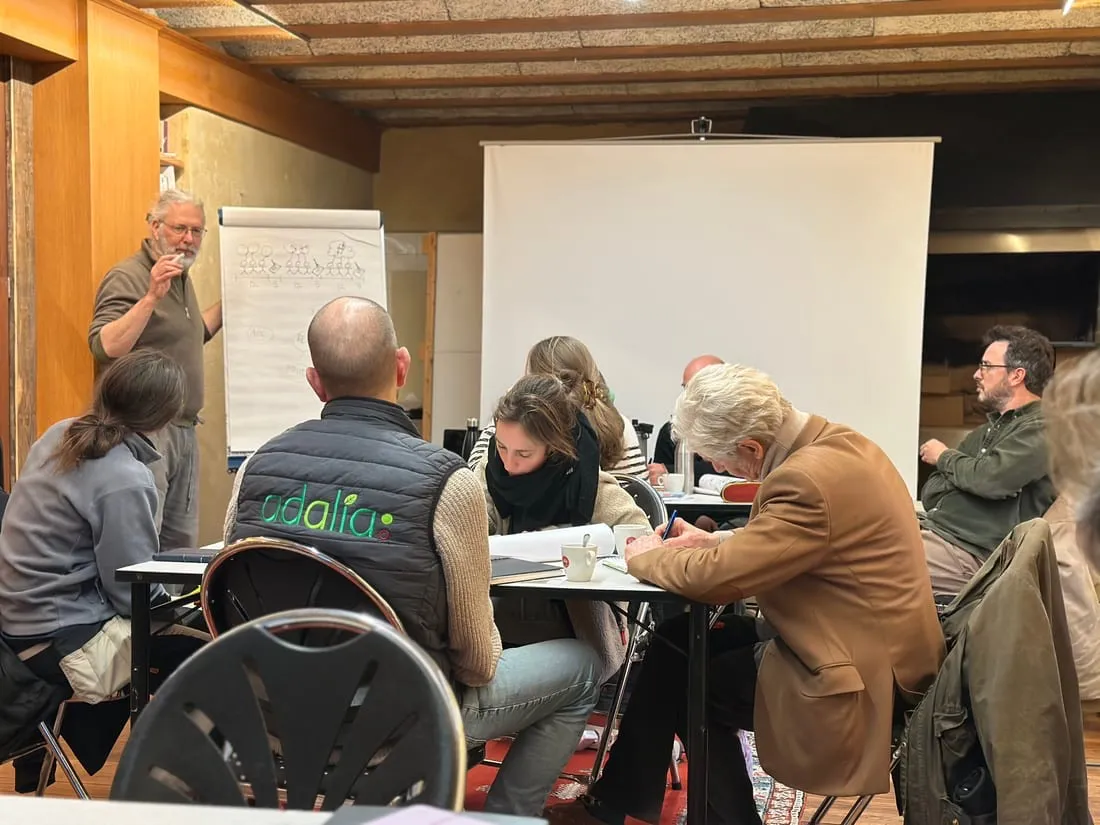
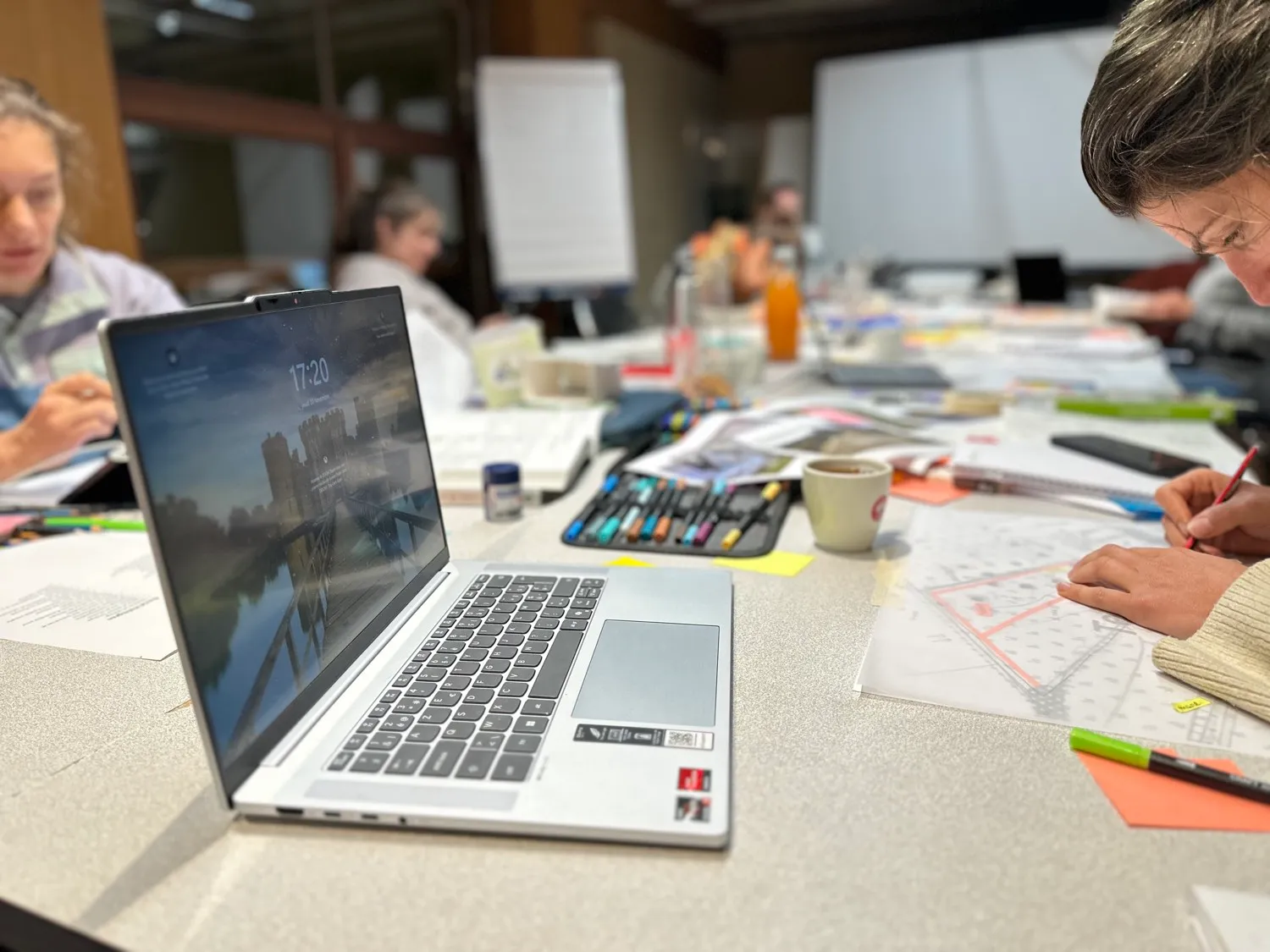
We're looking for 3 to 5 clients in Belgium, ready to commit to this adventure between January and May 2027. Every project is unique and adapted to your wishes, your land and your constraints. The offer is for private gardens only — our teaching team selects projects based on their diversity, feasibility and educational value.
This educational project is run by the Semisto Design Labs studio, which supervises and guarantees every design.
What's included
A tailored design
A dedicated team
Expert input, from several voices
Support after the design
A supportive rate
Semisto member
What happens next?
The design process runs from January to May 2027, alongside the program. Your time commitment is light: 1 to 2 on-site visits with the students and their mentor, 1 video call during the design phase, and your presence at the design presentation in Yvoir on 29 May 2027.
First contact and initial meeting
The team and your mentor designer meet you (on site or by video call) to understand your vision, your needs and your land.
Site visit and analysis
Surveying and ecological analysis of your land. The first sketches take shape and are presented to you for discussion.
Detailed design
Plant palette selection, planting plans and implementation phasing. Several Semisto specialists (water, soil, biodiversity, plant palette) are consulted to refine the choices. A video call lets you validate the direction.
Design presentation in Yvoir
During the program's closing session at Les 4 Sources (Yvoir, Belgium), the team presents your design to you. You leave with the full package: plans, planting sheets, recommendations. A planting quote can be provided on request.
Terms of participation
To guarantee the quality of every project and the smooth running of the program, we ask you to meet the following conditions:
- Private garden located in Belgium
The project concerns a private garden. Being located in Belgium lets students easily visit on site. - Financial commitment of €1,100
A contribution that covers part of the concrete costs (travel, analysis, materials) of the design phase. Implementation support and planting follow-up are not included (separate quote, on request). Refundable if the project doesn't go ahead for a reason attributable to Semisto. - Presence during site visits
Being available to host the team during the 1 to 2 on-site visits planned between January and May 2027. - Availability for exchanges
Taking part in the scheduled video call, staying reachable for occasional questions, and being present at the design presentation in Yvoir on 29 May 2027.
About the financial commitment
Your commitment covers part of the concrete costs of the project (travel, analysis, materials) and shows your motivation. It's a fraction of the real cost of a food forest design.
Both amounts cover the design phase only. Implementation support and planting follow-up are not included: they're covered by a separate quote, prepared on request once the design is delivered.
Frequently asked questions
What are the benefits of becoming a Semisto client? +
Your place will be part of a network of food-producing, resilient projects. You get a design created with respect for living things, the expertise of a specialised design studio, support with implementation, and Semisto member status (discounts on courses and the Semisto shop). You also join a community of enthusiasts who share the same values.
Does the design include the planting itself? +
No — the €1,100 covers the design phase only. Implementation support and planting follow-up are not included: a detailed, separate quote is available on request. You can do the planting yourself with our guidance, call on Semisto Design Labs, or get help from Food Forest Heroes, our collective of volunteer planters.
Do I need to dedicate my whole garden to the project? +
Not at all. The design can cover part of your garden — a corner you'd like to transform. The area and scope will be defined together at the first meeting, based on what you want and what makes sense for your land. That said, even if the design only covers part of it, the team looks at the interactions with your whole property — the house, access points, neighbours, water, wind, what's already there: everything is factored into the analysis.
Is my land suited to a food forest? +
Most land in Belgium is suitable for creating a food forest. Analysing your land (soil, exposure, water, wind…) is part of the process. If your application is selected, the first visits will confirm feasibility and adapt the design to your conditions.
What's the quality level of the design? +
Students are supervised by an experienced Semisto designer who oversees every step and guarantees the quality of the deliverable. And every design draws on input from several Semisto trainers and specialists, consulted in their area (hydrology, biodiversity, plant palette, soil…). You get expert input throughout the process.
How much time do I need to commit? +
Your commitment is light: 1 to 2 on-site visits (a few hours each) with the team and their mentor designer, 1 video call during the design phase, and your presence at the design presentation in Yvoir on 29 May 2027. The rest of the work is done by the team.
How are projects selected? +
Semisto's teaching team selects projects from the applications received. Criteria include the diversity of projects (land, context, goals), feasibility, educational value, and the project owner's motivation. We get back to you within a few weeks of your application.
I'm not in Belgium, can I still apply? +
For this edition, we're limiting projects to Belgium to make travel easier for students. If you're nearby (northern France, Luxembourg, southern Netherlands), feel free to contact us to discuss it.
Sounds like you? Apply
Tell us about your land and your project. Here's how to join the adventure.
You fill in the form below
Our teaching team reviews your application
We get back to you to discuss your project
If it's a yes, the adventure starts in January 2027