Food Forest Designer
A year to build solid food forest design skills — and join a lasting network of practitioners.
The program on video
Q&A webinar — Thursday 3 September, 8pm CEST
Thinking about training in food forest design? We’re running a webinar to answer all your questions about this edition of the program: curriculum, pace, real client project, career paths — let’s talk it through together. Register via this form (in French, like the webinar and the program itself): you’ll receive your Zoom link, along with the replay and full recap of the July webinar.
Rather talk it through? Book a 20-minute call with Mohammad, the program coordinator (in French).
A year to build solid food forest design skills — and join a network of practitioners with whom to launch your own project or support other people’s. Some graduates turn it into an activity, often alongside another; all come out equipped, connected and transformed.
This program is taught entirely in French. Semisto Academy is opening a new cohort of 15 motivated people drawn to food forest design — one of the essential crafts of the coming decades. Spread over 30 days, the program blends ecology, design and real on-the-ground implementation. It’s the most detailed French-language training available for developing food forest and edible garden design and planting skills. By the end of the program, in June 2027, you’re accredited as a Food Forest Designer.
The program starts in October 2026 with an immersion in food-forest ecology. Michael Hulet opens the season with the vision: why we’re entering the era of edible forests, and where we’re heading together.
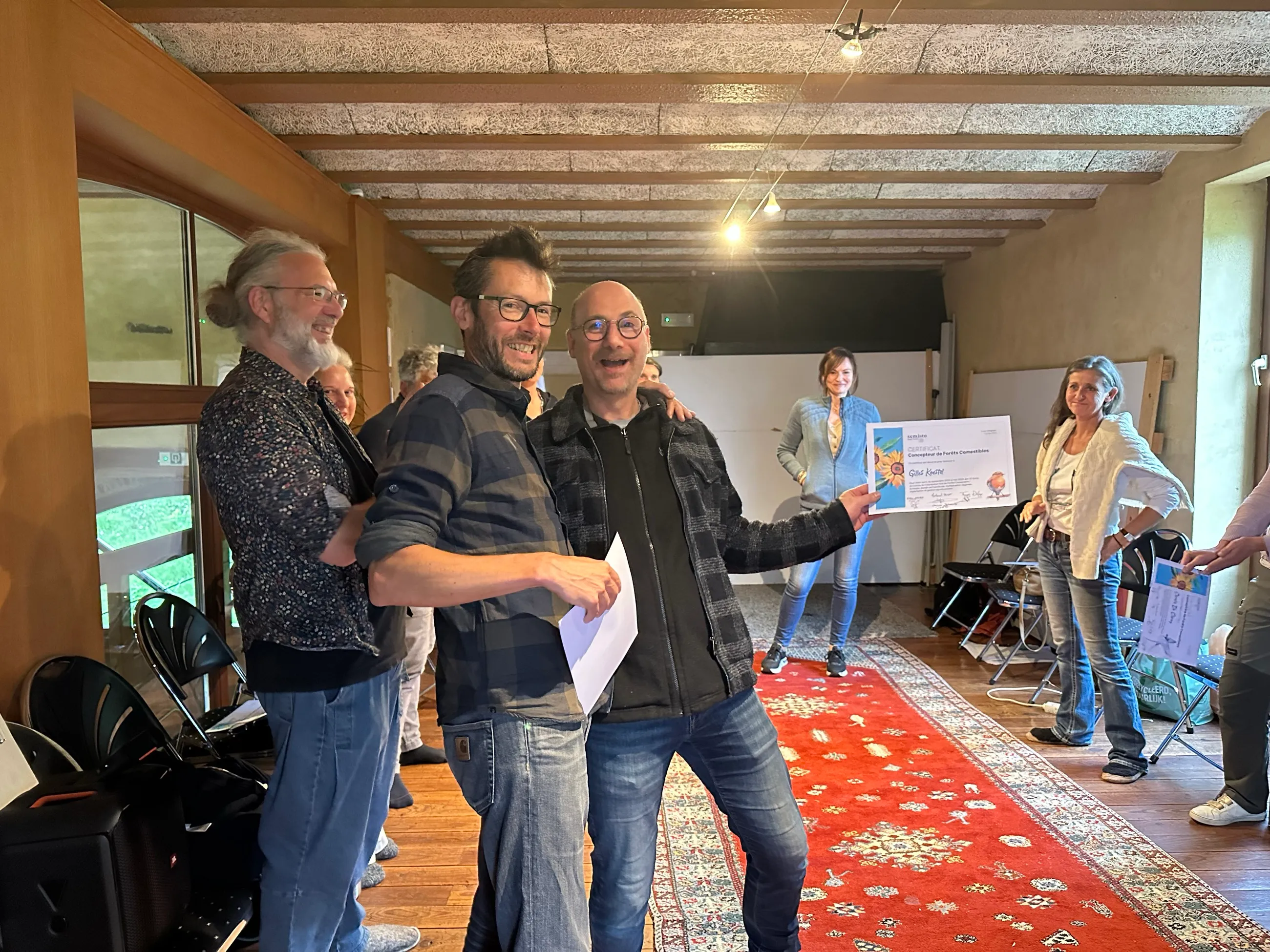
The previous cohort’s certificate ceremony, last May.
What you’ll learn
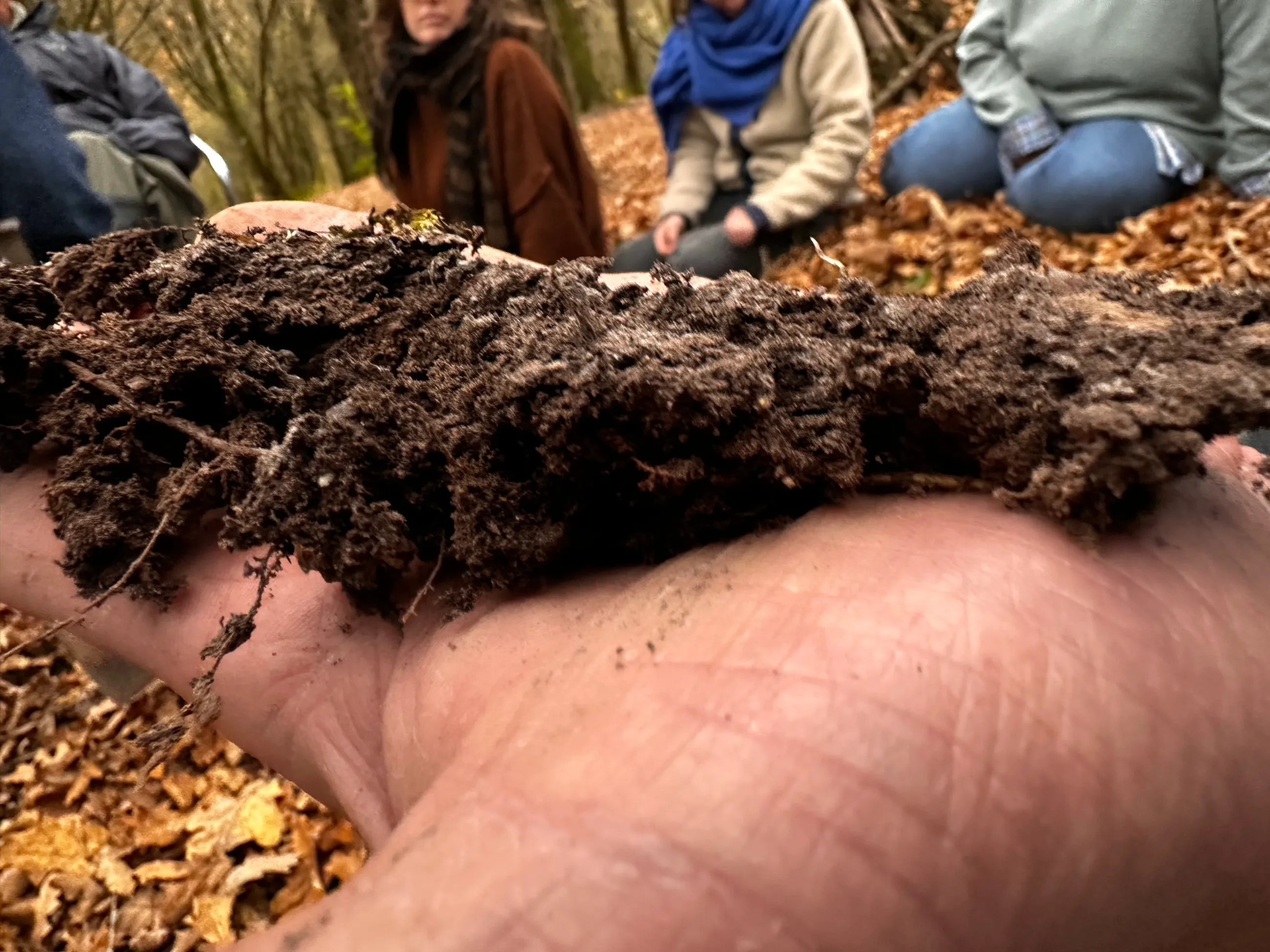
The program combines ecological foundations, design method and hands-on planting skills:
- The foundations of forest ecology and tree biology
- The specific ecology of food forest ecosystems
- The Semisto design methodology (managing a client from A to Z)
- Planting a food forest: plant propagation, species selection, planting techniques and tree care
- Developing a real client project alongside mentors from the design studio
- Designing plant palettes suited to a specific project
- Water design in food forests
- Budget estimation and management
- Expertise in low layers and woody layers
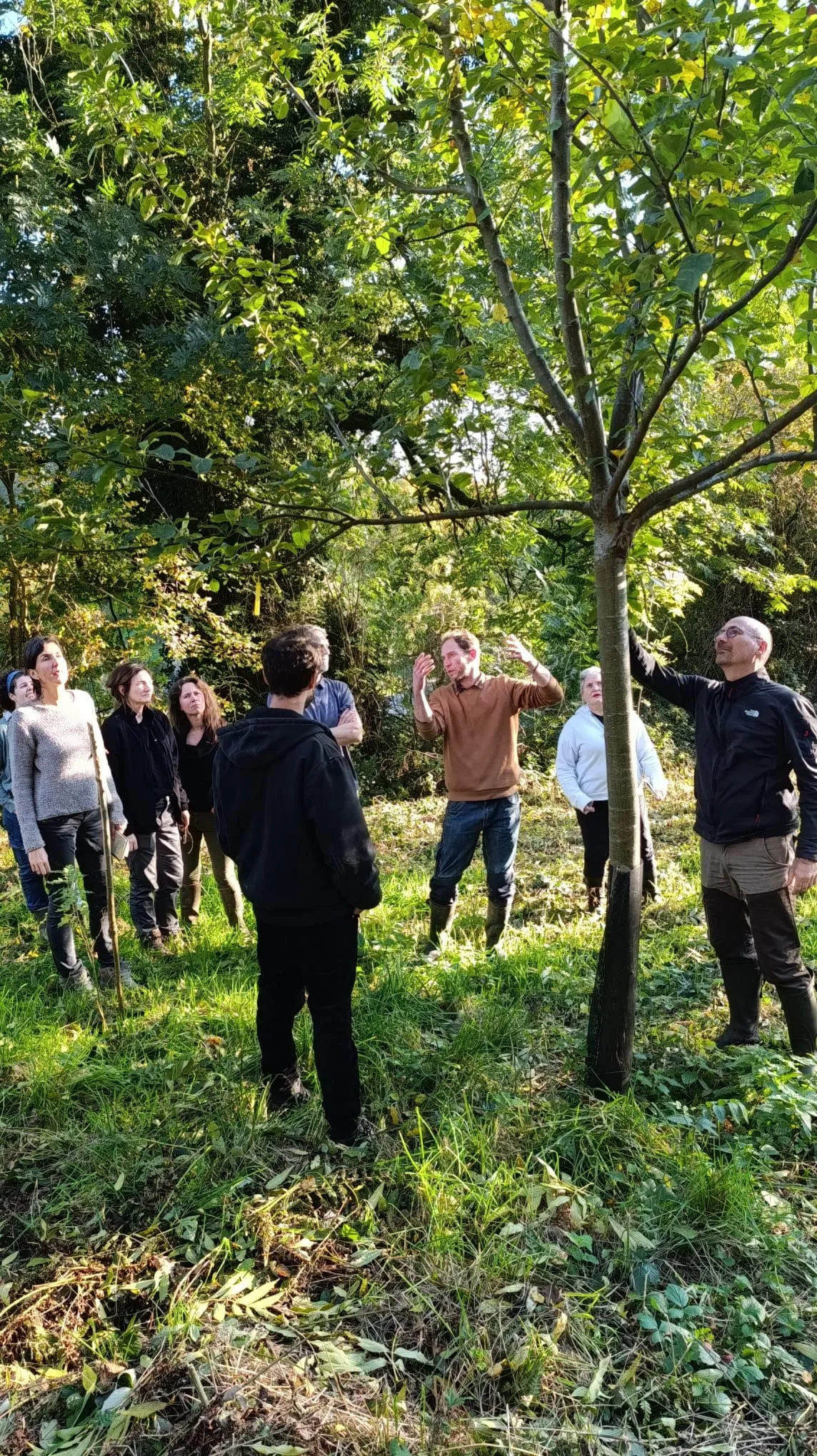
You’ll observe the Semisto Design Labs at work as an “observer” and draw on the Terranova platform for real professional projects.
By the end of the program, you’ll be able to:
- read a site and understand its systemic interactions;
- professionally design and plant food forests;
- use the right tools at each stage of a project.
A real project, real project owners
No made-up exercises: this edition brings in four real project owners. You meet them for the interview and site analysis, you design for their actual place, and you present them your pre-project and then your detailed project — just like a real design assignment, guided by mentors from the design studio.
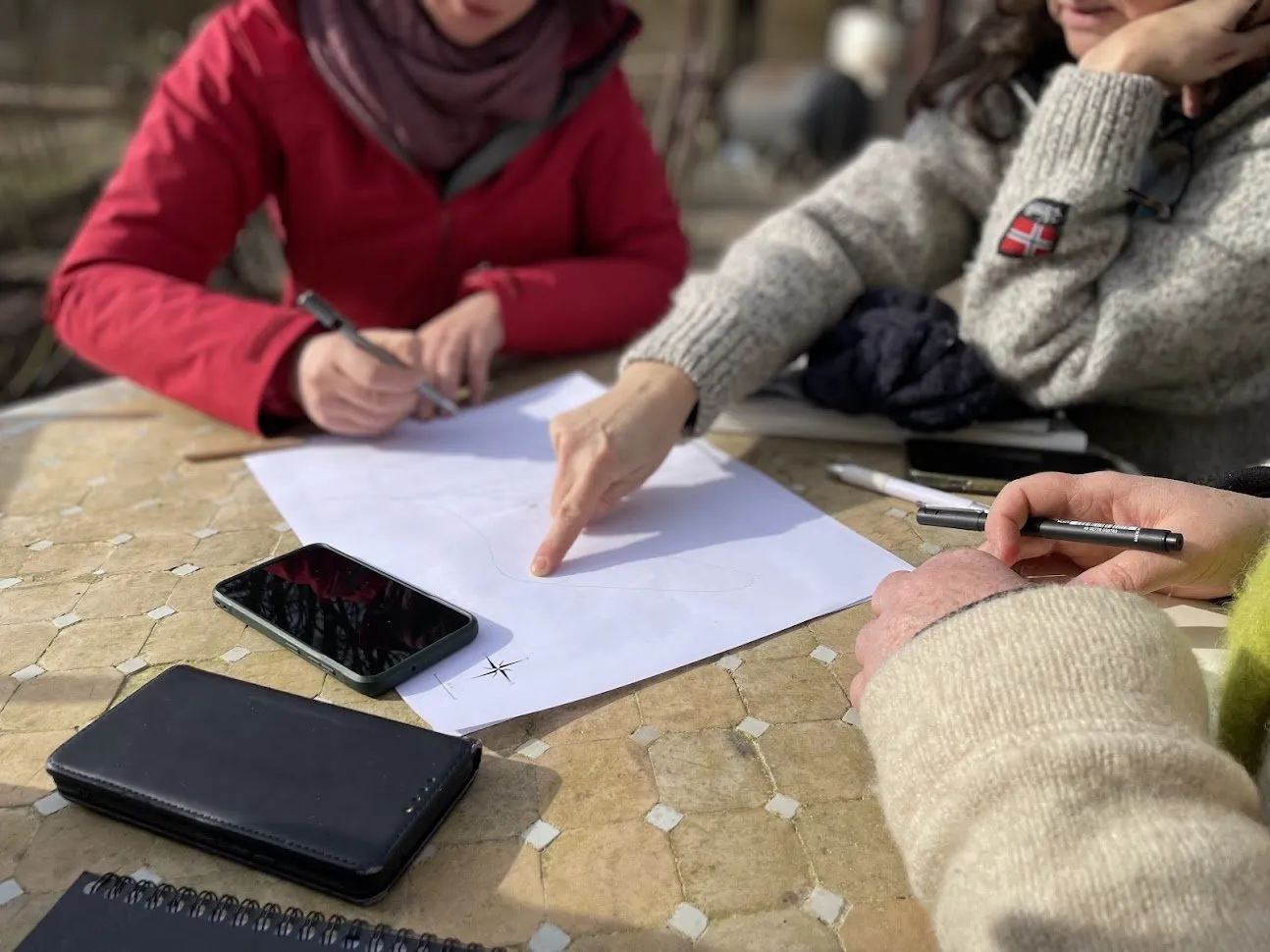
Have your own garden in Belgium? Become a program client: the cohort designs your food forest, for a supportive commitment of €1,100.
What comes after the program?
Let’s be honest: today, very few people make 100% of their living from food forest design — including within our own design studio, where everyone combines several activities. What the program really gives you, its graduates say better than we can: solid foundations, a systemic understanding of living systems, and a network that lasts.
- You can launch your own activity, at your own pace — often alongside another one: a graduate from the latest cohort is starting her design activity this summer.
- You can collaborate with the Semisto ecosystem — nursery school, planting works, plant datasheets, trainings, Design Labs: 10 out of 13 graduates from the latest cohort want to keep working with us, and we’re consolidating this network to best support those who come out of the program.
- You transform your own place and your community’s — your garden, a collective project, your town.
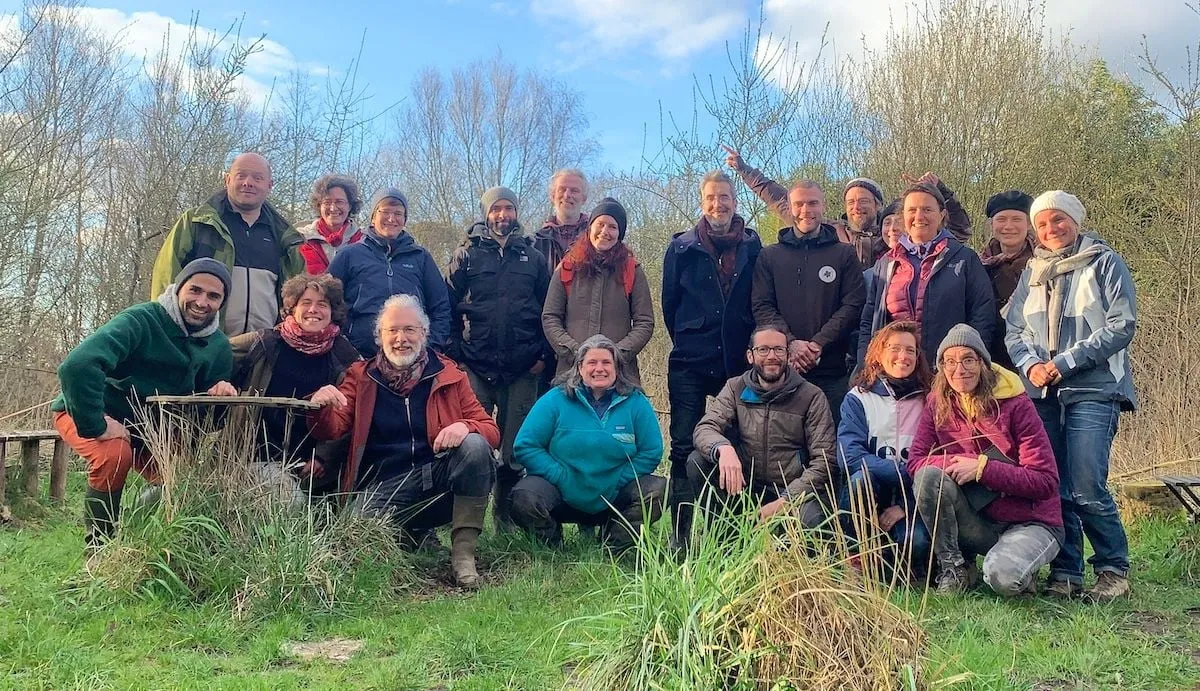
The network, in practice: the 2025-2026 cohort.
Who this program is for
Ideally, you’ve already taken a Permaculture Design Certificate (PDC) course — but it isn’t required. The program welcomes anyone motivated and passionate about agroforestry and food forests, as well as professionals in landscaping, plant propagation, arboriculture, horticulture, agroforestry, botany and related fields.
No farming background needed: ideally you’ve simply experimented with a bit of food forest at home or elsewhere. And if you’re not sure this is the right place for you, don’t rule yourself out — come talk it through at the webinar or book a call with Mohammad.
The 2026-2027 calendar
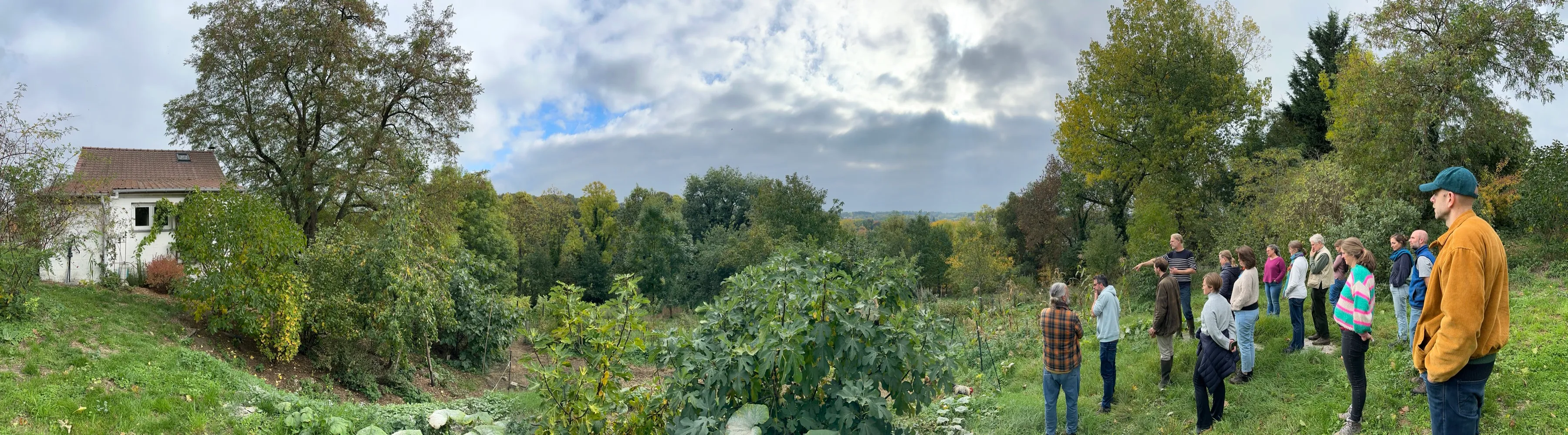
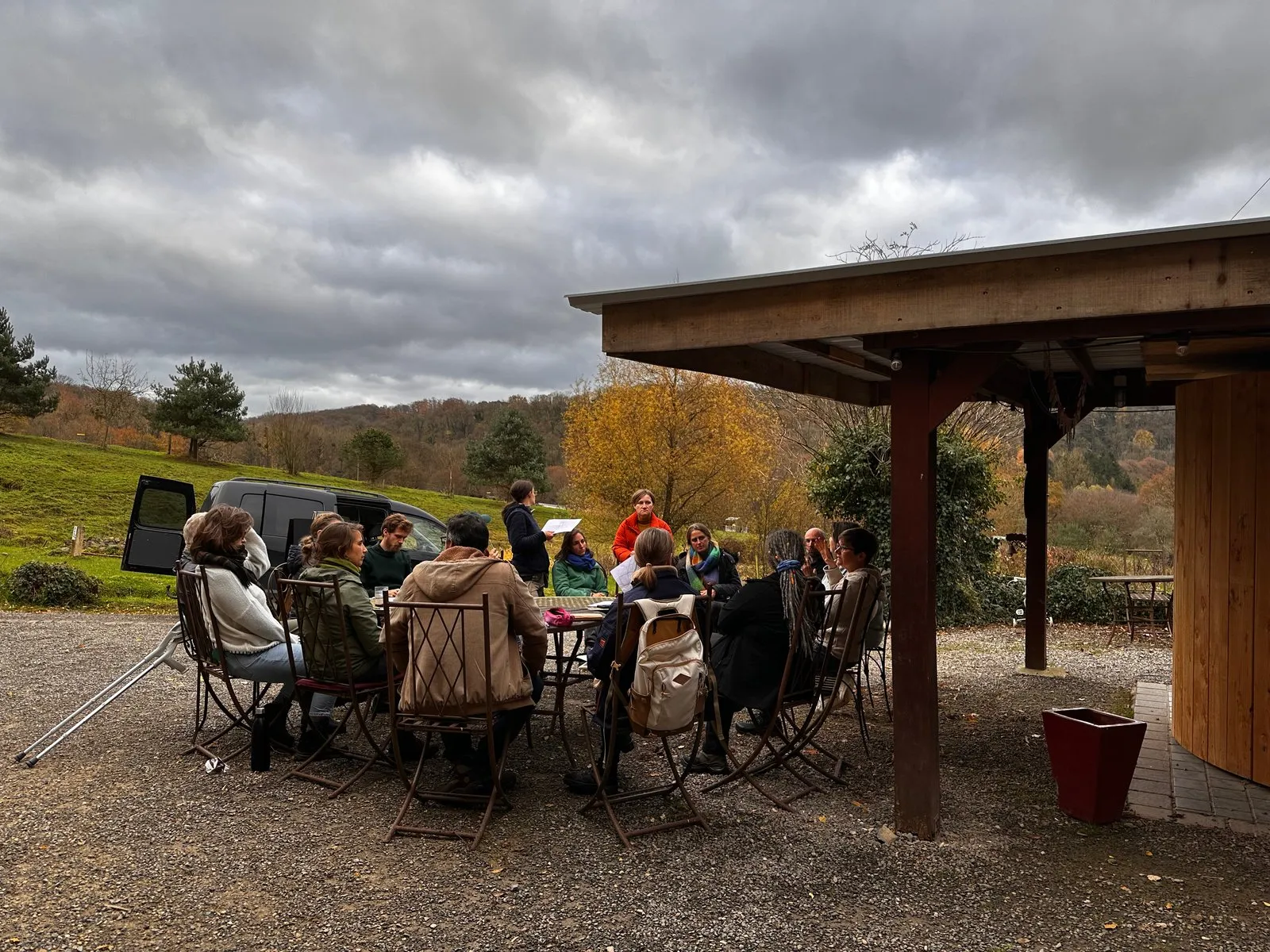
Sessions mostly take place at Les 4 Sources, in Yvoir (between Namur and Dinant, Belgium), from October 2026 to May 2027, roughly 4 days a month. We work in two-day stays, from Friday morning (9:30am) to Saturday afternoon (5pm). If you’re travelling from far away, you can stay on site from Thursday evening.
| Dates | On the program | Location |
|---|---|---|
| 16-17 October | Toward the era of the food forest (Michael Hulet) | Les 4 Sources, Yvoir |
| 6-7 November | Imitating the forest (Laurence Delahaye) | Bois de Spy |
| 13-14 November | Inspiring visits: Het Voedselbos + Eetbos, Deinze | — |
| 27-28 November | Design Checklist methodology + interview, site analysis and sketching (Eric Luyckx) | Les 4 Sources |
| 11-12 December | Fertility, plant-wildlife interactions, planning and harvests (Michael Dossin) | Les 4 Sources |
| 8-9 January | Ecological niches (Laurence Delahaye) | Les 4 Sources |
| 22-23 January | Tree biology and tree health (Laurence Delahaye) | Les 4 Sources |
| 5-6 February | Different goals, different designs (Eric Luyckx); planting the food forest (Julie Chevolet) | Les 4 Sources |
| 19-20 February | Water design in food forests (Antoine Vilain) | Les 4 Sources |
| 12-13 March | Designing plant palettes (Eric Luyckx); planting workshop (Julie Chevolet) | Les 4 Sources |
| 26-27 March | Thematic peer reviews (collective) + finalising pre-projects (Eric Luyckx) | Les 4 Sources |
| 9-10 April | Budget estimation and control (Erwin Demarbaix) | Les 4 Sources |
| 23-24 April | Low-layer expertise (François Delforge); woody-layer expertise (Corentin Hennuy) | Namur → Les 4 Sources → Vaux-sur-Sûre |
| 14-15 May | Inspiring visit: Ketelbroek, Netherlands (Wouter Van Eck) | — |
| 28-29 May | “So, where do we go from here?” + Semisto Party (collective) | Les 4 Sources |
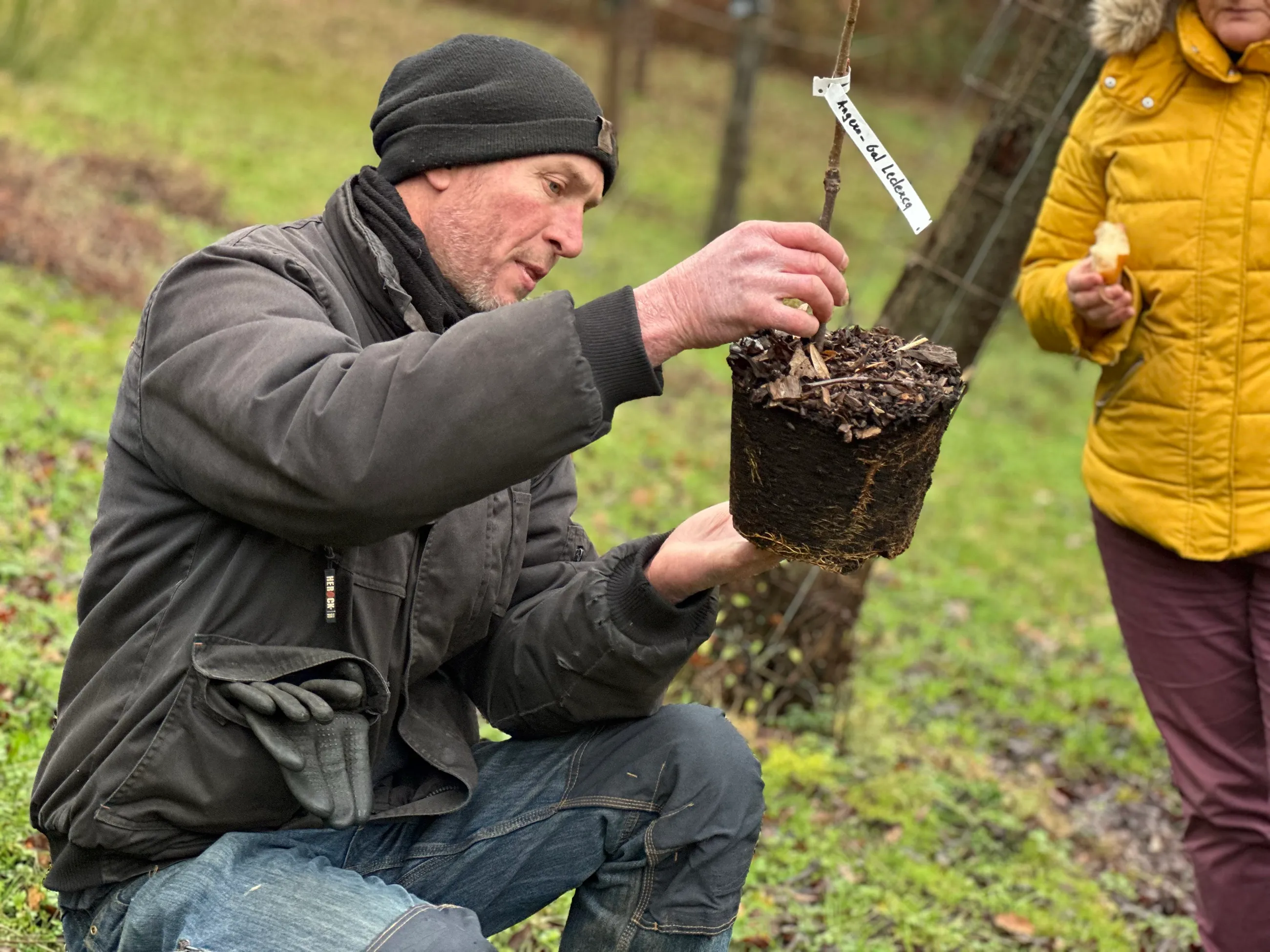
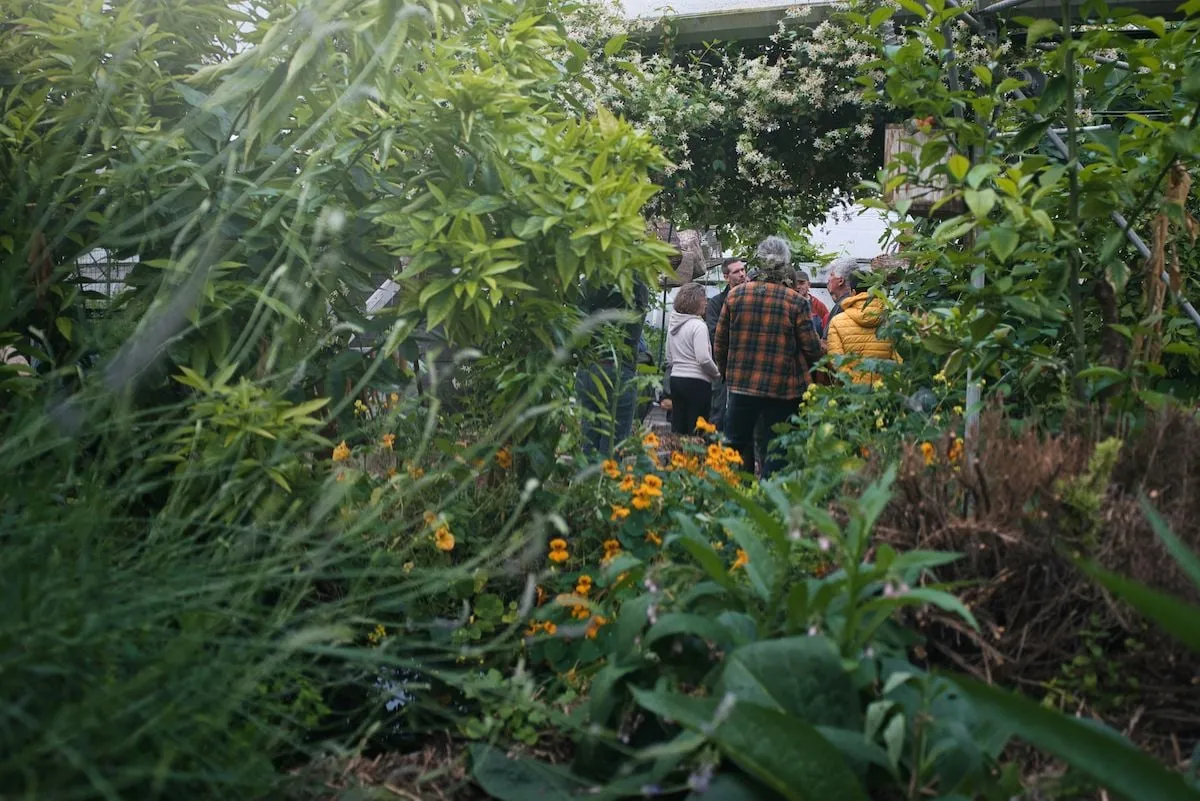
Throughout the year, inspiring visits take you to reference sites in Belgium, the Netherlands and France — Het Voedselbos, Eetbos, Ketelbroek, the Bec Hellouin organic farm, and other multi-layer gardens and agroforestry projects.
New in 2026-2027
This fourth edition has been enhanced to serve you even better:
- Real project owners get involved — the program’s core design exercise is done on real sites, for real clients (see “A real project, real project owners” above).
- Webinars on specific topics — the Semisto collective runs a series of webinars on themes that complement the sessions.
- Discounts on hands-on workshops — reduced-price access to add-on activities run by Semisto or its partners: grafting, plant propagation, pond creation, etc.
- Real case-study analysis — reviewing existing designs, lessons learned and shared expertise to sharpen your design thinking.
- Close collaboration with Semisto Design Labs — you follow Peer Reviews (project reviews) and observe every step of a design project end to end, from first client contact through to planting follow-up.
- Collaborative work time — in small groups for project work, and as a full group for rich, inspiring exchanges.
- Optional add-on trainings — bonus days to go deeper on specific topics (pond creation, fruit tree pruning, grafting, etc.).
- More time outdoors — hands-on fieldwork and themed project visits with varied purposes (biodiversity, scientific research, food production, etc.).
- Personalised reviews — collective and individual check-ins to measure your progress and adjust your learning.
- Technology in service of knowledge — every classroom session at Les 4 Sources is recorded and published as course notes in your private My Semisto space.
Accommodation & meals
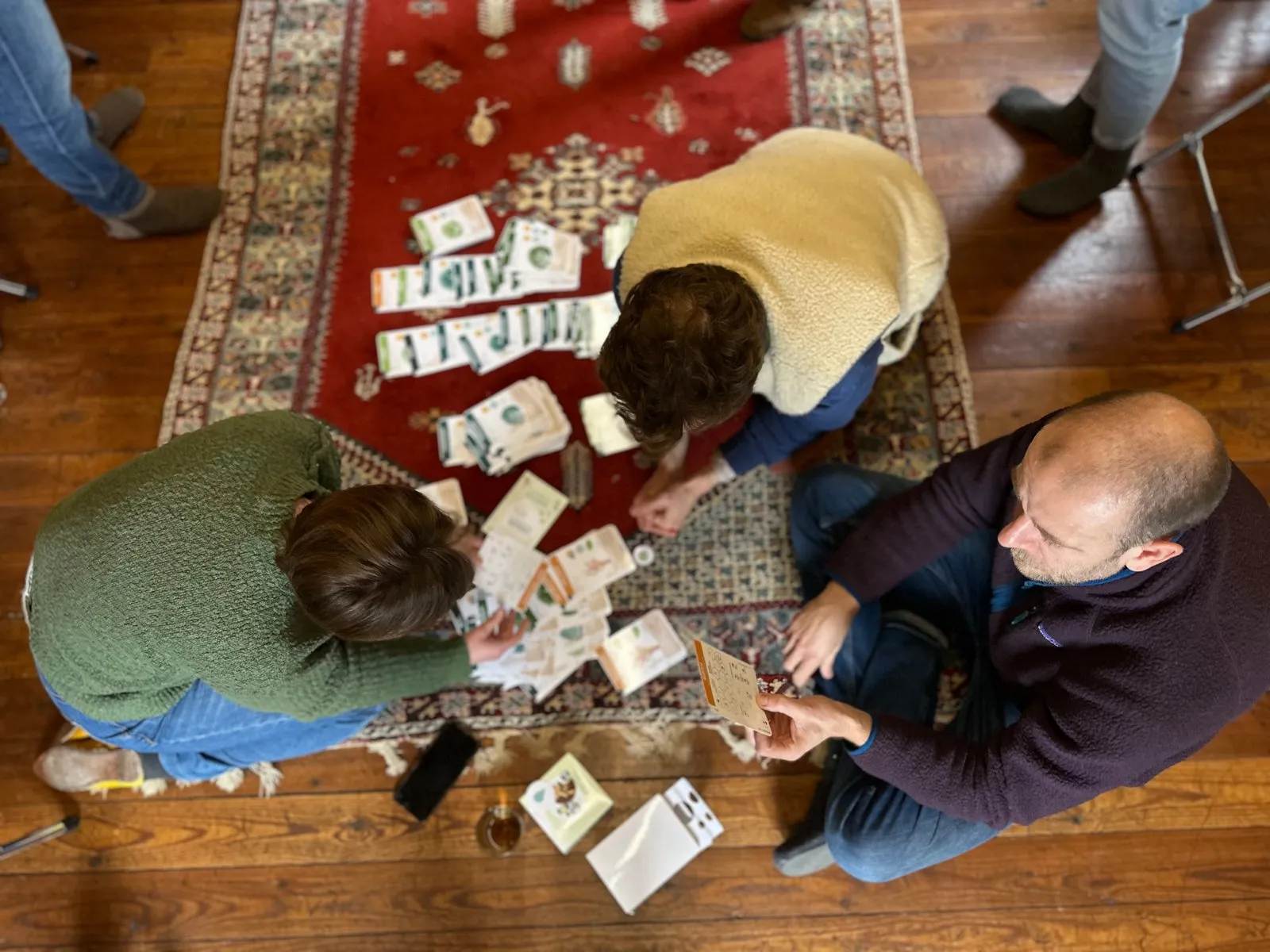
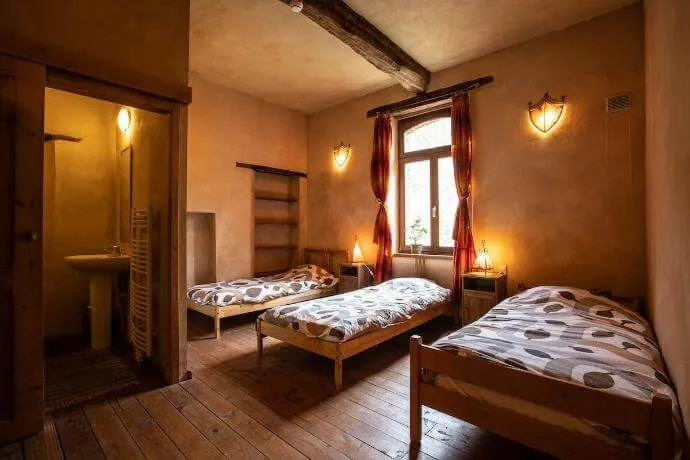
The training runs on Fridays and Saturdays, leaving you a precious day of the weekend free. Everyone stays together, in shared rooms, at La Hulotte des 4 Sources, our rural accommodation renovated with ecological materials.
The main venue is in Yvoir, reachable by train via the Brussels-Luxembourg IC line. For visits in Belgium and abroad, as well as any site-visit travel, meeting points will be shared to organise carpooling.
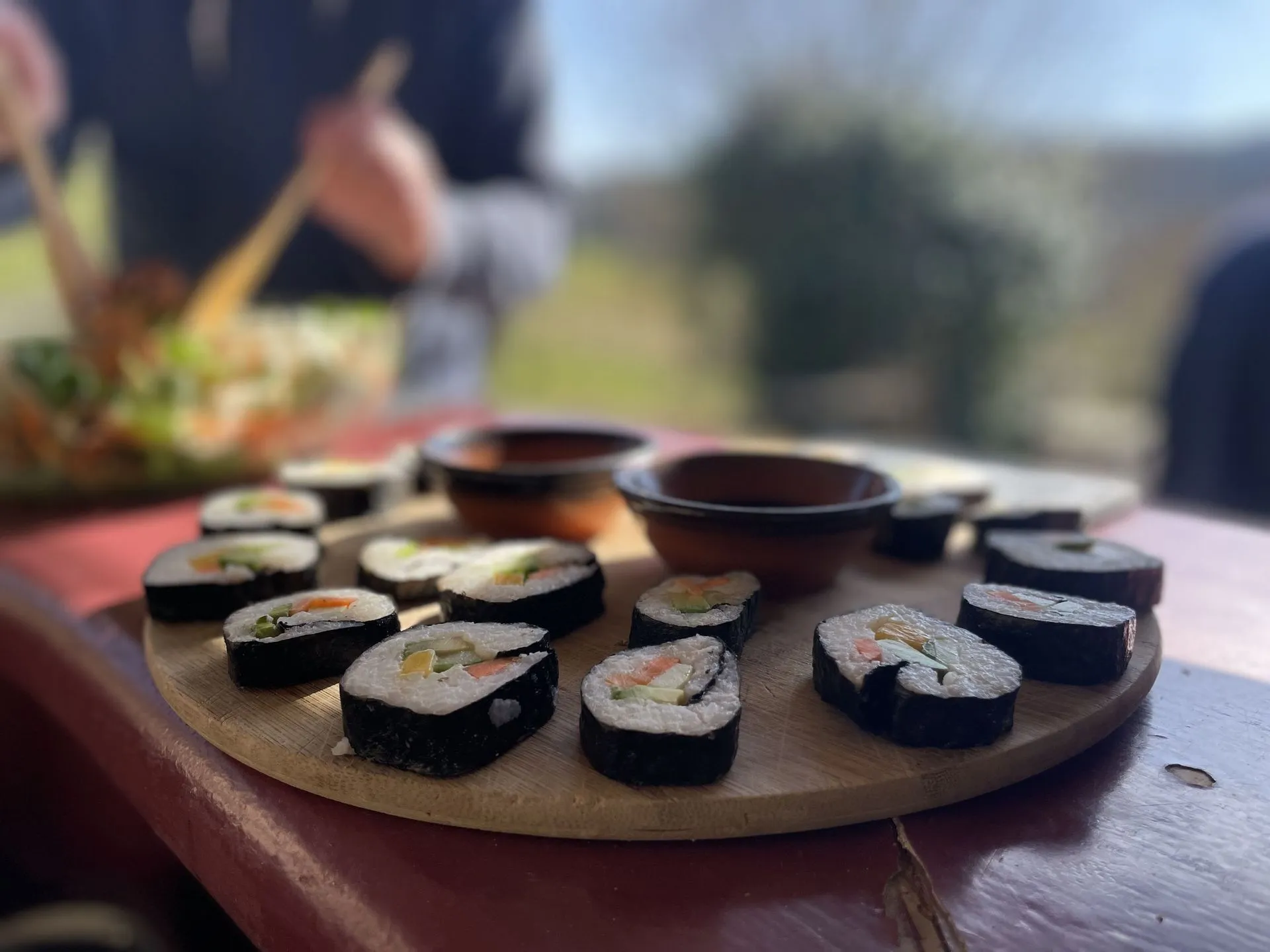
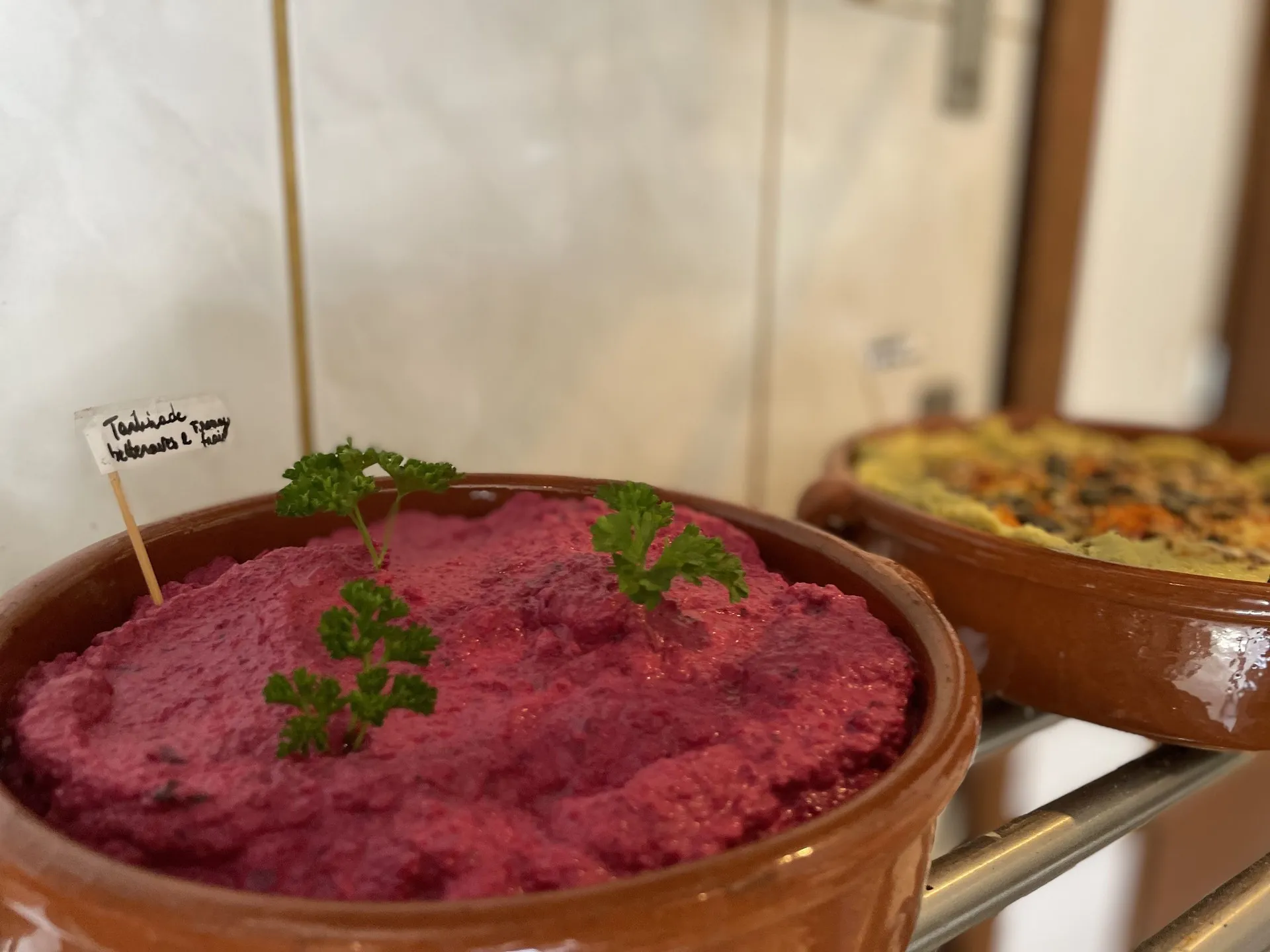
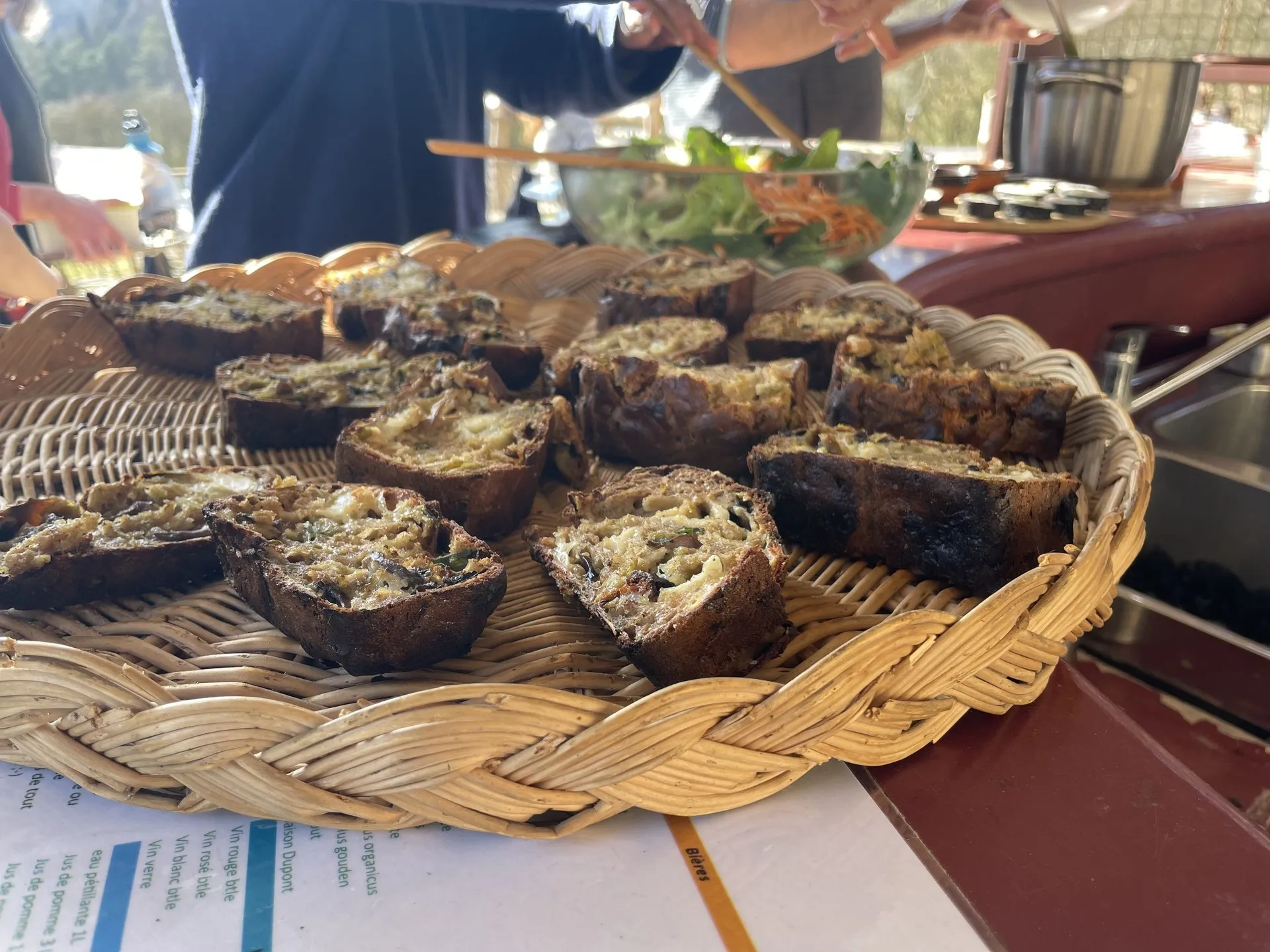
For meals, Stéphanie, our on-site cook, prepares dishes from fresh produce grown in the gardens, wild plants, and organic produce from the Paysans-Artisans producers’ cooperative and local organic shops. Friday lunch is a shared-plate “auberge espagnole” — everyone brings a dish. Let us know your intolerances and allergies on the registration form so meals can be adapted.
Price and terms
The full program costs €3,600 for 30 days of professional training, accommodation and meals included (except Friday lunch, which is shared-plate). This covers:
- trainers’ fees and travel expense reimbursement;
- accommodation at Les 4 Sources and during visits;
- meals from the Les 4 Sources kitchen (local, organic);
- Friday dinners at a restaurant during visit sessions;
- rental of training spaces;
- coordinating visits with inspiring project owners;
- coffee, tea, herbal teas and fruit during sessions.
This training is VAT-exempt under article 44 of the Belgian VAT Code.
Payment — a €350 deposit confirms your registration. You can pay in full immediately (a huge help to Semisto) or choose fee-free instalments. In practice: a €350 deposit at registration, then for example 8 monthly payments of €406.25 from October 2026 to May 2027 — the exact schedule is agreed with you, with full payment completed by May 2027.
Financial support — Semisto reserves support for a few people who need it: up to 4 students can receive assistance covering up to 44% of the cost (reduced fee of €2,000, see the FAQ).
Registration
- Fill in the registration form.
- Choose your payment option (in full or by instalments).
- Pay the €350 deposit.
- Receive personal confirmation from the team.
- Get ready for the first sessions in October at Les 4 Sources.
- Enjoy the moment.
Fill in the registration form →
A question or a doubt before taking the leap? Book a 20-minute call with Mohammad, the program coordinator (in French).
FAQ
More about the program
What is the Food Forest Designer program?
A series of theoretical and hands-on courses for anyone who wants to take their food forest and agroforestry design skills to a professional level. It builds the confidence to design and plant effectively, and to run client relationships with assurance. It’s aimed primarily at professionals (landscapers, nursery growers, project owners) — with room for those not yet professional but transitioning into the trade.
Where do the courses take place?
Mainly at Les 4 Sources (a shared living place in Yvoir, between Namur and Dinant, Belgium), with some sessions elsewhere in Wallonia and visits in Belgium and neighbouring countries.
Until when can I register?
Registration closes on 30 September 2026, or earlier if all 15 spots are confirmed before then. Get in touch if you need time to decide.
What language is the program taught in?
Courses and materials are in French. Some shared documents may be in English; visits conducted in English or Dutch are translated.
What will I learn?
To understand forest ecosystems, make sound design choices, master planting, and manage projects effectively — with downloadable resources and access to an online community.
What topics aren't covered?
The program focuses on creating food forests and fruit hedges, covering project management, client communication and budgets along the way. Other complementary trainings will be recommended to you.
The instructors
Laurence Delahaye
Forest ecosystem ecology and resilience · Epiphytia
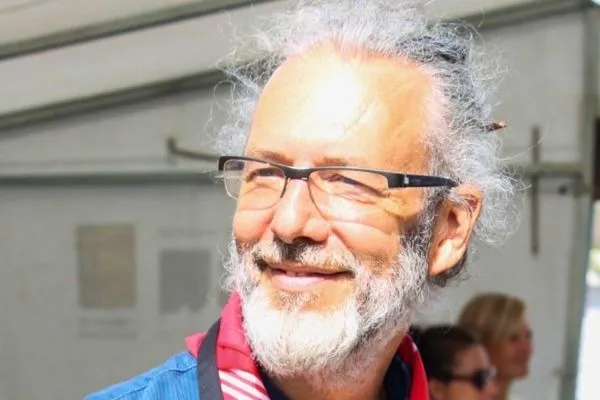
Eric Luyckx
Design methodology · permaculture facilitator
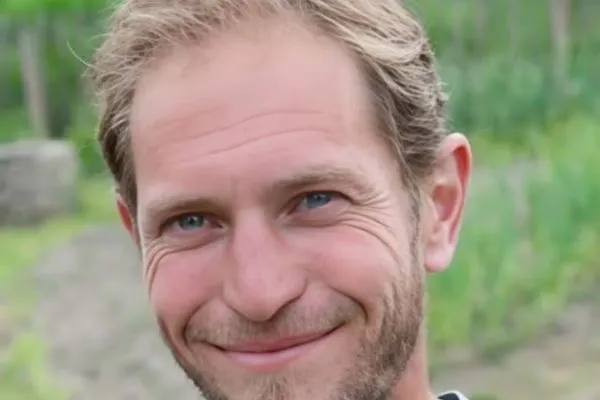
Michael Dossin
Fruit trees and plant propagation · Bout du Monde micro-farm
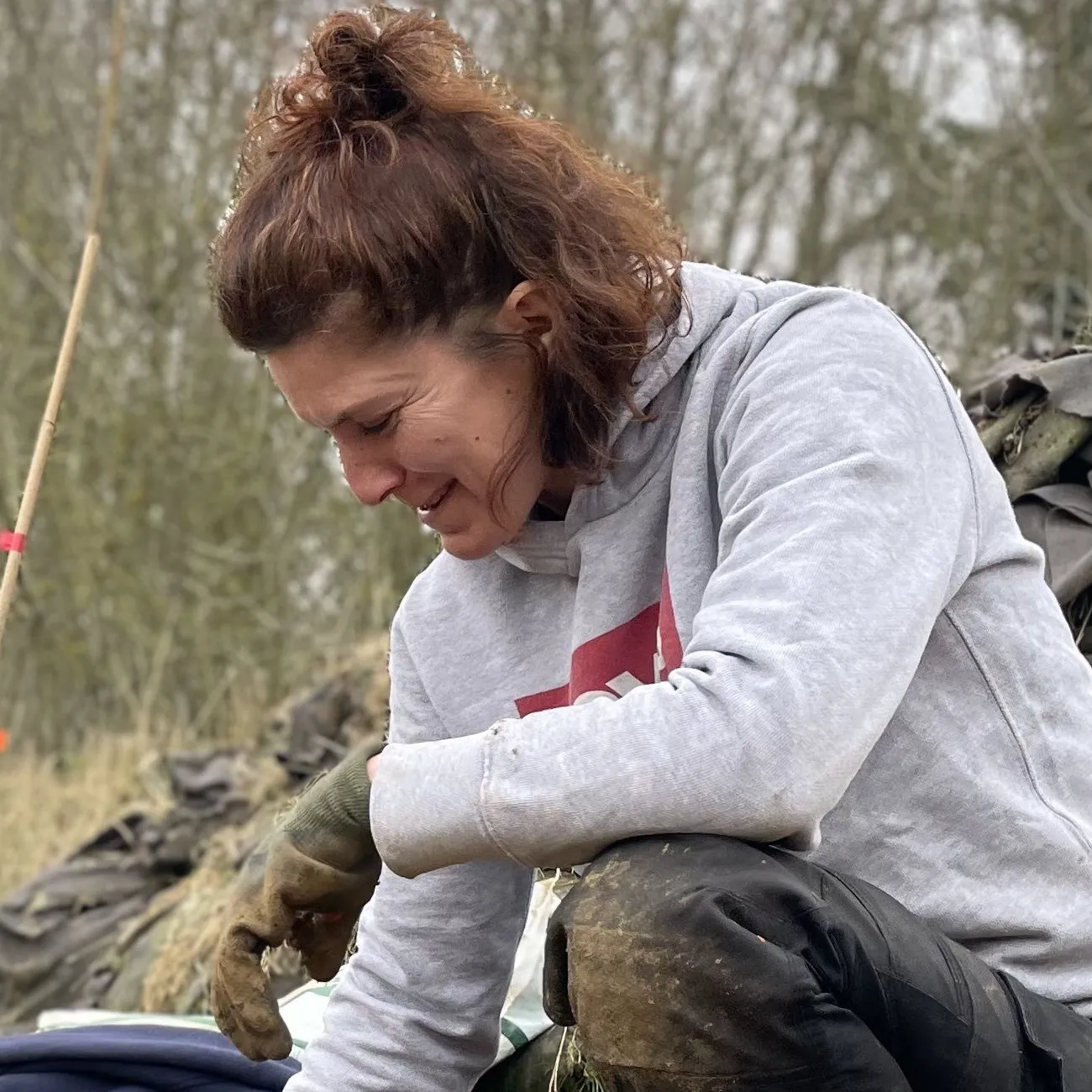
Julie Chevolet
Planting and staging living gardens
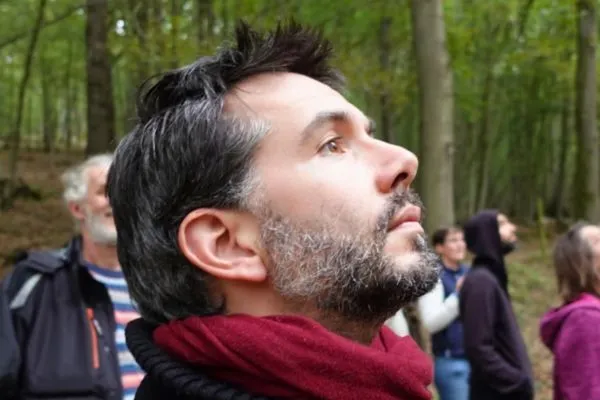
Antoine Vilain
Water design · trained by Daniel Halsey
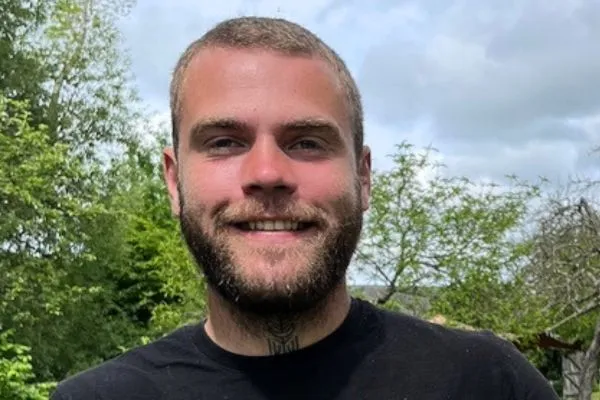
Corentin Hennuy
Nursery grower and forester · unusual fruit trees
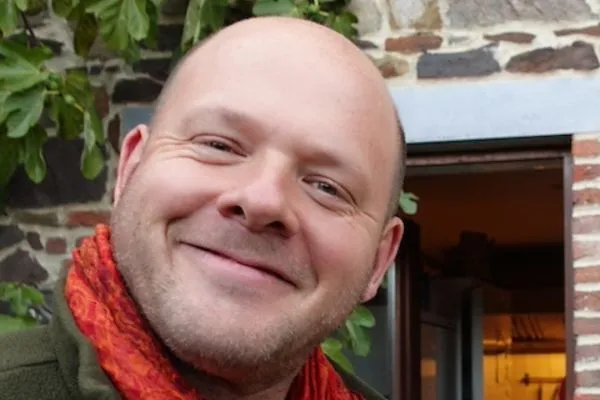
François Delforge
Low layers · founder of the Semisto nursery school
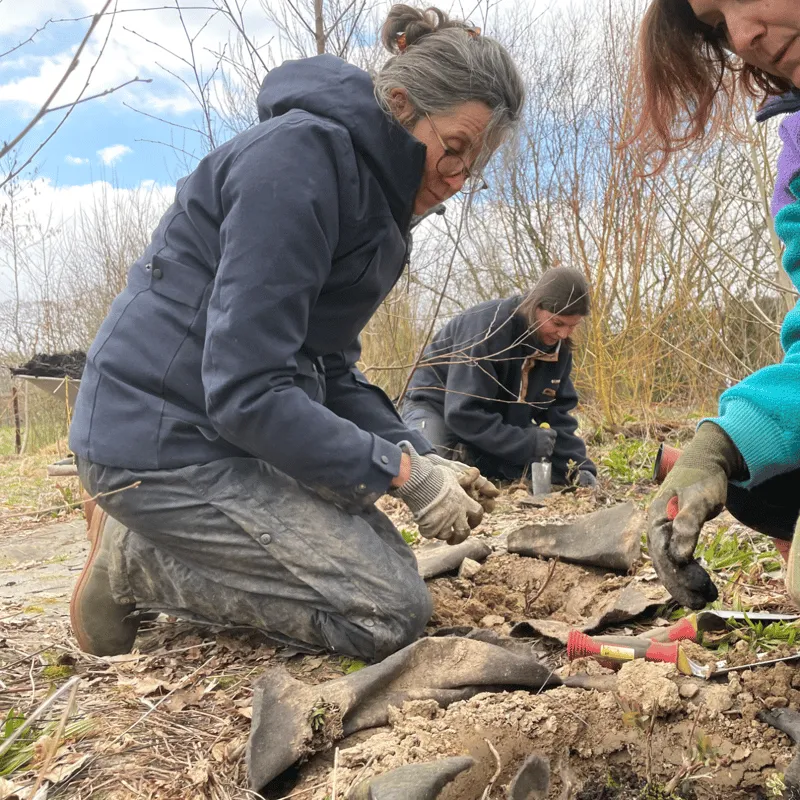
Anne Goldschmidt
Design and syntropic agriculture · Agrécolibre
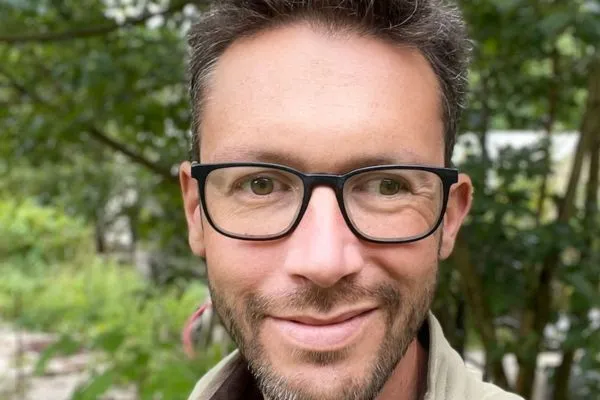
Michael Hulet
At the origin of the program · Les 4 Sources collective
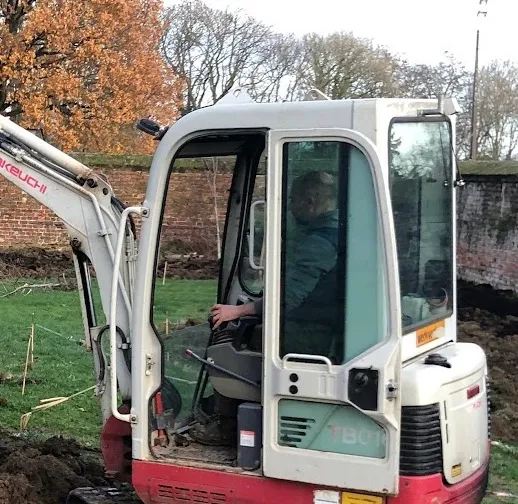
Erwin Demarbaix
Budget estimation and management
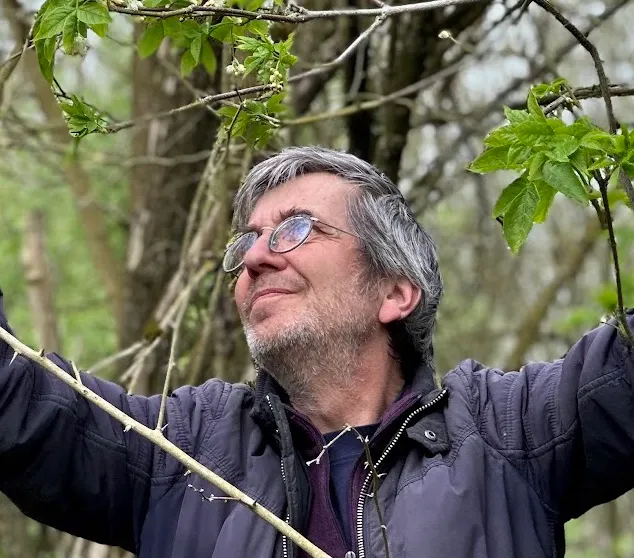
Wouter Van Eck
Ketelbroek · Dutch food forest pioneer
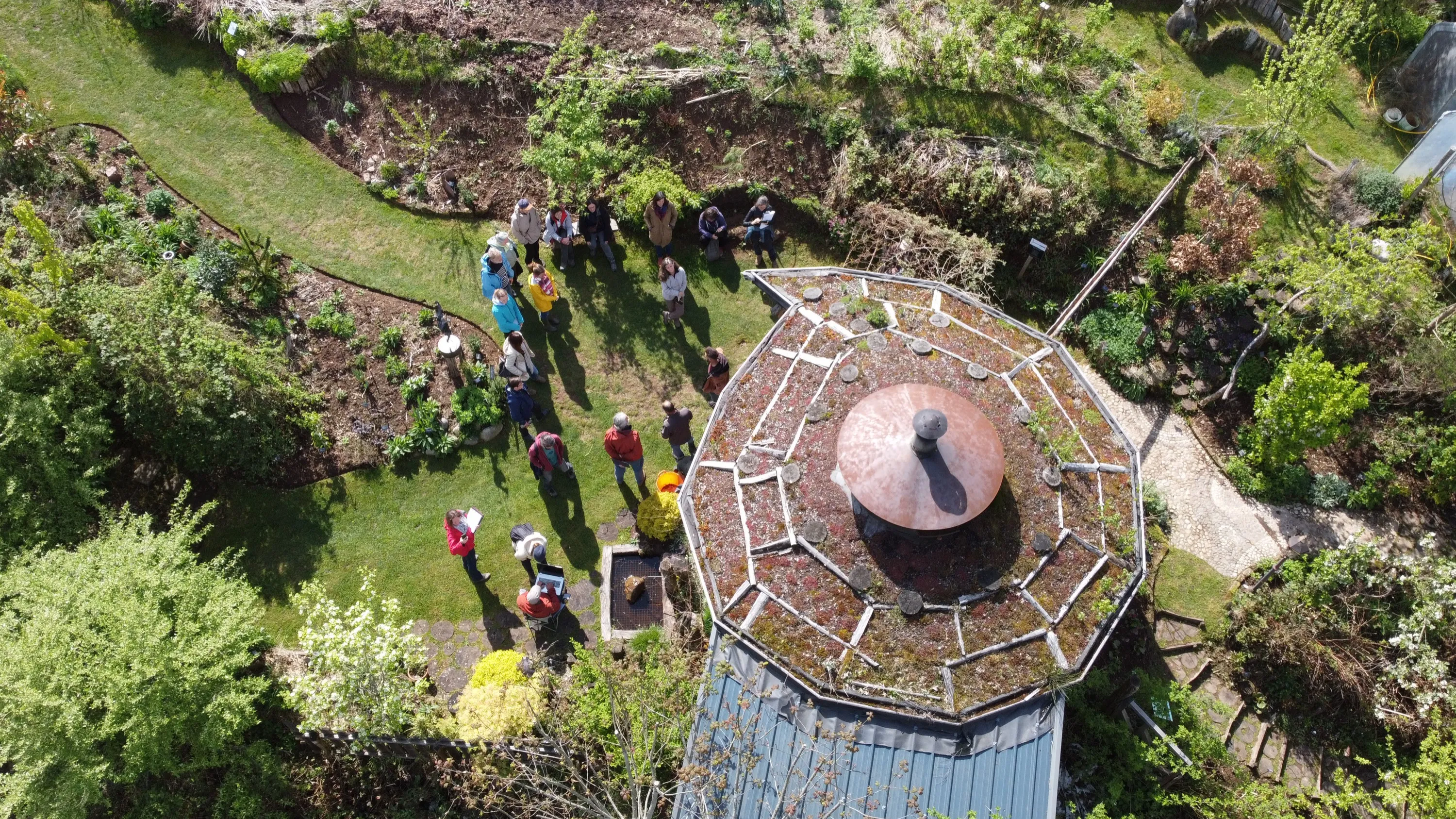
The course in photos
Alumni of the program
A full immersion into the world of food forests, with top-notch trainers and inspiring visits. An intense human experience and a real springboard to launch your own projects. If you're hesitating: go for it!
A deeply enriching year, both on a human and educational level. Visits, encounters, a great group dynamic and quality teaching. I now feel ready to design and plant food forests.
Hope, meaning, enthusiasm, wonder, connection, robustness, autonomy, joy.
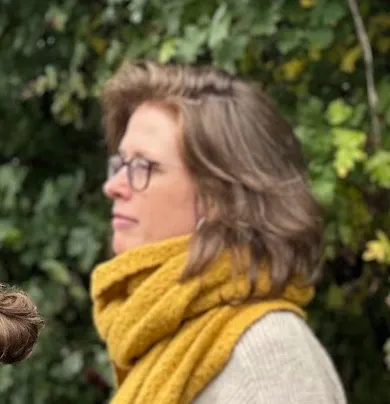 Laureline 2025-2026 graduate
 These are passionate people who share passionately. It's just beautiful!
 Julien 2025-2026 graduate
 Ready to join the 2026-2027 cohort?
15 spots, registration closes 30 September. Still hesitating? Join the webinar on 3 September, or talk it through for 20 minutes with Mohammad (in French).